

Interim Prime Minister Ilie Bolojan says he inherited a country with its back against the wall when he took office at Victoria Palace, but will hand over to the next government a Romania on the path to sound recovery, 'with the experience of a government that did not lie, did not resort to populism and treated people with respect'.
'After almost 16 months in which I have had the honour of serving Romania as prime minister, (...) my term in office will come to an end. It has been an intense term, marked by domestic and international crises and challenges. I inherited a country with its back against the wall, facing a record deficit, not only in its budget but also in public trust. I am handing over to the next government a Romania on the path to sound recovery, with the experience of a government that did not lie, did not resort to populism and treated people with respect. In June last year, the situation was so serious that no one was rushing to become prime minister. There was a 9.3% deficit, unhealthy economic growth based entirely on consumption and debt, a blocked National Recovery and Resilience Plan (NRRP), with an imminent risk of losing European funds, a society divided following the annulment of the elections, and a real risk of default. There was no real choice, only one option - to begin the recovery process, with inevitable costs. The European Commission and financial markets had lost confidence in us. They would no longer accept promises, only measures with an immediate impact. Had we not embarked on an orderly reform process, a crisis would have followed that would have affected the entire country, with every family feeling its consequences severely,' Ilie Bolojan said on Monday at Victoria Palace, during a press conference reviewing his term in office.
He acknowledged that he had been compelled to begin his term by raising VAT to increase budget revenue and reduce the deficit.
'I have hidden nothing from Romanians, I have not manipulated the figures, and I have refused to make promises I could not keep. Some decisions were difficult. I know that behind every figure there is a family, an employee, an entrepreneur or a pensioner who has had to recalculate their expenses and has experienced a decline in their standard of living. I know that people do not live on macroeconomic indicators. They judge a government by the prices they pay, by wages and pensions, and by job security. That is why their efforts must be respected through a more prudent state and an economy that can once again offer them prospects for the future,' Bolojan said.
He thanked Romanians for having 'borne the brunt' of the difficulties during this period, stressing that their efforts had not been in vain. AGERPRES (RO - writing by: Daniel Florea; EN - writing by: Simona Iacob)
Bolojan says he inherited crisis-hit Romania, leaves country on path to recovery

Conţinutul website-ului www.agerpres.ro este destinat exclusiv informării publice. Toate informaţiile publicate pe acest site de către AGERPRES sunt protejate de dispoziţiile legale incidente. Sunt interzise copierea, reproducerea, recompilarea, modificarea, precum şi orice modalitate de exploatare a conţinutului acestui website. Informaţiile transmise pe www.agerpres.ro pot fi preluate, în conformitate cu legislaţia aplicabilă, în limita a 500 de semne. Detalii în secţiunea Condiţii de utilizare. Dacă sunteţi interesaţi de preluarea ştirilor AGERPRES, vă rugăm să contactaţi Direcţia Marketing - marketing@agerpres.ro.
Alte știri din categorie

Alter-Native International Short Film Festival to present major premieres and internationally award-winning productions
The 34th edition of the Alter-Native International Short Film Festival, which will take place from 4 to 8 November at the Palace of Culture in Targu Mures, will present audiences with major premieres and internationally award-winning productions. The event offers audiences a diverse programme which, alongside the traditional short film competition, includes &#

Alexandra Capitanescu releases 'Choke Me,' her first album in English
Alexandra Capitanescu, Romania's representative at Eurovision 2026, where she won third place, has released her first album in English, 'Choke Me', Universal Music Romania reported on Monday. Capitanescu and her band, consisting of Bogdan Stoican (guitar), Matei Cohal (bass), Luca Sofron (drums) and Thomas Circota (keyboards), propose a sound that
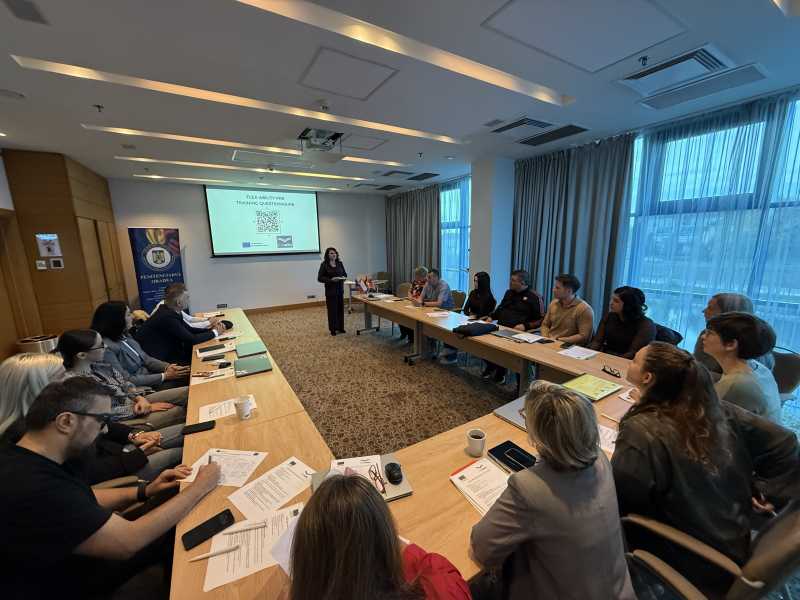
Oradea Penitentiary hosts international training on support for inmates with learning difficulties
Oradea Penitentiary is hosting an international training course for specialists from four European countries from 19 to 23 October, as part of the European Erasmus+ FLEX-ability project, initiated by senior prison commissioner Laura Opris. 'The project is primarily aimed at prison officers who work directly with people deprived of their liberty. FLEX-abili
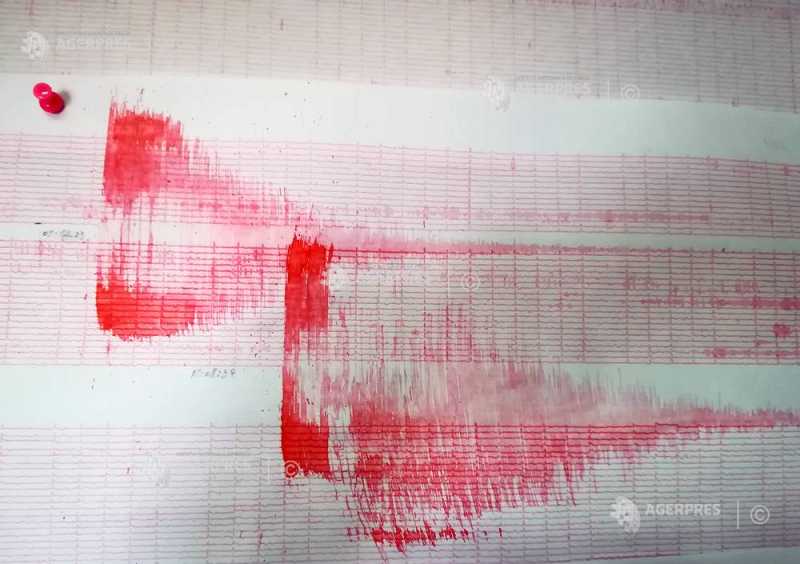
Magnitude 4.8 earthquake detected in Vrancea seismic zone on Monday
An earthquake with an estimated magnitude of 4.8 and an estimated depth of 76.5 km was detected in the Vrancea seismic zone on Monday, the National Institute for Earth Physics (NIEP) announced on its Facebook page. 'An earthquake has been detected in the Vrancea seismic zone, with an estimated magnitude of 4.8 and an estimated depth of 76.5 km. The effects
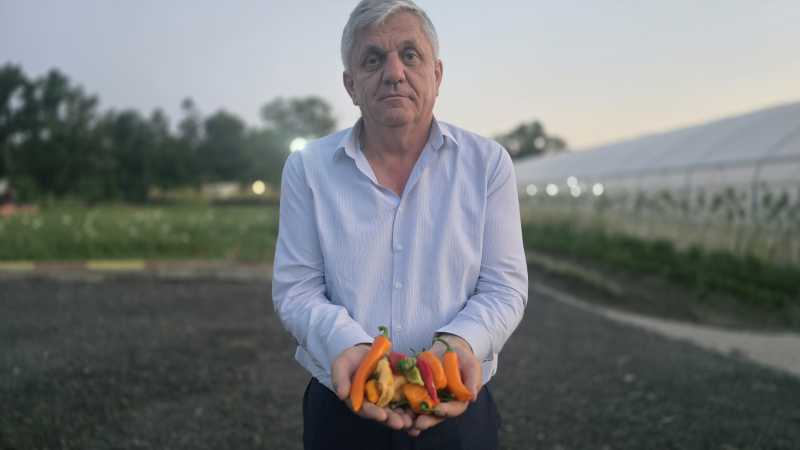
I CHOOSE ROMANIA/Horticulturist Costel Vinatoru chose to stay in Romania despite receiving many offers from abroad
Awarded the Romanian Academy Prize and the Sanctus Stephanus Magnus Order of the Romanian Patriarchate, horticultural researcher Costel Vinatoru chose to remain in Romania despite receiving offers from the United States and France, believing that he should leave behind a treasure in his homeland, as a testament to the place where 'God sowed him'.

Directors Rakan Mayasi and Eivind Landsvik, Les Films de Cannes a Bucarest festival's guests
Directors Rakan Mayasi ('Yesterday the Eye Didn't Sleep') and Eivind Landsvik ('Low Expectations') are guests at the Les Films de Cannes a Bucarest festival and will meet audiences in Bucharest at Cinema Elvire Popesco, Cinema Muzeul Taranului and the Auditorium Hall of the National Museum of Art of Romania, the organisers said in a press release sent to
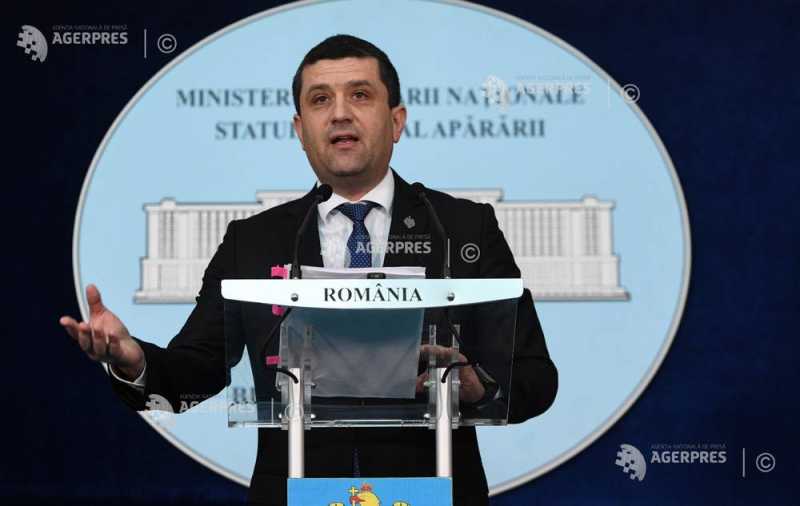
Interim DefMin Miruta: Ministry of National Defence records three firsts in Saturday evening's drone shoot-downs
Interim National Defence Minister Radu Miruta told a news conference on Sunday in Targu Jiu that three firsts had been recorded in connection with the two drones shot down by Romanian military pilots in the country's airspace on Saturday evening. 'I can tell you what was unprecedented about the two drones shot down last night in Romanian airspace. The
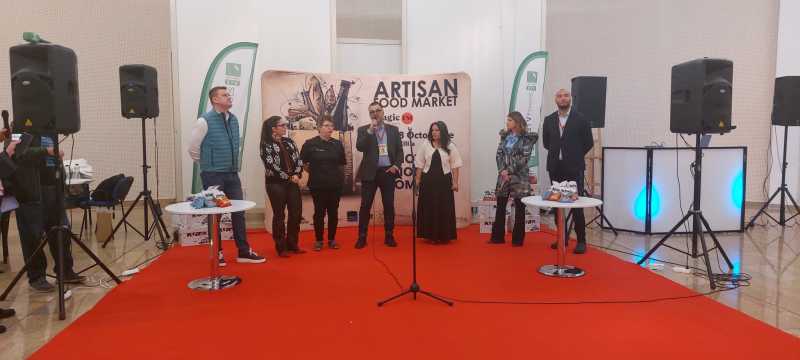
Romania's artisan food producers eye retail expansion amid funding and regulatory challenges
Romanian artisan producers are increasingly investing in processing facilities and making greater use of local resources to create higher-value products, positioning themselves to enter retail chains and supply restaurants. However, their business development also depends on access to financing, cooperation and a predictable legislative framework. 'After f