
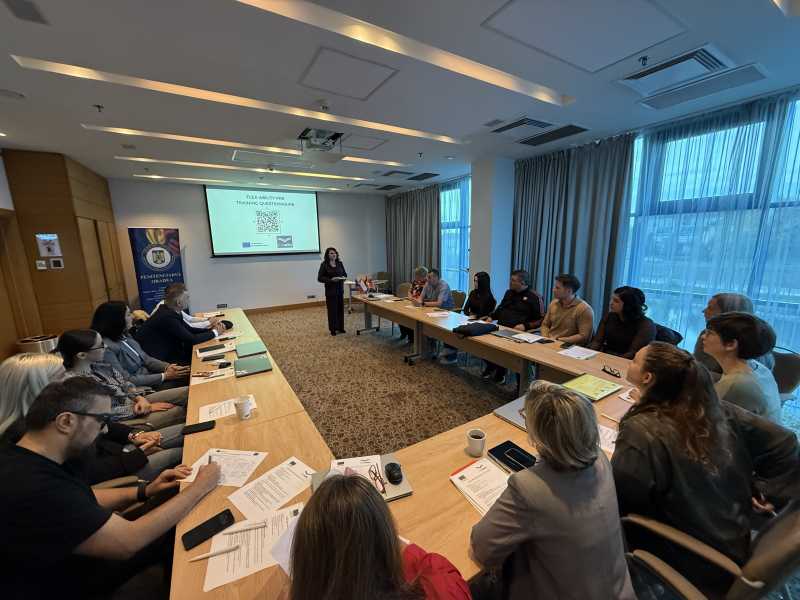
Oradea Penitentiary is hosting an international training course for specialists from four European countries from 19 to 23 October, as part of the European Erasmus+ FLEX-ability project, initiated by senior prison commissioner Laura Opris.
'The project is primarily aimed at prison officers who work directly with people deprived of their liberty. FLEX-ability seeks, on the one hand, to identify people with learning difficulties and, on the other, to develop tailored tools to help them improve their basic skills and abilities. These are essential for social reintegration and a return to the labour market,' Oradea Penitentiary director, chief commissioner Ciprian Timis, told AGERPRES ahead of the course opening.
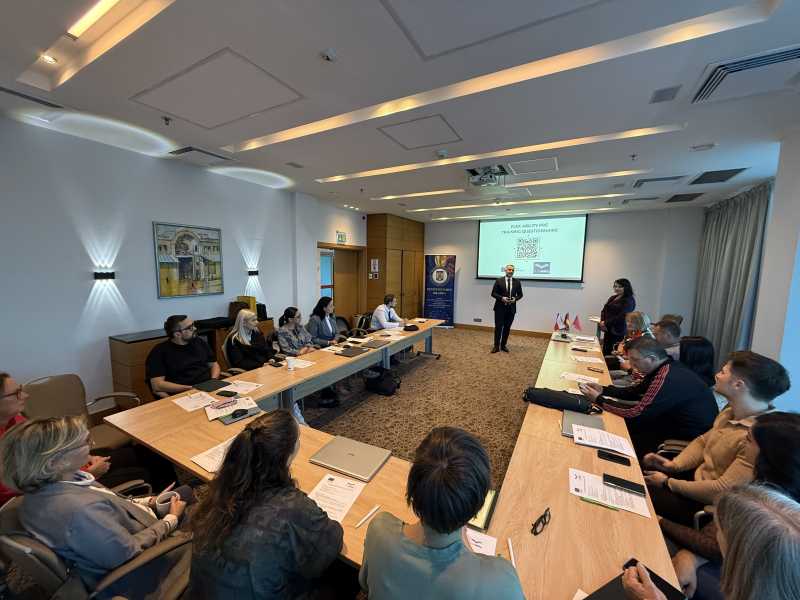
Photo: (c) EUGENIA PAŞCA / AGERPRES
An important point, he said, is that despite their learning difficulties, these individuals have practical skills and can be very good employees, representing a valuable resource for companies seeking staff. However, to access employment, their practical abilities need to be supported by a minimum level of knowledge to facilitate their integration into the workplace.
In his welcome address to participants, director Ciprian Timis gave a striking example of the challenges faced by educational staff in the prison system. Recently, of the 55 people deprived of their liberty who started working, approximately half did not know how to write their own names, although some had staid that they had completed six or even seven years of schooling.
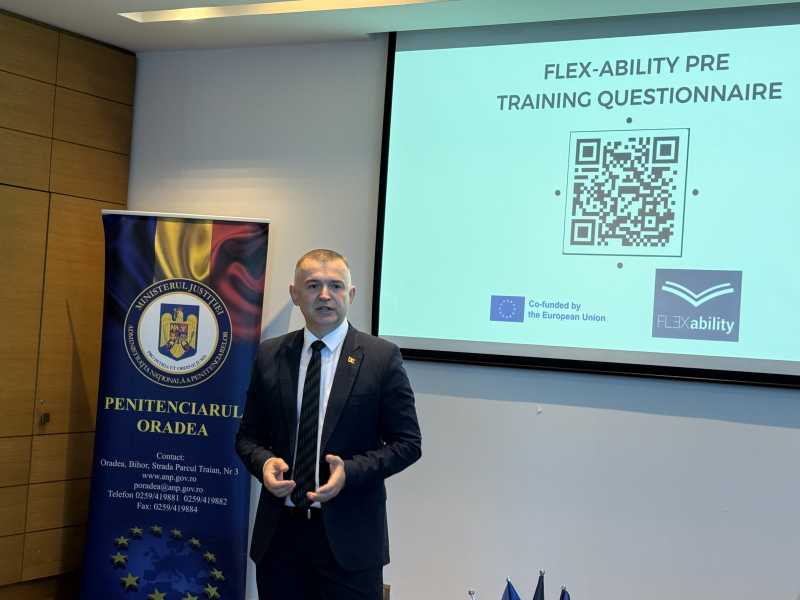
Photo: (c) EUGENIA PAŞCA / AGERPRES
'Imagine that, after filling an entire exercise book or even two with their names, copying a template, they still cannot write their names without assistance,' Ciprian Timis explained, underlining the need to identify learning difficulties and use methods tailored to each individual.
The FLEX-ability project aims specifically to address such situations. During the course in Oradea, 18 participants - 15 specialists from Germany, Poland, Türkiye and Romania, together with three representatives of Oradea Penitentiary - will test and learn to use a tool for the preliminary identification of learning disorders and adapt educational activities to prisoners' needs. The training will be based on a manual jointly developed by specialists from the project consortium and Oradea Penitentiary, with academic support from Poland.
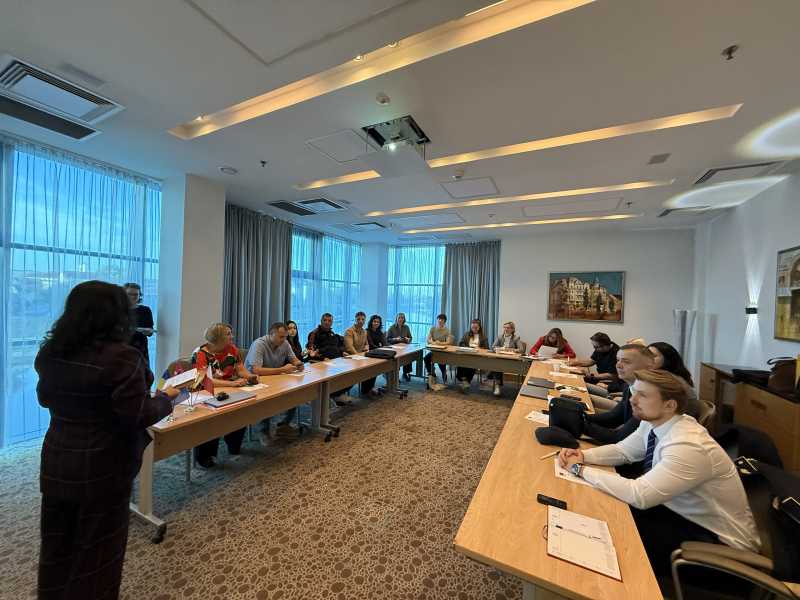
Photo: (c) EUGENIA PAŞCA / AGERPRES
The 18 participants form a network of trainers who will pass on the methods they have learnt to other educators through dissemination sessions, with each trainer expected to reach at least five colleagues, thereby multiplying the number of specialists able to use these methods within the system.
The idea for the project grew out of the professional experience of Laura Opris, deputy director for social reintegration at Oradea Penitentiary. Before working in the prison system, she had teaching experience working with children with special educational needs. She subsequently recognised similar difficulties among people deprived of their liberty.
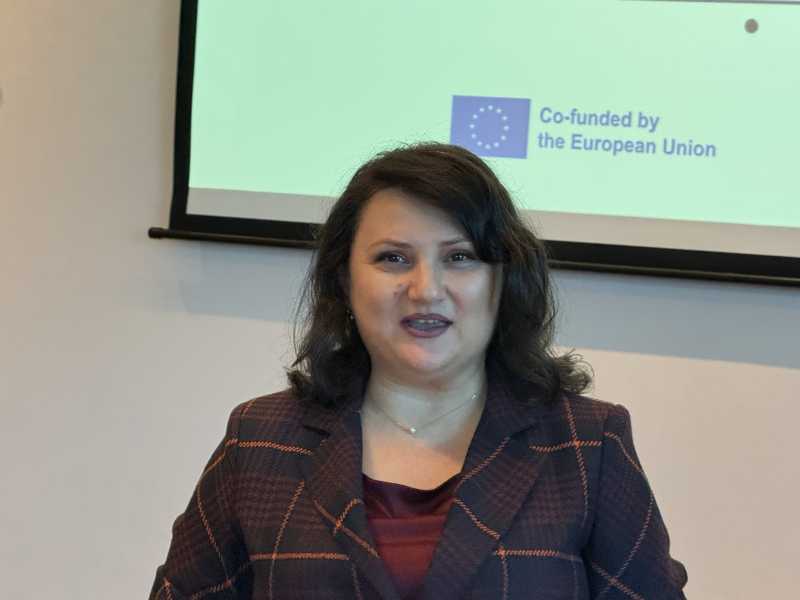
Photo: (c) EUGENIA PAŞCA / AGERPRES
'Together with my colleagues in the Education Department, we realised that we were not always equipped to address the learning difficulties and differences experienced by adults. Often, some people would give up on learning, or even we would give up and believe that no method would work. We therefore identified a shared need among our partners: the learning difficulties faced by some prisoners, particularly with reading and writing. We want to, and hope we have managed to, find inclusive solutions that facilitate education during detention and support their social reintegration,' Laura Opris told AGERPRES.
The project brings together organisations and institutions from Germany, Romania, Türkiye and Poland. It was initially submitted in Romania twice but failed to secure funding. The initiator then decided to propose it to partners in Bremen, Germany, namely Interchange Non-Profit gUG, represented at the course opening by Rhianon Williams, who took over coordination of the consortium. This time, the application scored more than 90 out of 100 in the German national agency's assessment, securing European funding through the Erasmus+ programme.
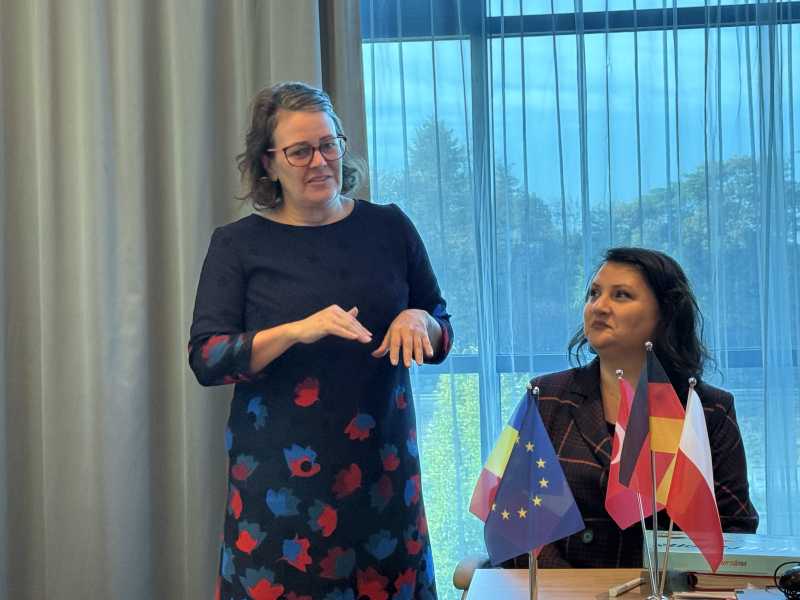
Photo: (c) EUGENIA PAŞCA / AGERPRES
The consortium aims to improve the quality of education in prison institutions by developing the psychopedagogical skills of staff working with people who experience learning difficulties.
Beyond the exchange of experience between specialists, the project, which runs from November 2025 to October 2027, will deliver practical resources: a manual for prison educators, a screening tool, an innovative method for the preliminary detection and rapid identification of dyslexia symptoms among prisoners and an online platform featuring teaching materials, worksheets and lesson plans.
The materials developed under the project will be made available on the LiberateSkills platform towards the end of this month, allowing institutions across Europe to benefit from the project's results.
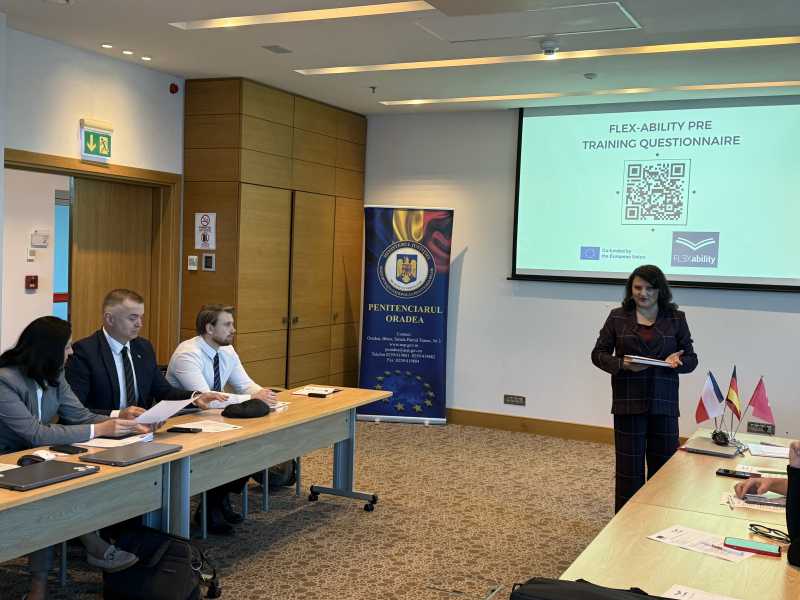
Photo: (c) EUGENIA PAŞCA / AGERPRES
In addition to Oradea Penitentiary, the project also involves the Centre for the Promotion of Lifelong Learning in Timisoara and the Buzias Educational Centre, so that methods for identifying learning difficulties can also be applied to minors and young people deprived of their liberty, enabling early intervention and prevention.
On 20 October, the foreign delegation will visit Oradea Penitentiary to observe activities supporting prisoners' social reintegration, particularly the education programme. The visit will conclude with a discussion attended by representatives of CSEI Orizont and Oradea Technological High School No. 1. AGERPRES (RO - writing by: Eugenia Pasca; EN - writing by: Adina Panaitescu)
- Category: English
- Date: 2026-10-19 13:29:55
- Foto: EUGENIA PAŞCA / AGERPRES