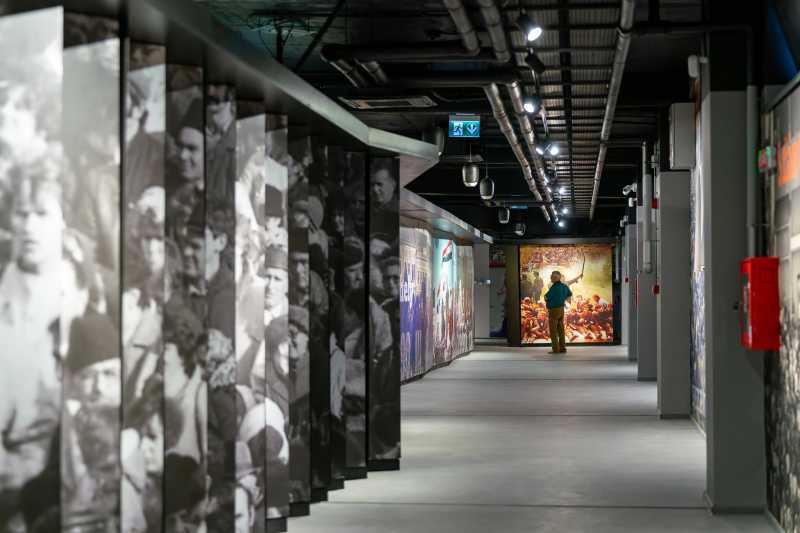

The eighth edition of the Huniade Castle Medieval Festival is in full swing in Timisoara, inviting residents and visitors alike to step back into a long-vanished world of kings, knights, noble families and medieval traditions.
Huniade Castle stands at the historic heart of Timisoara, and the National Museum of Banat, housed in the monumental building, dedicates an annual festival to its history.
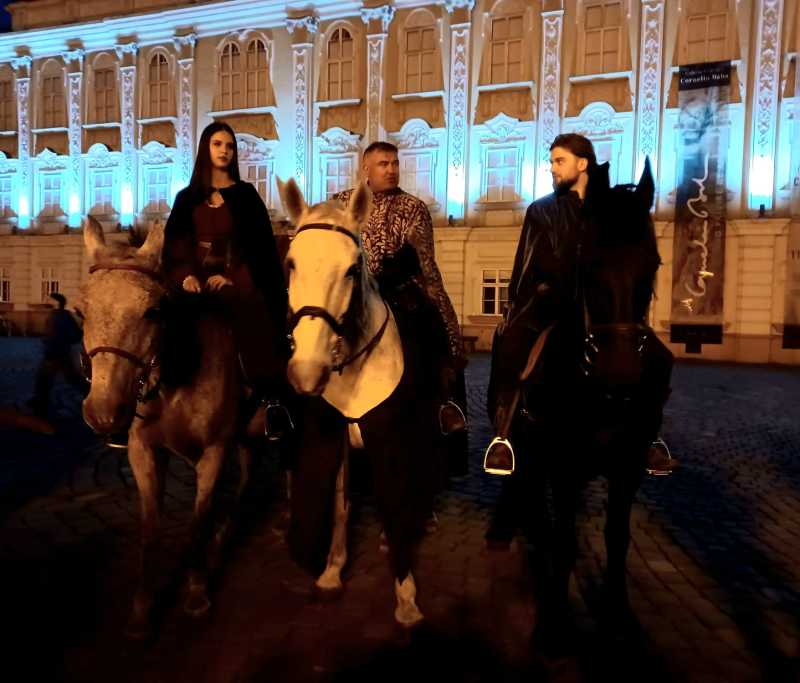
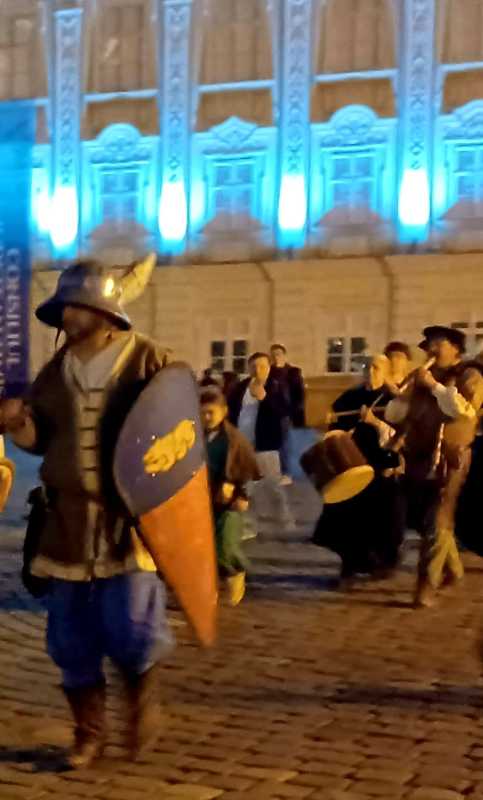
The festival opened on Friday evening with a parade through the city centre. Before hundreds of spectators, King Sigismund of Luxembourg, Queen Barbara of Celje and their entourage rode past on spirited stallions brought from the Asian steppes. They were accompanied by representatives of the noble houses of Celje, Garai, Ostoja, Ozora and Lazarevic, Central European mercenaries, knights renowned for their achievements in tournaments and battles, soldiers from Wallachia, diplomats, townspeople, skilled guild craftsmen, royal cooks, clergy, travellers from the East, jugglers and minstrels from inns and castles.
'We are at the beginning of the 15th century, when the shadow of the Crescent is spreading across the borders of the Kingdom, and King Sigismund forges a new brotherhood with the most feared military commanders of the neighbouring lands: the Order of the Dragon, established to lead the fight against the Ottomans. Bearing the symbol of the Dragon itself, Timisoara becomes the setting for the joyous celebrations marking this noble alliance,' Sergiu Galis, a radio producer specialising in historical programmes, told AGERPRES.
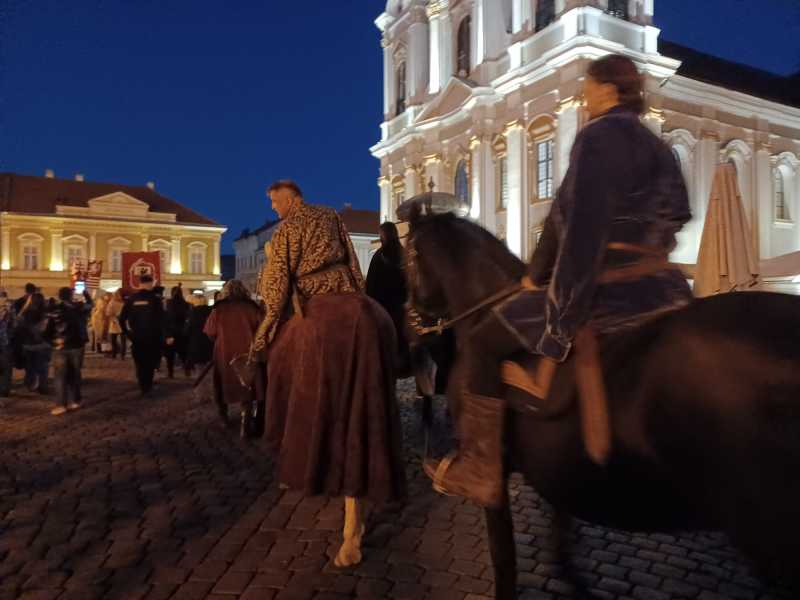
The evening concluded with a knights' tournament. For three days, Timisoara is transformed into a medieval stronghold, its streets alive with knights and minstrels, the aromas of bygone times and echoes of legend, as history is brought back to life amid smiles and applause.
In the park surrounding Huniade Castle, knights will cross swords, craftsmen will open their workshops, and minstrels will revive the music of medieval courts and taverns. Kings, queens, noble families, mercenaries and travellers will recreate the atmosphere of the early 15th century, when alliances were sealed by oaths and honour was defended in tournaments.
Visitors will be able to discover medieval crafts, combat and cavalry demonstrations, archery competitions, historical gastronomy and live concerts.
A grand royal banquet, the investiture of knights into the Order of the Dragon and a pyrotechnic theatre performance will complete the experience.
For three days, history steps out of the chronicles and takes its place among the people once again, in the very centre of Timisoara.
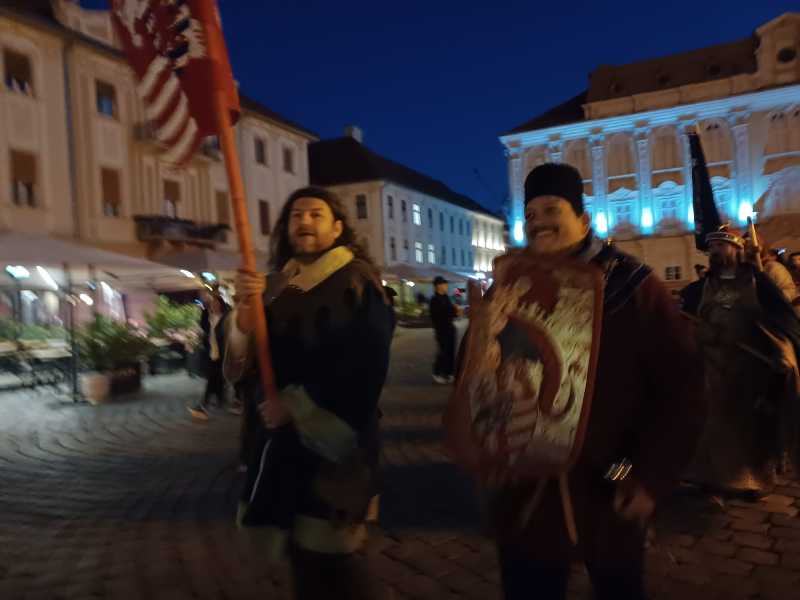
The Royal Festivities are scheduled for Saturday and Sunday, when medieval encampments will come to life and workshops dedicated to blacksmithing, royal coin minting, luxury textile weaving, pottery, medieval lighting objects, leatherworking and historical archery will open to the public.
At lunchtime, the royal cooks will compete to prepare the finest dishes for the king and his guests, offering visitors a journey through the history of medieval gastronomy.
Other events will evoke the atmosphere of the period, including competitions between noble houses, armoured duels with swords and shields, and an exploration of the world of linen textiles, examining the production, use and culture of luxury fabrics in the Late Middle Ages.
The Peregrinii ensemble will bring medieval music, while the programme will also feature 'The Triumph of Light: The Culture of Medieval Lighting Objects', along with medieval songs and farces. At dinnertime, the grand royal banquet will begin - the king will announce the establishment of the Order of the Dragon and invest its first knights. Delicacies inspired by medieval gastronomy will be served, accompanied by music and courtly dancing. The winners of the tournament and the kingdom's bravest noble house will be announced. Ottoman envoys will also be received, alongside a mysterious traveller described as a master of serpents.
On Sunday, at 15:30, the participating groups will gather for the festival's closing ceremony. Knights will lower their banners, craftsmen will pack away their tools, and the gates of the medieval stronghold will close on another chapter of history, leaving its stories with visitors until the next gathering.
Huniade Castle occupies a site closely connected with Timisoara's medieval past.
In the early 14th century, Charles Robert of Anjou visited the fortress in 1307 and ordered the construction of a royal palace on the site of the present-day Huniade Castle. During a period of feudal anarchy, he moved his court and the capital of the Kingdom of Hungary to Timisoara.
In 1552, the fortress was conquered by the Ottoman Empire under Ahmed Pasha and became the centre of an Ottoman administrative province, or pashalik, ushering in a long period of Ottoman rule that lasted until 1716.
October marks a turning point in Timisoara's history. On 18 October 1716, 310 years ago, Habsburg troops led by Prince Eugene of Savoy liberated the city from Ottoman rule.
The event marked the end of Timisoara's period under Ottoman administration and the beginning of its transformation towards Western European cultural and political influences and the ideals of the Enlightenment. AGERPRES (RO - writing by: Otilia Halunga; EN - writing by: Simona Iacob)
- Category: English
- Date: 2026-10-17 15:18:02
- Foto: Otilia Halunga/AGERPRES