
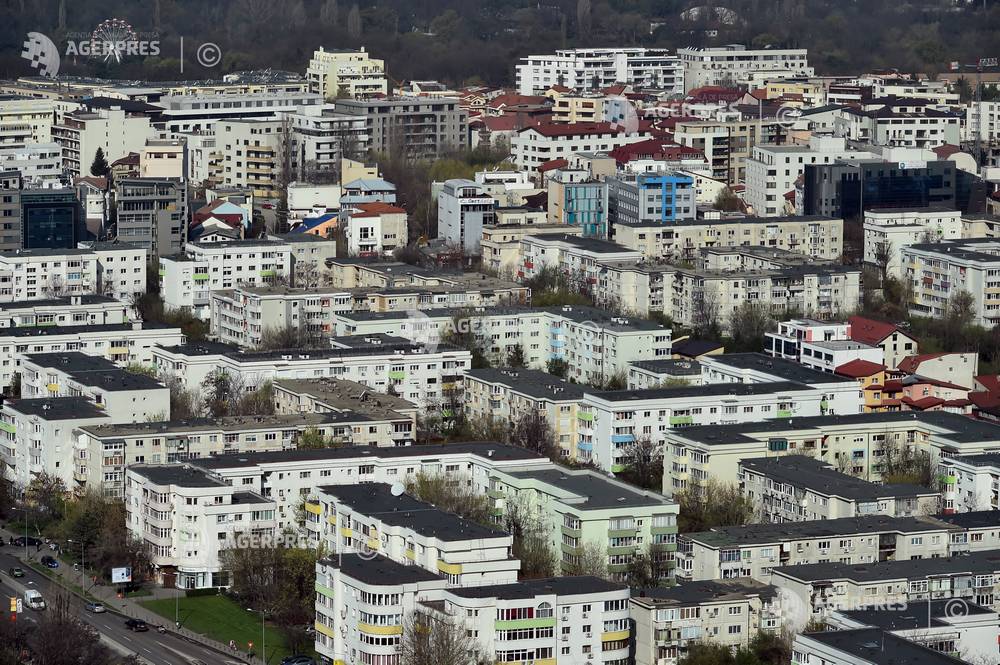
Romania's capital ranks last among European cities that have transitioned from fossil fuel-based heating to sustainable heating systems, according to a new report by Greenpeace Central and Eastern Europe (CEE) released on Tuesday.
Bucharest ranks alongside Athens and Rome due to its high dependence on gas, the lack of an integrated strategy, and the slow pace of thermal retrofitting, the study's authors note.
At the opposite end of the spectrum, Stockholm, Paris, and Vienna are the most advanced in the transition to fossil-fuel-free heating systems, bringing direct benefits to citizens.
In this context, Greenpeace calls for political, regulatory, and financial support from the European Union (EU) and national governments to accelerate the transition to renewable heating solutions at the local level.
'The report is being released as EU policymakers debate Europe's energy future and the threat of rising prices looms once again ahead of the heating season. Leading the rankings, Stockholm, Paris, and Vienna stand out for their clear long-term plans, significant investments in district heating networks, and social protection measures. Copenhagen and Amsterdam are on the right track, showing visible progress in the transition to more sustainable heating systems. In the middle tier—Budapest, Prague, Berlin, Warsaw, and Brussels—the situation varies from city to city, yet all are still navigating an incomplete transition process. At the bottom of the rankings, Bucharest possesses an extensive district heating network and support programs for vulnerable households; however, the system currently performs poorly, and the transition to a fossil-fuel-free system is far from complete. Significant investments in rehabilitating and modernizing the network are planned and backed by secured funding. Nevertheless, the system remains heavily reliant on fossil fuels and faces substantial heat losses and efficiency issues,' the study notes.
According to the cited source, alongside the risks stemming from gas dependency, the report also highlights the tangible benefits of investments in 'green' projects. For instance, in Paris, Vienna, and Madrid, projects involving heat pumps, insulation, and solar energy have contributed to significantly lower energy bills, while in Berlin and Amsterdam, 'power-to-heat' plants are helping cities better withstand energy price fluctuations.
At the same time, in Warsaw, the closure of gas-fired power plants led to a significant reduction in nitrogen oxide (NOx) and particulate matter (PM) emissions.
The authors of the expert report point out that the greatest challenge of the transition is no longer setting ambitious goals, but putting them into practice.
'To phase out fossil-fuel heating without placing the costs of the transition on citizens' shoulders, cities need clear timelines for achieving this transition, limits on new investments in gas-based projects, and the strategic use of available funds. European funds such as the Modernisation Fund and the Social Climate Fund can support home renovations and energy efficiency improvements, as well as provide assistance to households affected by energy poverty,' the document notes.
The report titled 'Gas-free cities? European ranking of the district heating transition - A ranking of 15 European cities based on the phase-out of fossil fuel-based heating, infrastructure, project implementation, and social equity' was produced by independent energy and climate consultant Mehmet Boruhan Bulut. AGERPRES (RO - writing by: Daniel Badea; EN - writing by: Catalin Cristian Trandafir)
- Category: English
- Date: 2026-10-06 15:18:52
- Foto: Silviu MATEI / AGERPRES Photo