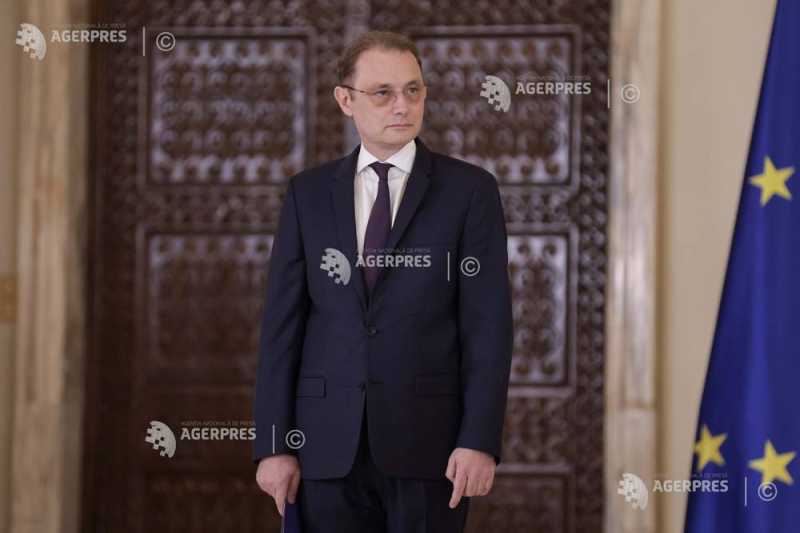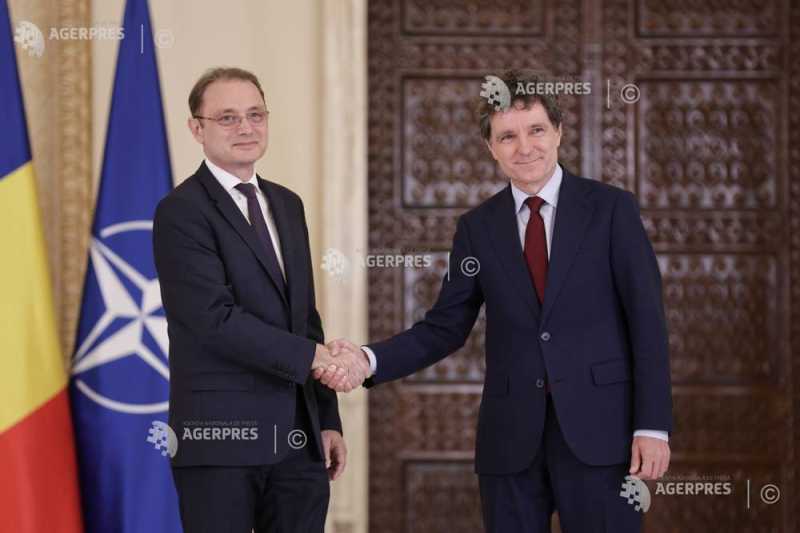


President Nicusor Dan stressed on Tuesday the importance of knowing history at a time when historical values and realities have increasingly come under scrutiny.
Speaking at the event 'The Holocaust: A Testimony for Young People,' Nicusor Dan drew attention to the risk of blaming a minority for the weaknesses and shortcomings of society.
The president said the event organised at Cotroceni Palace marked Romania's National Holocaust Remembrance Day (October 9), as well as the third anniversary of the October 7 Hamas attacks against Israel.
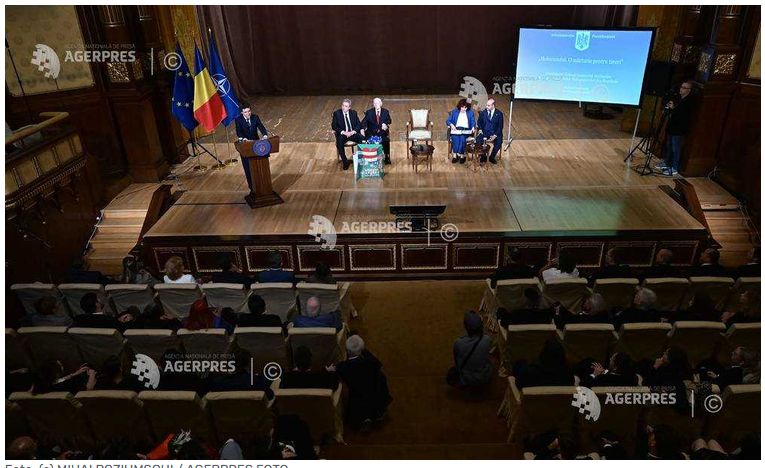
'It is important to know history and to take responsibility for history. What I can remark is that, just as many values are being called into question, historical realities are also being called into question. That is precisely why it is important for them to be taught in schools, and it is important for each of us, and for society, to turn to specialists when dealing with history. And it is important for people who bear witness to times that do not do us credit to come before us and give this testimony,' he said.
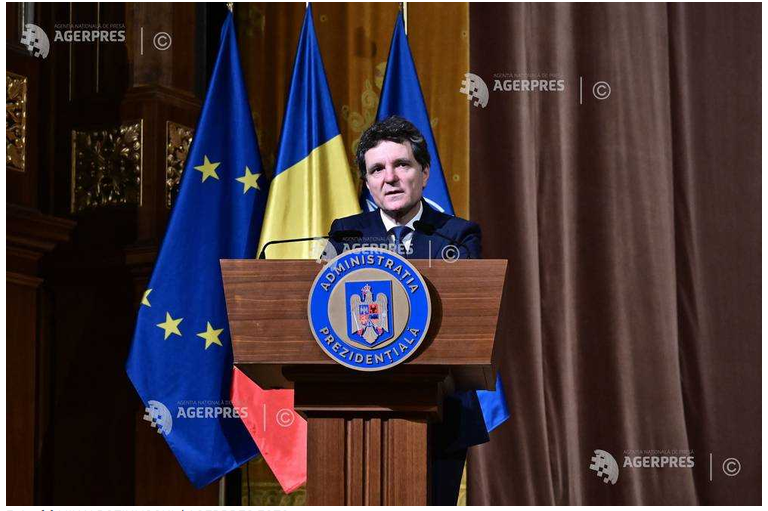
Nicusor Dan highlighted the importance of knowing the historical truth at a time when there is still a temptation to blame others for one's own weaknesses.
'I believe it is a matter of taking responsibility, because there is always a temptation, both for individuals and for society, to blame someone else. And who can be blamed, if we are talking about a society, other than a member of a minority? That is the temptation, to hide our weaknesses and shortcomings. And so, everyone who takes responsibility, who respects both the past and the present and values, must be present in society and tell that truth. Because otherwise we return precisely to those times when justifying the blame placed on others led us to the atrocities we are talking about,' he said.
The event at Cotroceni Palace was attended by students from two middle schools and 11 high schools, as well as students from four universities, teachers, researchers and historians.
They heard the testimony of 96-year-old Holocaust survivor Otto Fulop. At just 13 years of age, he was deported together with his family and subsequently sent to the Auschwitz-Birkenau, Melk, Mauthausen and Gunskirchen Nazi camps. He recalled the moment when he arrived in Košice on the train that would later take him to the Auschwitz camp.
'From Košice, the train set off. I had no idea about Auschwitz, about that word. In Kraków, I saw a little girl through the window of the carriage, a window that was sealed shut. I saw her and asked myself: 'Why am I here and you are free? What have I done?' The only thing I was guilty of was being Jewish. That was my guilt, and no other. From Kraków, the train set off for Birkenau-Auschwitz. (...) At Auschwitz, we were selected: one to the left, one to the right. I was not fit for work, but I did not even look at what the German officer was showing us. I followed my father. I survived, by a miracle of God's grace,' he said.
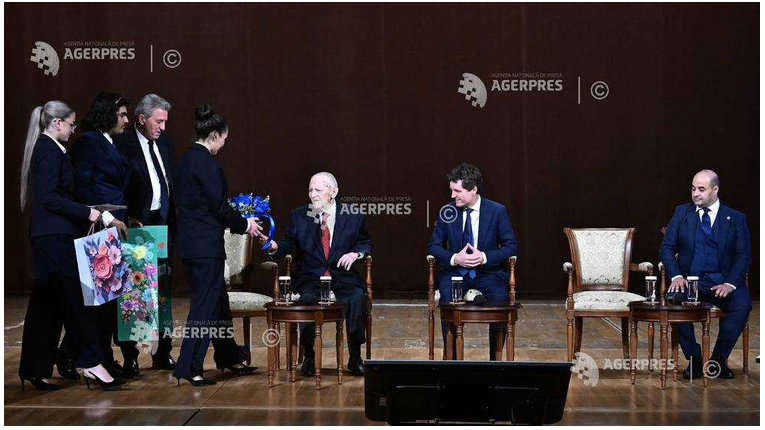
Otto Fulop spent 240 days at Auschwitz 'in the shadow of the crematoria and gas chambers.'
'At Birkenau, it was hell on earth: (...) the selections, the food, the beatings, disease and suicide. There was no other way out. Periodically, they would come and select us. They selected those who were fit for work, to be sent to Germany. But instead of work, the destination was the crematorium. The gas chamber and the crematorium,' he recalled.
Otto Fulop also described the moment he was liberated from Gunskirchen, a concentration camp where he survived epidemic typhus.
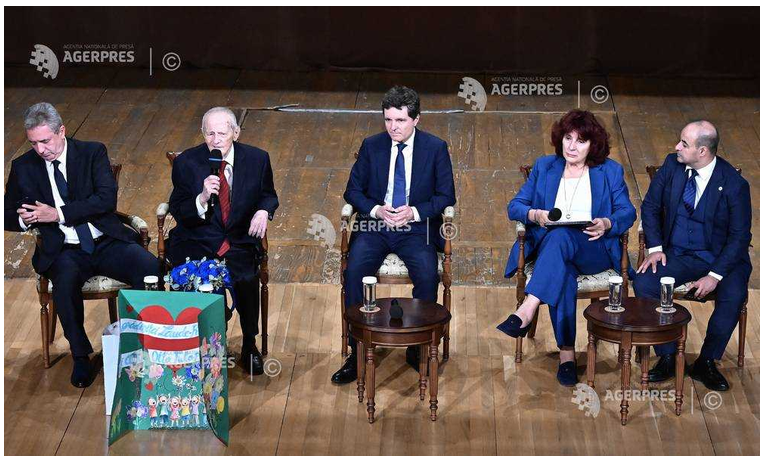
'One evening, after about two weeks, I heard gunshots. The German guards fled, they vanished. (...) I cannot describe it - I am a history teacher, not a poet - and I cannot describe what freedom meant, when I escaped slavery. There is nothing more precious than freedom,' he told the audience.
Tova Ben Nun-Cherbis, executive president and founder of the Lauder-Reut Foundation, pointed to the importance of knowing history in order to prevent new tragedies.

'We have a duty to know our history, to take responsibility for the past and to condemn the crimes and ideologies that made the Holocaust possible, in order to build a Romania where such tragedies can never happen again,' she cautioned. AGERPRES (RO - writing by: Irinela Visan; EN - writing by: Simona Klodnischi)
- Category: English
- Date: 2026-10-06 18:36:14
- Foto: Mihai POZIUMSCHI / AGERPRES Photo