
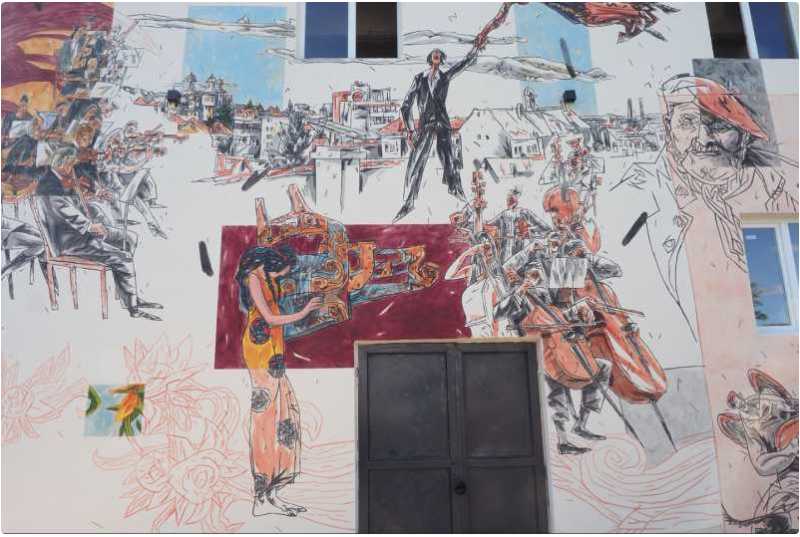
A 500-square-metre mural has transformed the former mill that now houses Zalau's 'Moara Artistilor' Cultural Centre into a vast visual story about Don Quixote, the human condition and the great landmarks of art. Painted by József Ottó Szatmári, the work was inaugurated on Monday at an event organised by the Pro Teatru Association with support from the Salaj County Centre for Culture and Arts.
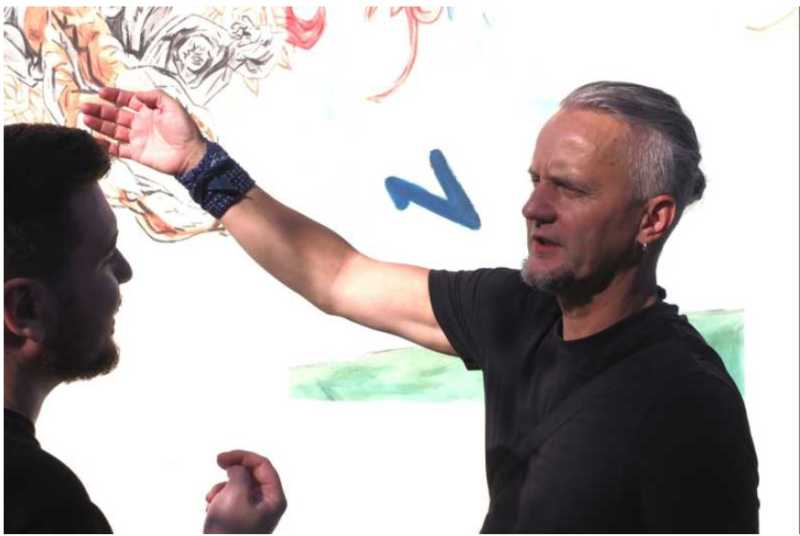
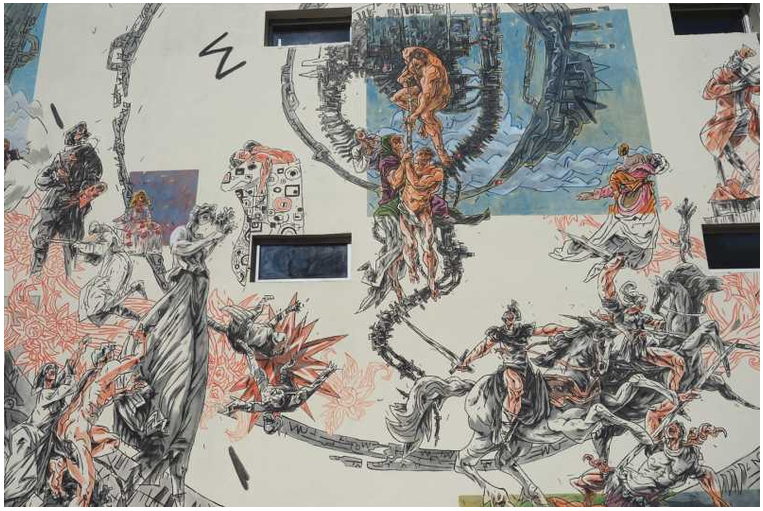
The mural's starting point was the building itself - once a mill - and the idea of 'fighting windmills,' a metaphor Szatmári sees as perfectly suited to artists. 'What I was told should appear on this wall was the story of Don Quixote, because it's a former mill. On the other hand, Don Quixote's story is also an allegory of actors and artists fighting 'windmills'. Beyond that, I was very lucky to be given free rein to paint what I wanted and how I wanted,' he told AGERPRES.
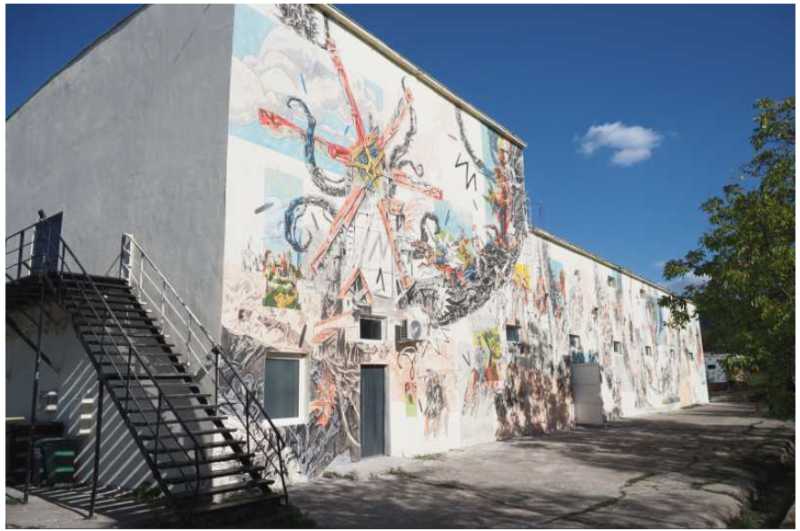
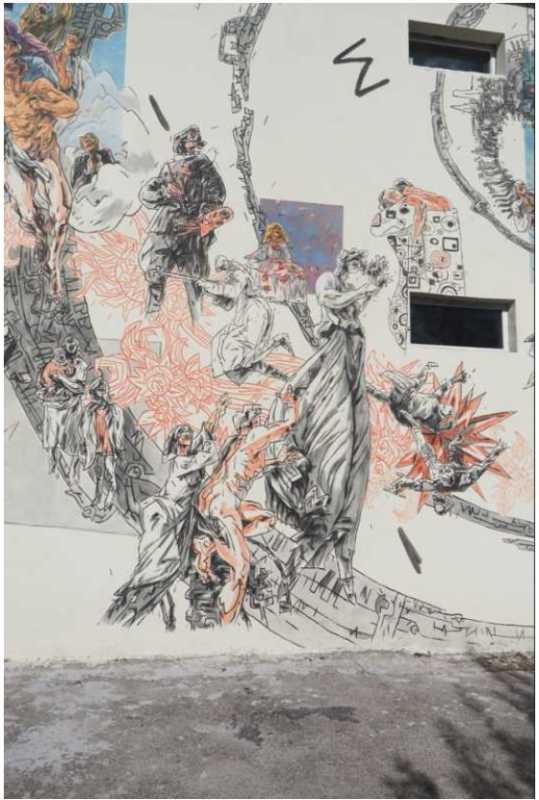
What emerged is a wall where references from art history meet characters, symbols and even landmarks from Zalau. At its core, Szatmári says, the mural speaks about people searching for another path - and about the desire to do things differently. 'Largely, this wall is about the human condition, with everything that comes with it. In fact, it's a kind of struggle to do better and differently than the rest of us,' he explained.
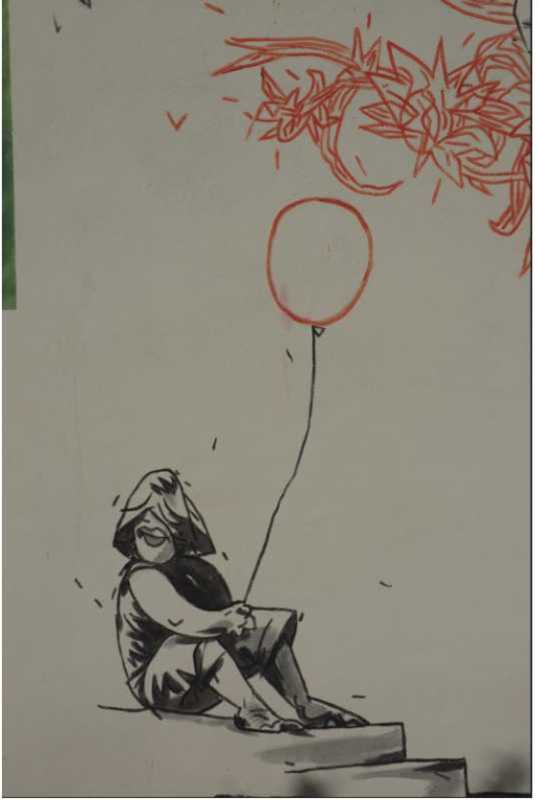
Across the mural's surface appear reinterpretations of worlds associated with Michelangelo, Gustav Klimt, Corneliu Baba, Nicolae Grigorescu, Diego Velázquez, Marc Chagall and Banksy. Iconic Zalau buildings also find their place in the composition, turning the mural into both a journey through art history and a dialogue with the city that hosts it.
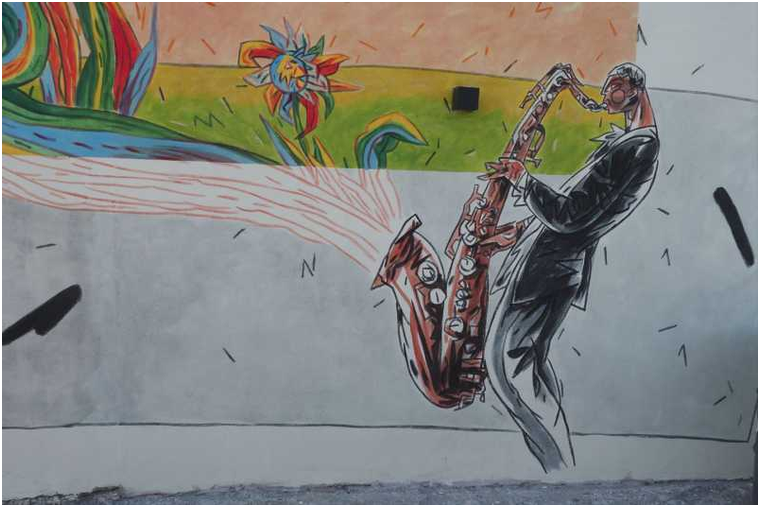
A special touch is a verse by the Persian poet Hafiz, which Szatmári interprets as a reflection on the artist's role and his relationship with his work. 'I was inspired by a splendid verse by Hafiz, which says so beautifully: 'I'm a hole in a flute that the Christ's breath moves through. Pay attention to the music, not to me.' So I am only a hole that produces a single sound, and in fact it's the music that is important, not me,' he said.
The mural did not appear overnight. The project stretched over nearly two years, unfolding in several stages from sketching the composition to applying colour. 'It's first of all work that lasted almost two years. It was done in two stages and more will follow. Last year, in the first stage, under an AFCN project, the painting was sketched, and then in the second stage, this year, colour was added,' said Darius Prodan of the Pro Teatru Association.
The idea of a large mural in Zalau had been around for some time, and the transformation of the former mill into a cultural centre offered the perfect setting. 'We always wanted a large mural in Zalau, and when we started working on this Cultural Centre, we said this would be the place - and we hope it opens the way for a city that hosts more such murals, not necessarily by the same artist,' Prodan added.
Choosing Szatmári also had a local dimension: he is originally from Zalau and works across visual fields that go beyond traditional painting. For organisers, the mural is more than an artistic intervention - it is part of the broader process of turning an industrial building into a community space.
'It practically gives a face to the Cultural Centre we are building, where we have the performance hall, the art gallery and the summer theatre,' Prodan said.
Moara Artistilor (The Artists' Mill) is conceived as a multifunctional space, the result of modernising and repurposing the former Communist Party mill. Plans include cultural facilities as well as areas for sports and leisure, inspired by models of industrial spaces reclaimed for community and culture. 'We're trying to go into auxiliary areas too, not just culture, but mainly it will be an important cultural centre, following the model in Berlin, where industrial spaces gain a new meaning,' Prodan explained.
And the new mural - with its more than 500 square metres - is one of the most visible steps in giving that new meaning shape. As of Monday, the wall of the former mill is no longer just an industrial façade. It has become a space where Don Quixote meets great names of art, buildings from Zalau and a meditation on the artist's place in his own creation.
A wall that, like the cultural centre it now clothes, tries to say that a building can gain a new life when the community finds a new story for it. AGERPRES (RO - writing by: Sebastian Olaru; EN - writing by: Simona Klodnischi)
- Category: English
- Date: 2026-09-28 19:51:18
- Foto: Sebastian OLARU / AGERPRES Photo