
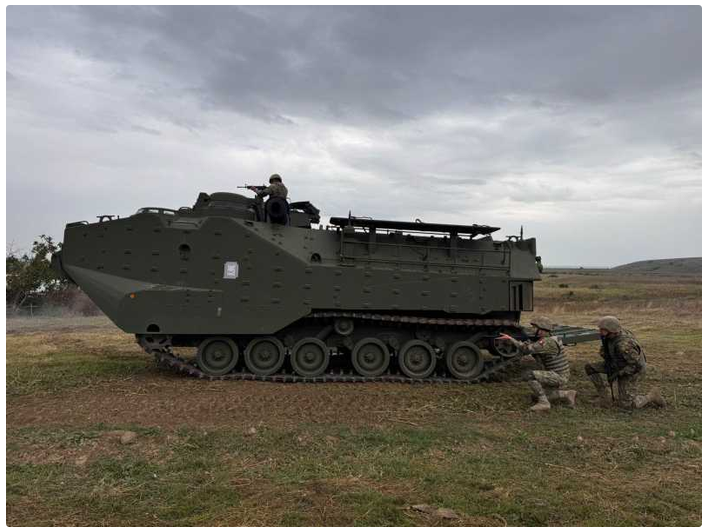
The United States and Romania have celebrated the delivery of the first nine Amphibious Assault Vehicles (AAVs) to Romania, marking a major milestone in U.S.-Romanian defense cooperation and bolstering NATO security on the Black Sea coast and along the eastern flank of the alliance, the U.S. Embassy in Bucharest reported on Monday.
The arrival of the AAVs, military vehicles designed to carry troops and equipment directly from naval ships during amphibious combat in Babadag, Tulcea County, initiates specialized technical training to bring the new capability into active service.
Designed for demanding terrain and complex missions, the AAVs provide critical mobility and adaptability particularly well suited for operations the Danube Delta and the Black Sea coast.
'Deterrence is built on capability, but Alliance is built on trust. Today, the United States and Romania demonstrate both,' said U.S. Ambassador Darryl Nirenberg during the official handover ceremony.
Ambassador Nirenberg highlighted the important role of the United States Marine Corps in coordinating the logistics and providing operational expertise for long-term vehicle maintenance and deployment. He also commended the leadership of the Romanian government, military officials, and the personnel of the 307th Marine Infantry Regiment 'Heracleea' tasked with operating the fleet.
The delivery of the AAVs represents a long-term investment in Romania's national defense infrastructure, enhancing the shared ability of the United States and Romania to respond to the demands of evolving security challenges across NATO's Eastern Flank.
The Assault Amphibious Vehicle, AAV7A1 is designed to carry up to 21 combat-loaded Marines and equipment from ocean naval vessels to hostile shores, and their combination of marine water jets and heavy land tracks ensures that troops remain protected while transitioning from rough surf to inland terrain.
Evolved from World War II-era 'Alligator' landing vehicles, the AAV has earned a reputation for rugged durability and superior mobility for transporting troops and cargo from ship to shore, according to the embassy. AGERPRES (RO - editing by: Oana Ghita; EN - editing by: Corneliu-Aurelian Colceriu)
- Category: English
- Date: 2026-09-28 19:01:33
- Foto: U.S. Embassy Bucharest / Facebook