

Prime Minister-designate Siegfried Muresan said on Wednesday that his preference, based on 'what is good for Romania', is for the country to have a single government from now until 2028.
'We have not discussed this. Indeed, in the spring I said that we, the National Liberal Party, would no longer be in the same government with PSD because we saw that it does not work. PNL and PSD cannot govern together, but we can govern one after the other. Four months have passed since then and there is now less time until the next parliamentary elections, about two years. As time passes, the mandate gets shorter, and if we were to divide it as well, we would contribute to increasing political instability,' Muresan said when asked whether he would propose a rotation in government to PSD.
He pointed out that Romania has had 13 prime ministers over the past 20 years, nine of them in the past decade.
'Government instability in Romania has increased over the past 10 years, and I believe Romania would benefit from political stability. A prime minister who begins his term by telling civil society, investors, the private sector, NGOs and our European and transatlantic partners, 'You know, I have started my term, but I have to leave in a few months,' is not a prime minister who can achieve the most for Romania. The established practice is that when you are invested, you govern until the end of the parliamentary term. I am prepared to do that,' the prime minister-designate said.
He added that if the option of a rotation emerges in talks with PSD and the other parties, it will be discussed.
'But it is clear that Romania has only two years left until the scheduled elections and, after already having two governments during this parliamentary term, it would be desirable to have just one more until 2028. (...) My preference, based on what is good for Romania, is to have a single government from now until 2028, but obviously we can discuss this with the other parties. What we rule out is PNL and PSD governing together, but we do not rule out the parties governing one after the other. What will be essential for us in PNL, however, is the agenda on which Romania is governed, and that is a criterion our party will uphold now and in the future. That is also why we did not vote in Parliament for the candidate put forward this summer, who did not have a serious and responsible agenda,' Muresan said.
Asked whether he saw signs of openness from the Social Democrats following discussions between PNL and PSD leaders, Muresan said talks with PSD were proceeding according to plan.
'This is exactly the plan we had from the beginning. I said from the outset that I would talk to PSD after talking to PNL, USR, UDMR and the national minorities. First the partners, first the parties that officially supported you, and then the other political actors. From my point of view, we are exactly on schedule. I am grateful for the telephone conversation I had with Mr Grindeanu and I look forward to meeting him for concrete, serious discussions,' Muresan said.
The prime minister-designate argued that the current parliamentary deadlock stemmed partly from PSD having campaigned in the last parliamentary elections as a pro-European party and subsequently formed a pro-European government with PNL, USR and UDMR, before beginning to cooperate with AUR [the Alliance for the Union of Romanians].
'PSD claims to be a pro-European party, but do not ask me now to argue that Emergency Ordinance 13, for example, was a pro-European measure. The pro-European character of a politician and a party is always demonstrated through actions, not statements. That is the test by which we will know whether we can call PSD a pro-European party or merely the junior partner of the anti-European party called AUR,' Muresan said.
In his view, PSD's actions in recent months have created 'a disconnect with what people want'.
'People in Romania want modernisation and reform. Romanians are pro-European, which is why over the past 20 years they have consistently elected pro-European presidents who sought to modernise and reform the state, despite the disappointments associated with those presidencies. People have consistently wanted a pro-European direction. We therefore now have this disconnect between what people want and what PSD and AUR have done in the Romanian Parliament. PSD can correct these mistakes, and it is currently in a much more fragile position than it was six months ago, when it decided to bring down the government led by Ilie Bolojan. We can see that PSD has fallen in the polls and that its attempt to control Romania by imposing a new government has failed,' Muresan said.
He added that he could promise the Social Democrats 'fair treatment and a governing programme that is good for Romania and good for the people, and they will have to make their choice.'AGERPRES (RO - writing by: Alina Novaceanu; EN - writing by: Simona Iacob)
Muresan favours single government until 2028 over rotation

Conţinutul website-ului www.agerpres.ro este destinat exclusiv informării publice. Toate informaţiile publicate pe acest site de către AGERPRES sunt protejate de dispoziţiile legale incidente. Sunt interzise copierea, reproducerea, recompilarea, modificarea, precum şi orice modalitate de exploatare a conţinutului acestui website. Informaţiile transmise pe www.agerpres.ro pot fi preluate, în conformitate cu legislaţia aplicabilă, în limita a 500 de semne. Detalii în secţiunea Condiţii de utilizare. Dacă sunteţi interesaţi de preluarea ştirilor AGERPRES, vă rugăm să contactaţi Direcţia Marketing - marketing@agerpres.ro.
Alte știri din categorie

Jonathan Coe, Maja Lunde and Matt Haig to attend NOD Festival in Brasov
Writers Jonathan Coe, Maja Lunde and Matt Haig will be in Brasov this weekend for NOD Festival, an event dedicated to copyright and dialogue between literature, theatre and film, bringing together authors, publishers, translators, literary agents, creative-industry professionals and the general public. Now in its second edition, the festival will take place fr

Romania and Bavaria seek to develop joint security and defence industry projects
Romania and Bavaria are seeking to develop cooperation in the security and defence industry through joint development and production projects, technology transfers, investment and the integration of companies into European supply chains, representatives of the Romanian-German Chamber of Commerce and Industry (AHK Romania) inform on Wednesday. According to a pr

US-Romanian cooperation on combating smuggling
A team of employees from the Romanian Customs Authority underwent five days of training at the Port of Miami with US specialists in combating smuggling and the trafficking of dangerous goods. The course was organised by the Defense Threat Reduction Agency (DTRA), in cooperation with US Customs and Border Protection (CBP), the US Embassy in Bucharest said in a press release s
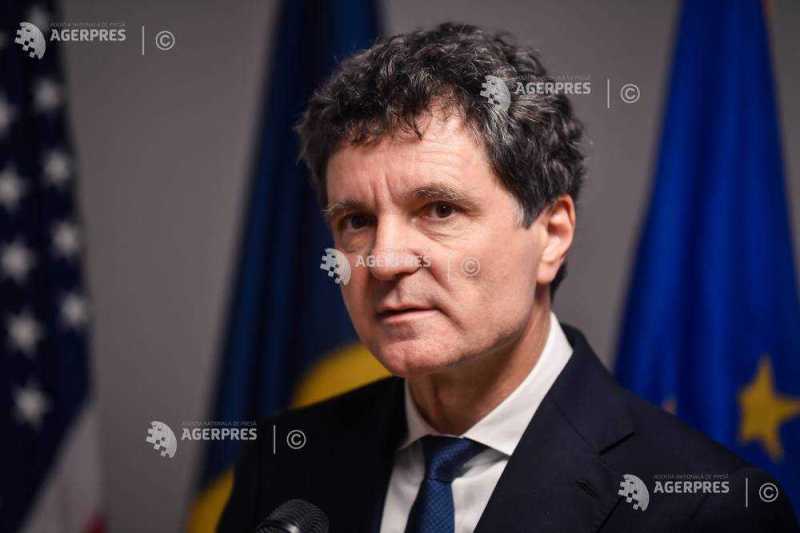
President Dan says Romania improved its response to drone threat, but is not fully prepared
Romania is still not fully prepared for the threat posed by drones, although it has improved its response capabilities, President Nicusor Dan said in an interview with journalist Jim Sciutto for CNN International's 'The Brief with Jim Sciutto' broadcast on Tuesday evening. When asked whether Romania's response to that threat was sufficient, Pre
Specialists from five countries to attend Romania's first applied storytelling conference
Specialists from Spain, Germany, Greece, England and Hungary will take part in the first 'Afostodata'/'Ocen Upon a Time' Conference on Fairy Tales and Applied Storytelling, which will be held in early October in Sfantu Gheorghe, according to a press release from the organisers. The event focuses on using stories as a tool in education, psycholo
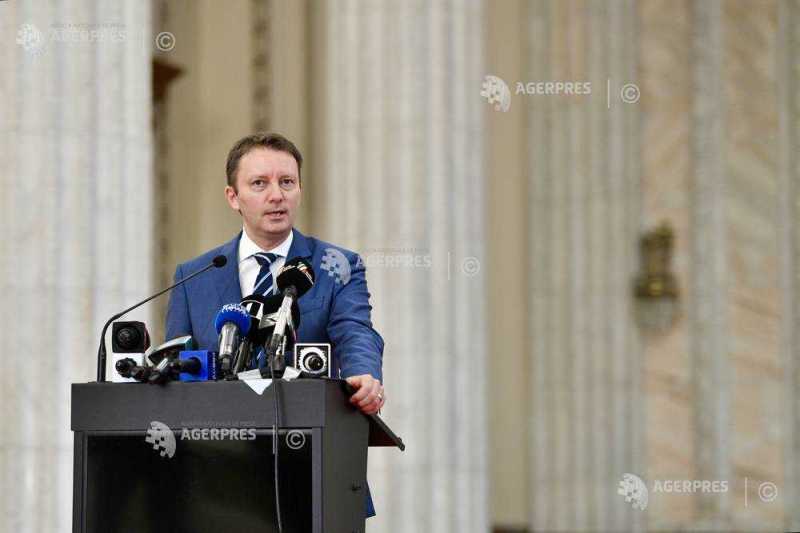
PM-designate Muresan: I will propose gov't with ambitious, pro-European agenda; test of truth for PSD
Prime Minister-designate Siegfried Muresan said at Parliament on Wednesday that the governing programme he will propose, together with the list of ministers in his Cabinet, will seek to continue the process of modernising and reforming Romania and will have a clearly pro-European nature. He said that the vote on the future Government would be a 'test of tr
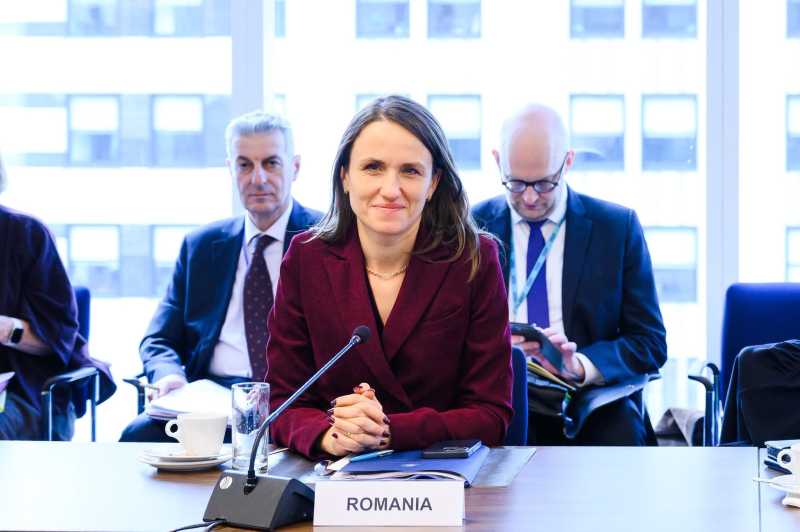
Black Sea security, energy security and US partnership on ForMin Toiu's UN General Assembly agenda
The security of the Black Sea region, the energy security and the strategic partnership with the US were on the agenda of interim Foreign Affairs Minister Oana Toiu, in the context of her participation in the United Nations General Assembly (UNGA) from 21 to 25 September, the Ministry of Foreign Affairs (MAE) said. According to the quoted source, Oana Toiu add
State Adviser Frasineanu: Romania must be competitive in the electricity market, both economically and industrially
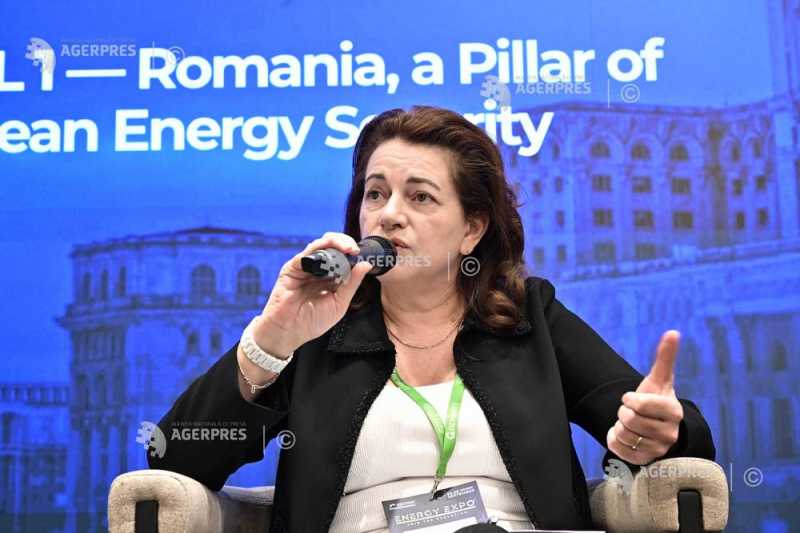
Romania must accelerate its competitiveness in the electricity market, both economically and industrially, Mihaela Frasineanu, state adviser with the Prime Minister's Chancellery, told an energy conference on Wednesday. 'We have seen this year, more than ever, the overlap between climate change and geopolitical instability and I believe that we are sti