

Interim Prime Minister Ilie Bolojan said Romania urgently needs a government capable of consolidating the progress made so far, continuing the shift in the economic model from consumption towards investment, keeping public spending under control and collecting revenue efficiently so that the economy can grow naturally, on sound foundations, towards genuine prosperity.
'We are at an important point in Romania's development. We changed direction last year, and the measures taken so far have worked. The deficit has fallen this year as well. (...) In the first seven months of 2026, it was 37% lower than in the same period of 2025. Every percentage point of reduction brings us closer to a balance in which we consume what we produce, not what we borrow,' Bolojan wrote on Facebook on Monday.
He said government personnel expenditure has fallen, while investment has been maintained with the support of European funds.
'In the first seven months, public investment reached 76 billion lei, almost 15 billion lei more than last year. This is the right direction: we are reducing expenditure that cannot be sustained and protecting investment that develops Romania,' Bolojan said.
He acknowledged that the budgetary adjustment has also resulted in an economic contraction and stressed the collective effort made by society.
'Yes, this correction has also had a contractionary effect on the economy. Consumption has fallen by the part that was financed through debt, with borrowed money. The economy has lost the growth - in fact, illusory growth - generated by this debt-financed consumption. It was a collective effort by society, for which I thank Romanians,' he said.
Bolojan stressed that the current interim government arrangement should not continue, as the powers available to an interim government are limited.
'We managed to complete the NRRP, maintain confidence in Romania through two rating assessments and navigate overlapping domestic and external crises. But the instruments available to an interim government are limited. Moreover, political uncertainty and the failure to adopt the public-sector pay law, because of PSD's irresponsibility, are creating doubts about whether spending can remain under control in the years ahead. From this point on, there are two possible paths. Which one we take will depend on the future government. Whoever comes to power will have to answer the question: how can we reduce the budget deficit as a share of GDP in 2027 (5.3%) and in 2028, given that NRRP grants will no longer be available, defence spending will not be able to fall but will instead increase, while wages and pensions will have to be indexed and will not decline as a share of GDP? This comes at a time when interest costs will remain a challenge in the years ahead, after we increased our debt levels too rapidly during the period of large deficits,' Bolojan explained.
The interim prime minister also warned that the next government will have to continue structural reforms.
'If it fails to continue the structural reforms or, worse still, gives in to the populist temptation to turn on the taps of money and consumption, we will find ourselves in an even worse situation than before, because no lender will believe that we are capable of changing. Romania must avoid that scenario. We urgently need a government that consolidates what we have achieved so far, continues the shift in the economic model from consumption to investment, keeps public spending under control and collects revenue efficiently, so that the economy can grow naturally, on sound foundations, towards genuine prosperity,' Bolojan said.
According to the interim prime minister, such a government can only be led by 'a responsible prime minister who fully understands the situation, a prime minister willing to make the constant and often unpopular effort to do what is necessary, not what sounds good'.
'A prime minister willing to work for the country, with his resignation on the table if necessary, and who has a credible governing programme,' Bolojan concluded. AGERPRES (RO - writing by: Daniel Florea; EN - writing by: Simona Iacob)
Interim PM Bolojan: Romania must resist populist spending, shift economy from consumption to investment

Conţinutul website-ului www.agerpres.ro este destinat exclusiv informării publice. Toate informaţiile publicate pe acest site de către AGERPRES sunt protejate de dispoziţiile legale incidente. Sunt interzise copierea, reproducerea, recompilarea, modificarea, precum şi orice modalitate de exploatare a conţinutului acestui website. Informaţiile transmise pe www.agerpres.ro pot fi preluate, în conformitate cu legislaţia aplicabilă, în limita a 500 de semne. Detalii în secţiunea Condiţii de utilizare. Dacă sunteţi interesaţi de preluarea ştirilor AGERPRES, vă rugăm să contactaţi Direcţia Marketing - marketing@agerpres.ro.
Alte știri din categorie
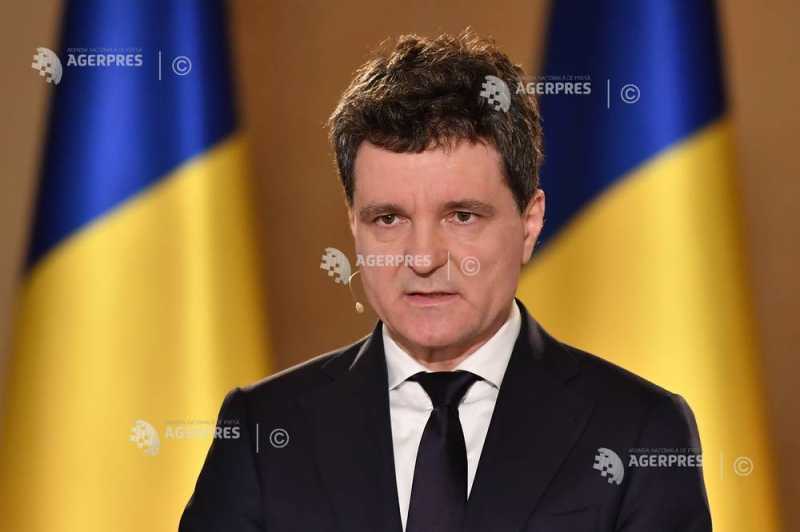
President Nicușor Dan to attend the High-Level Week of the UN General Assembly
President Nicușor Dan has several meetings and events scheduled in New York between 20 and 23 September, as part of his participation in the 81st session of the United Nations General Assembly, according to the agenda published by the Presidential Administration. The President is scheduled to deliver Romania's national statement during the High-Level Week of the session

President Dan says Foreign Ministry investigating Orlivka school case
President Nicusor Dan said on Friday that Romania's Foreign Ministry has opened an investigation into the case of the school in Orlivka, Odesa region, where a Year 1 class taught in Romanian was closed. Speaking at a news conference held after the Carpathian Integration Initiative 'Carpathian 8' Summit, he said that 'remarkable progress has bee

Bolojan: We will try, within our possibilities and depending on our electoral weight, to form a Government
President of the National Liberal Party (PNL) Ilie Bolojan said on Friday that, although Siegfried Muresan's nomination for prime minister came three months late, the party would deal with the situation 'responsibly' and seek to form a Government based on its electoral weight. 'Yesterday, about 30 minutes beforehand, I learned from the piece of

Siegfried Muresan: We will start work on a government programme; beginning of next week - discussion with MPs
Prime Minister-designate Siegfried Muresan announced on Friday that he was starting work on the government programme together with the National Liberal Party (PNL), Save Romania Union (USR) and the Hungarian Democratic Union of Romania (UDMR), mentioning that he would present the priorities at the beginning of next week and, based on these, would hold an "extremely tran

CCIR's Daraban: The diaspora is not a sentimental issue but a chapter in the national economy
The experience gained by Romanians in the diaspora in competitive markets must be transformed into investment, jobs and exports, believes Mihai Daraban, President of the Chamber of Commerce and Industry of Romania (CCIR). According to a press release from the organisation sent to AGERPRES, the institution is strengthening its partnership with ROUNIT - Reunited
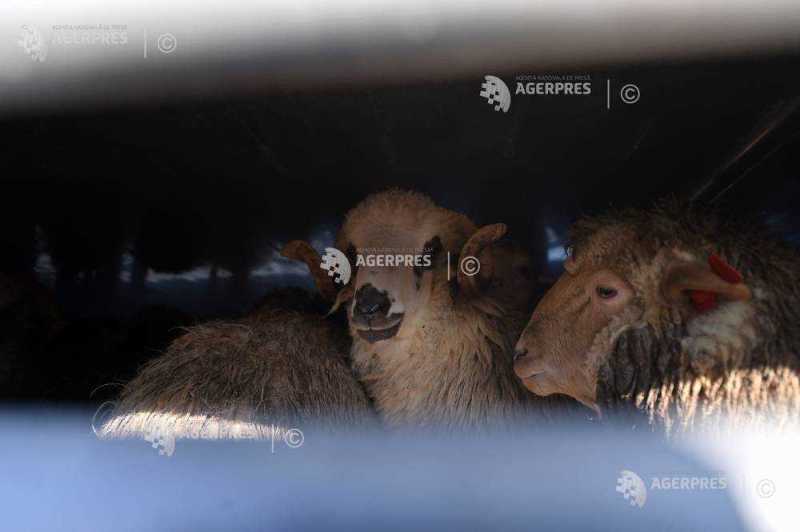
European Commission approves ANSVSA's Action Plan to unblock sheep and goat exports
The Action Plan of the National Veterinary Sanitary and Food Safety Authority (ANSVSA) for unblocking exports of sheep and goats has been approved by the European Commission, allowing exports of carcasses and products to resume under the differentiated vaccination scheme. According to an ANSVSA release sent to AGERPRES on Friday, the approved solution protects

Health Insurance House launches project on cross-border exchange of medical images, laboratory results, discharge reports
The National Health Insurance House (CNAS) announced on Friday the launch of the European project 'Romanian Medical Images, Laboratory Results and Discharge Reports' (RO-MI-LR-DR), for the cross-border exchange of medical images, laboratory results and discharge reports. The project is funded through the EU4Health programme, with the European Health an
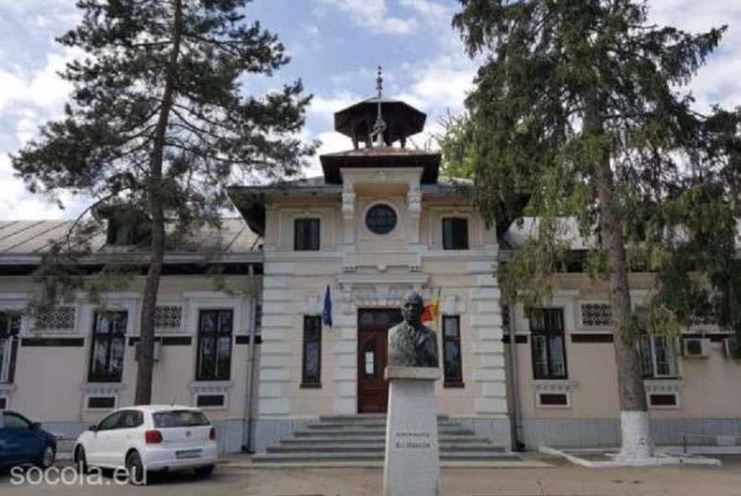
'Socola' Institute of Psychiatry in Iasi to hold new memory testing campaign at weekend
The 'Socola' Institute of Psychiatry in Iasi has announced that it will hold the third edition of its 'Memory Testing Campaign' on Saturday and Sunday, a campaign addressing people of all ages and aimed to identify individual risk factors that may predispose people to memory disorders, while also providing participants with specialist counselling.