
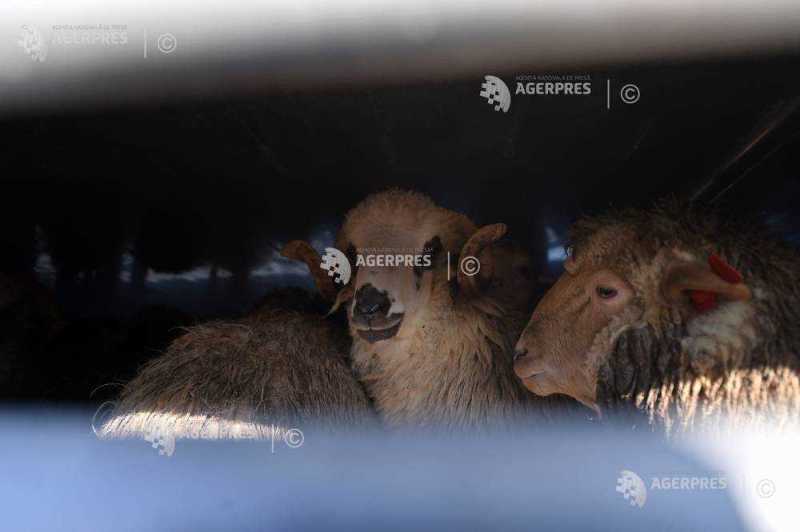
The Action Plan of the National Veterinary Sanitary and Food Safety Authority (ANSVSA) for unblocking exports of sheep and goats has been approved by the European Commission, allowing exports of carcasses and products to resume under the differentiated vaccination scheme.
According to an ANSVSA release sent to AGERPRES on Friday, the approved solution protects and does not affect in any way the exports of carcasses and milk products, due to the application of the complete immunization scheme exclusively in the two counties of Dobrogea.
Moreover, simultaneously with the approval of the plan, the ANSVSA secured six third-party export markets under conditions of vaccination in the complete scheme, by signing international treaties with Saudi Arabia, Jordan, Morocco, Tunisia, Israel and Libya.
The strategic document developed by the ANSVSA experts was approved, without amendments, by all 27 representatives of the EU member states, in the specialized Committee within the European Commission.
The ANSVSA representatives underscored that the approval of this plan represents an important step for the resumption of exports of sheep and goats from Romania and paves the way for the reassessment of the epidemiological status at national level.
Thus, the resumption of intra-community deliveries and to third countries will be carried out according to the following structural calendar: the adoption of a new official decision by the European Commission; the activation of trade agreements with non-EU states; the effective start of the national vaccination campaign - immunization in the field, an operation directly supported by the European Executive, which makes available to Romania, free of charge, a contingent of 1.3 million vaccine doses.
The national vaccination strategy validated by the EC will be applied differently, depending on the level of regional epidemiological risk.
In this regard, in the highest-risk area (Tulcea and Constanta counties), the full immunisation scheme will be implemented through the simultaneous administration of vaccines against Peste des Petits Ruminants (PPR) and Sheep and Goat Pox (SGP). From this special logistical area, the export will be made exclusively to non-EU countries that expressly accept imports from territories where vaccination is practised.
Moreover, in the rest of the country, the Plan provides exclusively for vaccination against Sheep and Goat Pox (SGP). 'This nuanced approach maintains the rest of the country with an official 'PMR-free' status, protecting traditional trade agreements and livestock supplies from unaffected areas,' the ANSVSA mentioned.
The ANSVSA reiterates that all 1.3 million doses of vaccine obtained from the European forum will be administered completely free of charge, without generating any expense for livestock farmers. Also, fair government compensation mechanisms remain fully active to support farmers directly affected by the outbreaks in the process of restocking their farms.
'Until the publication of the new European decision and the official start of vaccination, the territorial structures (DSVSA), in close collaboration with the Ministry of Internal Affairs, will intensify road and farm controls. ANSVSA firmly warns that clandestine animal movements and illegal trade directly undermine technical and diplomatic efforts and may block or delay the adoption of the new decision by the European Commission. Given the identification of recurring misinformation in the public space, ANSVA experts recommend that information on this subject be obtained from official and verified sources,' according to the release.
Official data show that, in 2026, approximately 19,000 sheep have been slaughtered so far, in full compliance with national and European regulations and to prevent the spread of PPR and SGP, representing 0.13% of the total estimated number of sheep nationwide.
At the same time, the ANSVSA 'would like to clarify once again that the action plan approved yesterday by the European Commission does not in any way affect the export of carcasses, milk or dairy products from Romania.'
Sheep farmers protested in Victory Square on Tuesday, with their main grievances relating to the management of PPR and SGP outbreaks and measures leading to the slaughter of animals, as well as the ban on sheep and goat exports because of PPR. AGERPRES (RO - writing by: Daniel Badea; EN - writing by: Rodica State)
- Category: English
- Date: 2026-09-18 12:59:13
- Foto: GRIGORE POPESCU / AGERPRES PHOTO