

Romania is paying for every month of political uncertainty through higher borrowing costs, delayed investment and postponed decisions, while facing the EU's highest inflation, one of the bloc's largest budget deficits and public debt nearing 60% of GDP, Romanian Association of Financial and Banking Analysts (AAFBR) President Flavius Valentin Jakubowicz said on Thursday.
Speaking at the AAFBR Annual Conference 2026, he warned that the economic model that brought Romania to its current situation - built on consumption, financed through deficits and fuelled by imports - has reached its limits and must be changed.
'The model that has brought Romania this far - built on consumption, financed through deficits and fuelled by imports - has reached its limit. This is not a personal opinion; it is what the data tell us. The real question today is not whether we change the model, but whether we change it by choice or through a crisis. Average consumption per Romanian has reached almost 94% of the European average, a significant achievement. But our productivity stands at only 78%. In other words, we consume almost like Western Europe while producing like an emerging economy. The difference is financed through borrowing,' Jakubowicz said.
He noted that Romania's economy is hovering between stagnation and recession, with inflation of around 11%, one of the EU's largest budget deficits and public debt approaching 60% of GDP.
'Three figures cannot be ignored. Economic growth was just 0.7% in 2025, and this year we are, at best, on the borderline between stagnation and recession. We have the highest inflation in the European Union - around 11% - and one of the largest deficits, at 9.3% of GDP in 2024. With major efforts, we hope to bring it down to around 6% this year. Public debt is approaching 60% of GDP, the only Maastricht criterion Romania still meets, but without adjustment it could rise to 67% or 68%. The European Commission has already warned that risks to the sustainability of Romania's public debt are high over the medium term, with government debt potentially climbing to around 90% of GDP by 2036,' he said.
Jakubowicz added that Europe itself is slowing, while Romania is borrowing at a faster pace and at higher costs than its economy is growing, with its sovereign rating remaining just one notch above non-investment grade.
'Europe itself is slowing. The euro area is expected to grow by only 0.8% this year. The favourable conditions Romania benefited from over the past two decades - cheap money and expanding markets - have disappeared precisely when we need them most. Economic growth of 2.5%-3% a year has reached its limits. Instead of generating lasting prosperity, it has translated into inflation and external deficits. We are borrowing more, and at higher costs, than our economy is growing,' he said.
The AAFBR president outlined five priorities for reshaping Romania's economic model, beginning with productivity.
'We are not here simply to list problems. We are here to discuss solutions. The shift must be from consumption to productivity, from deficits to investment and from low value-added activities to higher value-added ones. The first priority is productivity, not wages. The objective is not a low-cost economy, but a competitive one. Wages should grow alongside productivity, not ahead of it, which means investing in technology, technical education and workforce training, not just nominal pay rises,' he said.
The second priority is reindustrialisation, arguing that Romania has lost more industrial capacity over the past decade than any other EU member state.
'Convergence with Europe will not be won through statistics but in factories and exports. We have lost more industry in ten years than any other country in the European Union. This decline can be reversed only with predictable and competitive energy for industry,' Jakubowicz said.
He also called for prioritising investment over consumption and for a leaner, more efficient state administration, noting that Romania still has access to historic amounts of EU funding but risks losing nearly EUR 9 billion if it fails to absorb the money by the August 31 deadline.
Finally, he stressed that fiscal credibility and predictability are indispensable.
'Every month of political uncertainty costs us through higher interest rates, delayed investment and postponed decisions. Reforms must survive electoral cycles, and OECD accession should become the anchor that finally lowers Romania's cost of capital. We have everything we need - a market, talented people, a strategic position and unprecedented European funds. What we lack is the collective decision to use these resources together. We do not lack solutions; we lack the courage and patience to see them through. Reconfiguring this economic model cannot be postponed until a better moment because that moment will not come on its own,' Jakubowicz concluded. AGERPRES (RO - writing by: Oaba Tilica; EN - writing by: Simona Iacob)
AAFBR President Jakubowicz: Every month of political uncertainty means higher borrowing costs, delayed investment

Conţinutul website-ului www.agerpres.ro este destinat exclusiv informării publice. Toate informaţiile publicate pe acest site de către AGERPRES sunt protejate de dispoziţiile legale incidente. Sunt interzise copierea, reproducerea, recompilarea, modificarea, precum şi orice modalitate de exploatare a conţinutului acestui website. Informaţiile transmise pe www.agerpres.ro pot fi preluate, în conformitate cu legislaţia aplicabilă, în limita a 500 de semne. Detalii în secţiunea Condiţii de utilizare. Dacă sunteţi interesaţi de preluarea ştirilor AGERPRES, vă rugăm să contactaţi Direcţia Marketing - marketing@agerpres.ro.
Alte știri din categorie
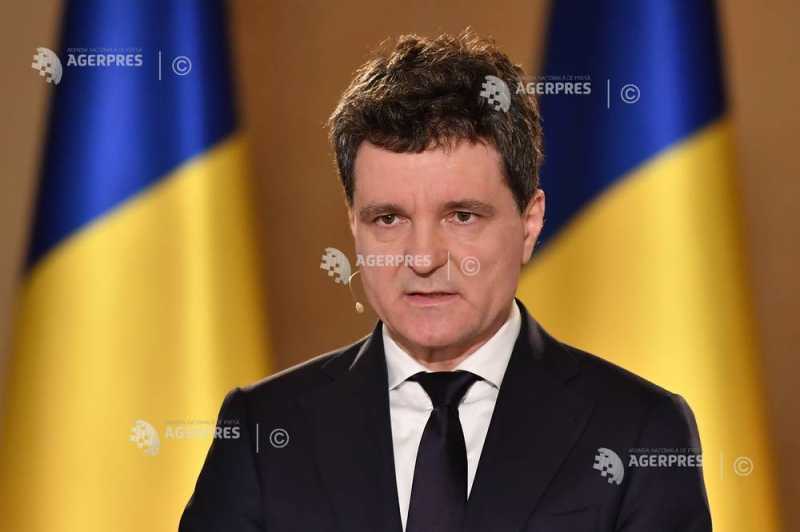
President Nicușor Dan to attend the High-Level Week of the UN General Assembly
President Nicușor Dan has several meetings and events scheduled in New York between 20 and 23 September, as part of his participation in the 81st session of the United Nations General Assembly, according to the agenda published by the Presidential Administration. The President is scheduled to deliver Romania's national statement during the High-Level Week of the session

President Dan says Foreign Ministry investigating Orlivka school case
President Nicusor Dan said on Friday that Romania's Foreign Ministry has opened an investigation into the case of the school in Orlivka, Odesa region, where a Year 1 class taught in Romanian was closed. Speaking at a news conference held after the Carpathian Integration Initiative 'Carpathian 8' Summit, he said that 'remarkable progress has bee

Bolojan: We will try, within our possibilities and depending on our electoral weight, to form a Government
President of the National Liberal Party (PNL) Ilie Bolojan said on Friday that, although Siegfried Muresan's nomination for prime minister came three months late, the party would deal with the situation 'responsibly' and seek to form a Government based on its electoral weight. 'Yesterday, about 30 minutes beforehand, I learned from the piece of

Siegfried Muresan: We will start work on a government programme; beginning of next week - discussion with MPs
Prime Minister-designate Siegfried Muresan announced on Friday that he was starting work on the government programme together with the National Liberal Party (PNL), Save Romania Union (USR) and the Hungarian Democratic Union of Romania (UDMR), mentioning that he would present the priorities at the beginning of next week and, based on these, would hold an "extremely tran

CCIR's Daraban: The diaspora is not a sentimental issue but a chapter in the national economy
The experience gained by Romanians in the diaspora in competitive markets must be transformed into investment, jobs and exports, believes Mihai Daraban, President of the Chamber of Commerce and Industry of Romania (CCIR). According to a press release from the organisation sent to AGERPRES, the institution is strengthening its partnership with ROUNIT - Reunited
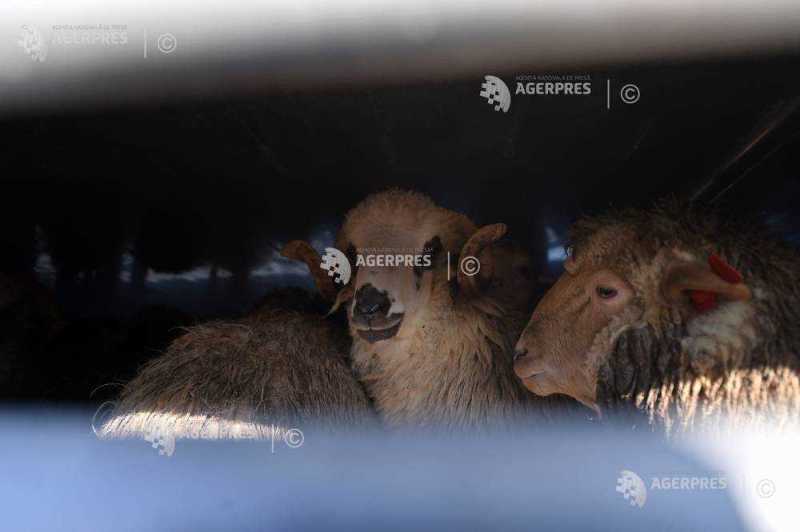
European Commission approves ANSVSA's Action Plan to unblock sheep and goat exports
The Action Plan of the National Veterinary Sanitary and Food Safety Authority (ANSVSA) for unblocking exports of sheep and goats has been approved by the European Commission, allowing exports of carcasses and products to resume under the differentiated vaccination scheme. According to an ANSVSA release sent to AGERPRES on Friday, the approved solution protects
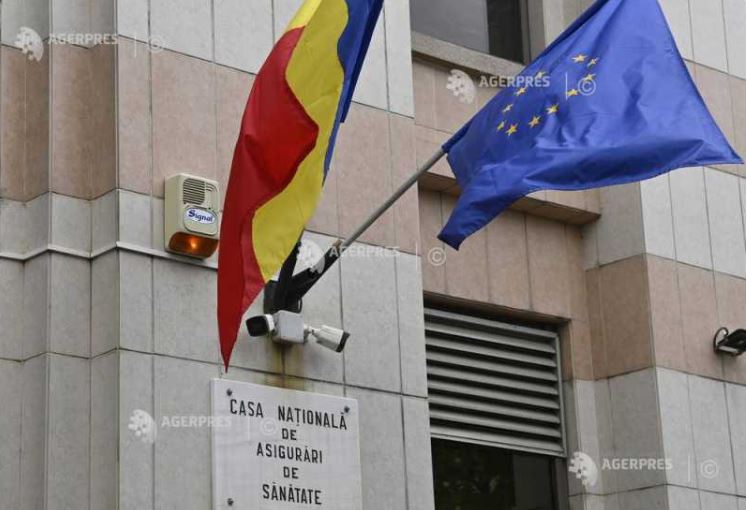
Health Insurance House launches project on cross-border exchange of medical images, laboratory results, discharge reports
The National Health Insurance House (CNAS) announced on Friday the launch of the European project 'Romanian Medical Images, Laboratory Results and Discharge Reports' (RO-MI-LR-DR), for the cross-border exchange of medical images, laboratory results and discharge reports. The project is funded through the EU4Health programme, with the European Health an
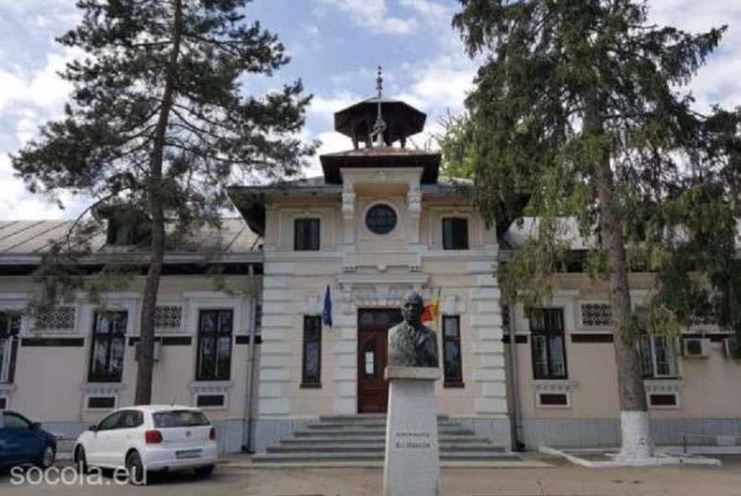
'Socola' Institute of Psychiatry in Iasi to hold new memory testing campaign at weekend
The 'Socola' Institute of Psychiatry in Iasi has announced that it will hold the third edition of its 'Memory Testing Campaign' on Saturday and Sunday, a campaign addressing people of all ages and aimed to identify individual risk factors that may predispose people to memory disorders, while also providing participants with specialist counselling.