
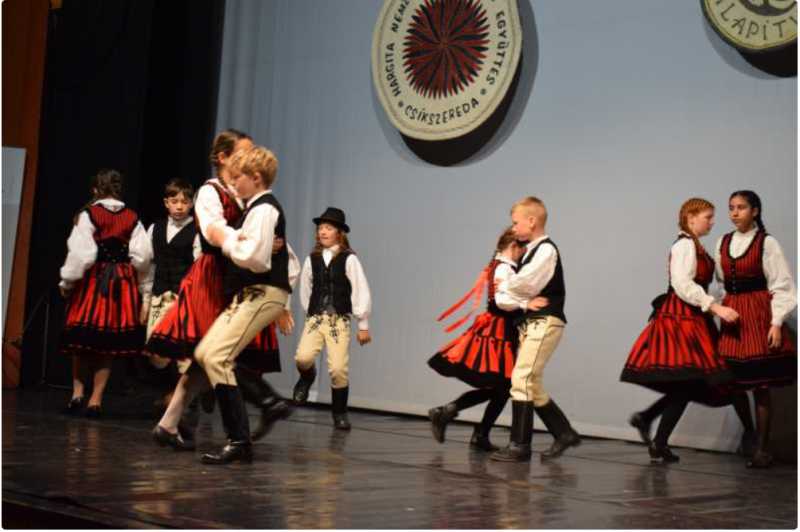
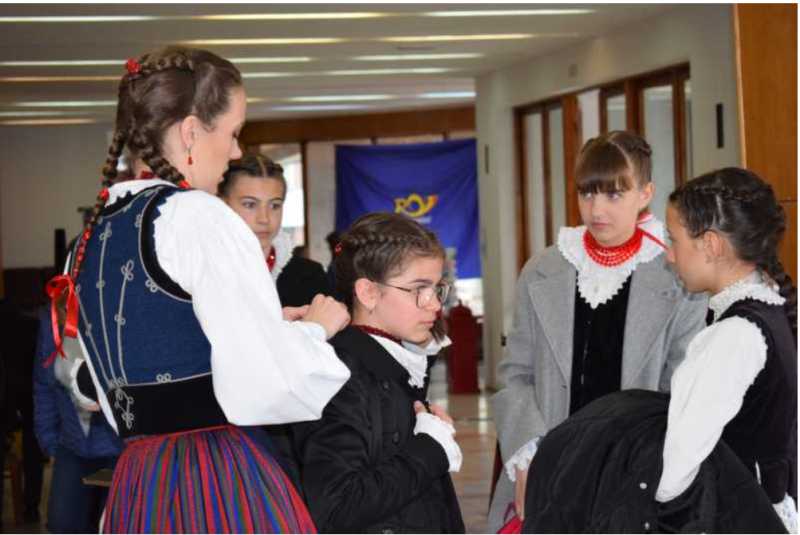
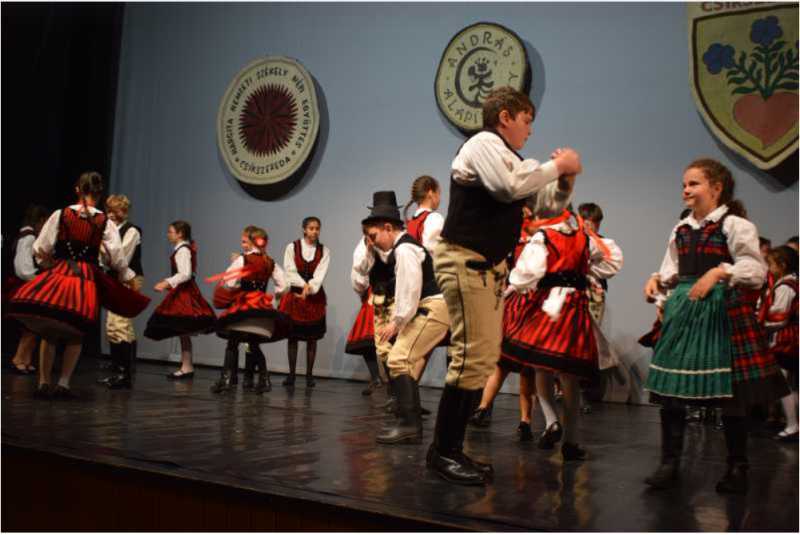
Hurried footsteps, laughter and the repeated movements of folk dances echo through the corridors of the Culture House in Miercurea-Ciuc. Outside, a cold drizzle falls steadily, but inside, hundreds of children dressed in traditional costumes warm the atmosphere as they adjust their hats, boots and skirts before stepping onto the stage.
Some are only a few years old. Others are teenagers. All have come to dance.
The 38th edition of the 'Csurdongolo' folk dance gathering for children and young people brought together around 1,200 participants from the Ciuc area, as well as from Gheorgheni and Bacau County.
The name of the event, Csurdongolo, refers to the folk dances once held in village barns, where the rhythm of dancers' footsteps would make the wooden floors tremble.
The traditional gathering was originally meant to take place outdoors, in the centre of Miercurea-Ciuc, where a stage had been set up.
But the rain changed those plans and the organisers were forced to adapt, moving the event inside the Culture House instead.
The programme included folk performances by children's and youth groups, interactive activities and a large communal dance bringing together all participants.
'I watched the children arriving through the rain, dressed in traditional costumes. And I thought about the minimum we need in order to know that what we have done is worthwhile. It was enough just to see their faces. They were so beautiful and so ready to come to this performance. They work every week so they can show us what they have learned. I was looking at their beautiful faces and their youth, and I thought that simply being together was enough,' says Andras Mihaly, director of the Harghita Szekler Dance Theatre, the initiator and driving force behind the event.
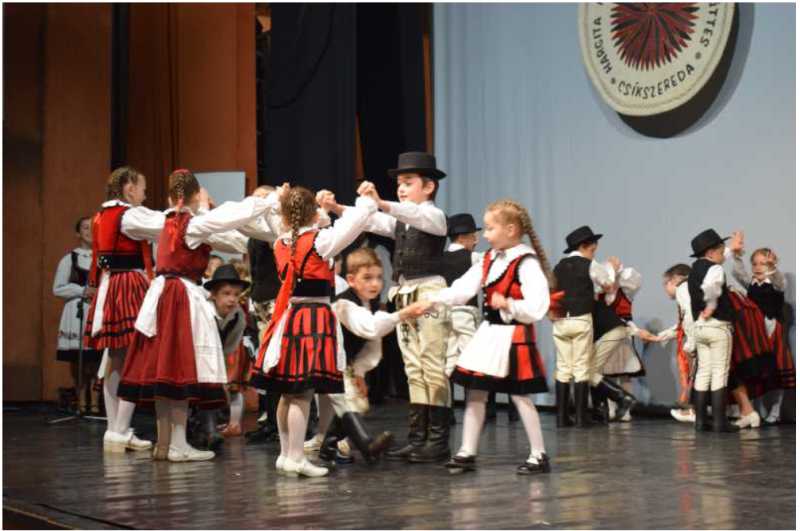
Beyond the joy of the gathering, the event in Miercurea-Ciuc, organised for the first time nearly four decades ago, serves to preserve traditions and pass them on to future generations.
According to Andras Mihaly, dancers and instructors from the Harghita Szekler Dance Theatre regularly travel to communities to teach folk dances to children, while the annual gathering is the moment when they step onto the stage and present what they have learned throughout the year.
The audience is not made up only of children. There are parents taking emotional photographs, grandparents following every step and even great-grandparents, all united in a celebration of dance and folk traditions.
'It is a very good investment if children preserve their songs, dances and traditional costumes. That is how we manage to pass on these important things to the next generation. When they themselves become great-grandparents, they will be here as spectators, watching their grandchildren and their families. And then we too will know that we did something truly worthwhile, even if we are no longer here,' Andras Mihaly says.
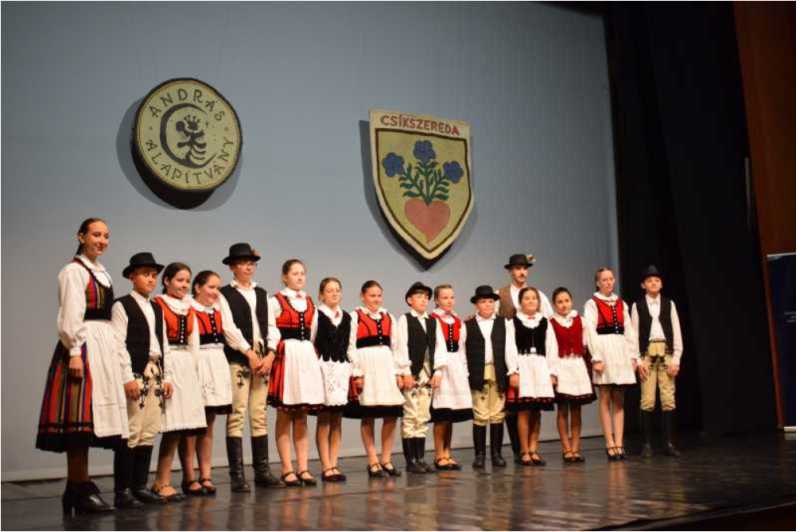
A mother from Miercurea-Ciuc, who attended the event with her eight-year-old daughter, says she had followed the gathering for years before her own child stepped onto the stage, and now takes part in it with joy.
'It is important because traditions are preserved and children come into contact with folk traditions and traditional costumes. I hope this tradition will continue,' she says.
Preparations for the event begin as early as September, when the first dance steps are taught, while by December the choreographies that will later reach the stage in spring are already being learned.
Kelemen Szilveszter, a professional dancer and dance instructor at the Harghita Szekler Dance Theatre, says there is great interest among children and teenagers in attending dance classes and later taking part in the event.
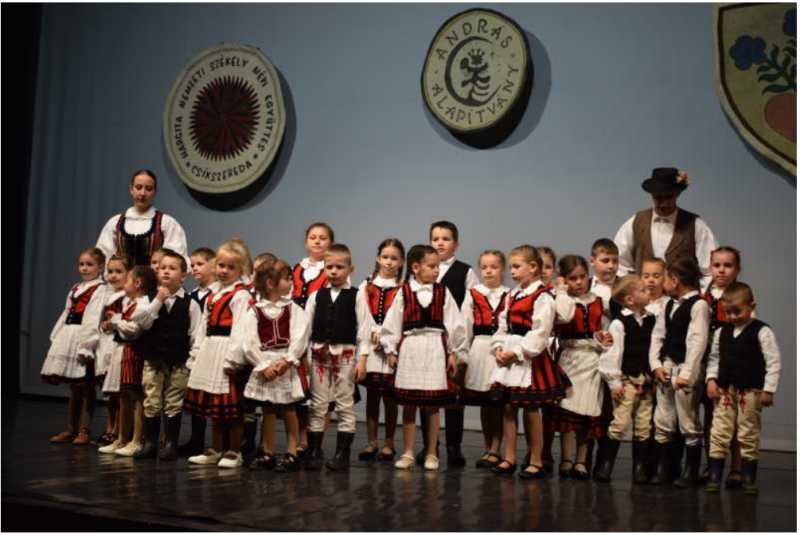
'We have several children's groups in the villages. For example, in the village of Bancu, we have four groups with around 150 members. There are children as young as four, but also young people aged 17 or 18. And they do come. (...) In the afternoons, after school. They come and pay for it. And yet they still come. They are very excited about this event, they enjoy it, both they and their parents prepare for it, and every year they look forward to Csurdongolo,' he says.
Kelemen Szilveszter himself was once one of the children dancing at the event, and perhaps that is where his passion for dance was born - a passion without which he says he could not live.
'I have been a dance instructor for almost 20 years. I have taught many children and many young people, and six of those young people are now professional dancers in the Harghita Ensemble. We are colleagues. Once we were instructor and student, and today we are colleagues. (...) I do not think I could live without folk dancing and without teaching folk dance. This is my life,' the man says, tears filling his eyes.
For his part, Szabo Laszlo, a professional dancer and dance master, has worked for years with children's groups in villages across the Ciuc area.
At this year's edition of the event, he was both instructor and father: one of his sons stepped onto the stage.
When asked how it felt, he replies: 'As an instructor, I always think it could have been even better. As a father, it was extraordinary, wonderful!'
The mayor of Miercurea-Ciuc, Korodi Attila, said the gathering is much more than a folk performance and stressed the importance of dance, music and folk art in preserving identity.
'A strong community preserves its identity and traditions, while folk dance, folk music and folk art help us carry this heritage forward. It is very important to pass these values on to children, so that they may learn our dances, songs and traditions. Through them, they connect to something deeper - to their ancestors, their roots and traditions, but also to the Hungarian culture that has defined us for generations. Today we do not only see hundreds of swirling skirts and little boots beating out the rhythm of the dance, we also see that our traditions continue to live on. We see that the Hungarian community in Ciuc has a future. Csurdongolo is not just a performance, but a true celebration of our community and our continuity,' Korodi Attila told AGERPRES.
The 38th edition of the folk dance gathering in Miercurea-Ciuc was organised by the Andras Foundation and the Harghita Szekler Dance Theatre, with the support of the Miercurea-Ciuc City Hall, Harghita County Council, the County Cultural Centre and several sponsors. AGERPRES (RO - writing by: Gina Stefan; EN - writing by: Simona Iacob)