
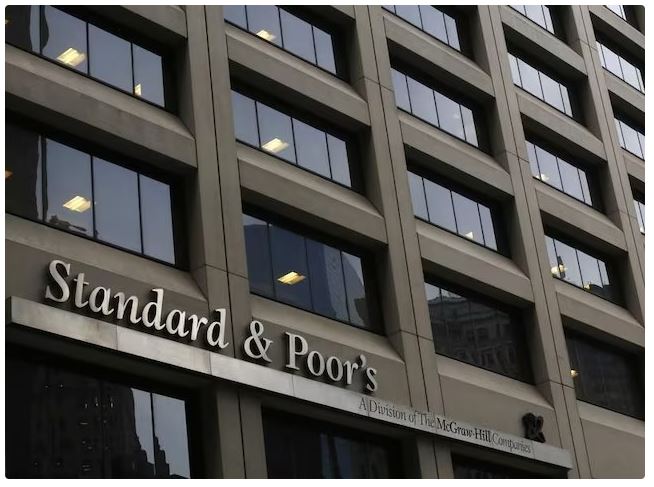
On October 2, 2026, Standard&Poor Global Ratings (S&P) affirmed its 'BBB-/A-3' long- and short-term foreign and local currency sovereign credit ratings on Romania, as the outlook remains negative.
The negative outlook reflects S&P's view that implementation risks relating to the consolidation of Romania's public finances and the narrowing of its external deficits remain elevated. The outlook also reflects Romania's susceptibility to shifts in investor confidence, due to sizable external financing needs and elevated nonresident holdings of government debt, according to a S&P press release issued on Friday.
Standard&Poor's could lower their ratings on Romania if the protracted government formation process following the collapse of the coalition in May 2026 could hinder fiscal deficit reduction in 2027 and 2028. The agency sees risks that a failure to implement a credible fiscal and policy path would not only jeopardize budgetary consolidation but could also heighten broader risks, such as deteriorating investor sentiment, increased funding costs, and amplified balance of payments pressures.
The agency could also consider a downgrade if external pressures intensify - for example, if energy market dislocations derail Romania's medium-term inflation expectations while materially weakening growth, the balance of payments, and fiscal outcomes.
S&P could revise their outlook to stable if Romania's external and fiscal deficits narrow, arresting the erosion of government and external balance sheets. This scenario would be supported by a credible medium-term policy plan--possibly anchored in a broad-based political consensus--alongside a rebound in economic growth.
According to the ageny, the rating affirmation reflects their near-term baseline expectation that Romania will successfully form a government that will adopt a credible budgetary framework for 2027-2028. Despite the political stalemate since May, including several failed confidence votes for various prime minister nominees, fiscal consolidation and EU fund absorption have remained on track for 2026. Romanian policymakers successfully advanced legislation over the summer to unlock the majority of recovery and resilience funds (RRF). This has driven a peak in EU inflows this year, supporting an exceptionally high public investment budget of 8.5% of GDP, with RRF absorption rates exceeding 90% for grants and 95% for loans. We forecast EU inflow funds at about 3.5% of GDP in 2026, assisting a significant part of Romania's elevated external funding requirements while providing the fiscal reprieve necessary to implement public sector investments--which is the main support to economic activity this year.
However, a prolonged political deadlock and the risk of suboptimal, last-minute policy compromises could threaten the projected reduction in Romania's twin deficits through 2029. Legislative paralysis is costing Romania EUR750 million in RRF grants due to the failure to pass a unitary public wage law. Without a durable framework to manage the public-sector wage bill (which represented almost 25% of expenditure in 2025), the fiscal outlook remains clouded by conflicting statements from mainstream parties. The lack of visibility regarding public wage increases poses a risk as the 2028 elections approach since increased political fragmentation could result in election-related fiscal slippage--historically about 1.3% of GDP--that would undermine the credibility of the deficit reduction path agreed upon with EU authorities under the excessive deficit procedure.
The agency forecasts a current account deficit of 7.5% of GDP in 2026, which will remain about 1 percentage point above our fiscal deficit path through 2029. Despite narrowing fiscal deficits, the current account balance is increasingly pressured by the winding primary income account driven by rising interest payments on the increasing stock of external debt. With foreign direct investment (FDI) also trending lower, the quality of external financing is a concern, making stabilising the political environment and ensuring continued EU fund inflows key to meeting the country's elevated gross external funding needs.
'Our baseline assumption is that Romania will present a credible fiscal plan for 2027-2028, and we project Romania's economy will contract by 0.5% as fiscal consolidation and elevated inflation--partly driven by global energy shocks--weigh on private consumption. We expect a rebound to 2.25% growth in 2027, supported by recovering consumption and a reduced fiscal impulse. While we expect public sector investment to decline by approximately 2% of GDP alongside tapering EU inflows, we anticipate a rebound in private sector investment to partially offset this gap. Our outlook remains subject to risks from persistent inflation, unclear domestic policy environment, and geopolitical tensions,' S&P reports.
S&P projects a full-year general government fiscal deficit of 6.25% of GDP in 2026, down from 7.9% of GDP in 2025 and 9.3% of GDP in 2024.
'Multiple reform packages introduced over 2025-2026 resulted in fiscal gains--including value-added tax increases, excise duty hikes, freezes to wages and pensions, and adjustments to corporate income tax. These efforts have produced steady fiscal consolidation as well as a contraction in government spending in nominal terms, despite the slowing economy. This contraction was driven by cost containment measures including a freeze on public wages and pensions legislated last year,' the agency adds.
52
The agency forecasts Romania's general government deficit to reach 5.8% of GDP in 2027 and continue to 5.0% of GDP in 2028. While reducing, we forecast these deficits will push Romania's net general government debt to 60% of GDP by 2027, up from 52% at year-end 2025.
All three major credit rating agencies (S&P Global Ratings, Moody's and Fitch) have a 'negative' outlook attached to Romania's sovereign rating, which places the country one step away from a 'junk' rating, which is a non-investment grade. AGERPRES (RO - writing by: Mihaela Dicu; EN - editing by: Corneliu-Aurelian Colceriu)
- Category: English
- Date: 2026-10-03 11:12:40
- Foto: Brendan McDermid / REUTERS