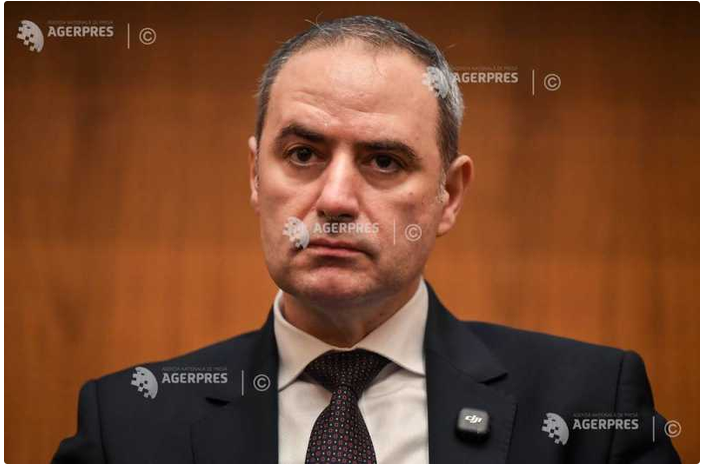


The Bucharest City Hall has proposed the gradual restriction of polluting vehicles in the Romanian capital between 2027 and 2032, starting in the city centre and later expanding across the entire city, Mayor Ciprian Ciucu announced on Friday.
The measure would be introduced in stages from Nov. 1, 2027, targeting older vehicles from non-Euro to Euro 5 emission standards.
'We are proposing a phased restriction, from 2027 to 2032, on polluting vehicles, from non-Euro to Euro 5, so this will not be a radical measure. In this area, you need to prepare the population,' Ciucu told a press conference.
According to the mayor, about 2.9 million vehicles are registered in Bucharest and neighbouring Ilfov County, of which nearly 1.3 million are old and highly polluting. Around 460,000 vehicles are between 22 and 35 years old and fall into the non-Euro, Euro 1, Euro 2 and Euro 3 categories, while another 835,000 vehicles are between 17 and 21 years old and meet the Euro 4 standard.
Under the proposal, starting Nov. 1, 2027, non-Euro vehicles would be barred from the central area of Bucharest.
From Nov. 1, 2028, Euro 1 vehicles would also be restricted in the city centre, while non-Euro vehicles would be restricted citywide. From Nov. 1, 2029, Euro 2 vehicles would face restrictions in the city centre, while non-Euro and Euro 1 vehicles would be restricted throughout Bucharest.
From Nov. 1, 2030, Euro 3 vehicles would be added to the central-area restrictions, while non-Euro, Euro 1 and Euro 2 vehicles would face citywide restrictions. From Nov. 1, 2031, Euro 4 vehicles would be restricted in the city centre.
From Nov. 1, 2032, Euro 5 vehicles would also be restricted in the central area, while non-Euro, Euro 1, Euro 2 and Euro 3 vehicles would face restrictions across the city.
The municipality also proposed the gradual replacement of wood-, coal- and other solid-fuel heating systems.
Under the multiannual municipal programme 'AER 2030 ACASA', households using such heating systems would receive support to switch voluntarily to low- or zero-emission alternatives. The programme targets approximately 15,000 households identified in Bucharest as part of a national effort to replace at least 50,000 heating units by 2030.
'Bucharest residents are getting sick every day. Cardiovascular diseases, cancers, children are the most affected because microparticles remain suspended in the air at about one metre above the ground. The fundamental question is: Do we want to become a civilised city or not? Are we a European city or are we not?,' Ciucu argued. AGERPRES (RO - writing by: Iulia Carciog; EN - writing by: Simona Klodnischi)
- Category: English
- Date: 2026-10-02 17:59:23
- Foto: Alex MICSIK / AGERPRES Photo