
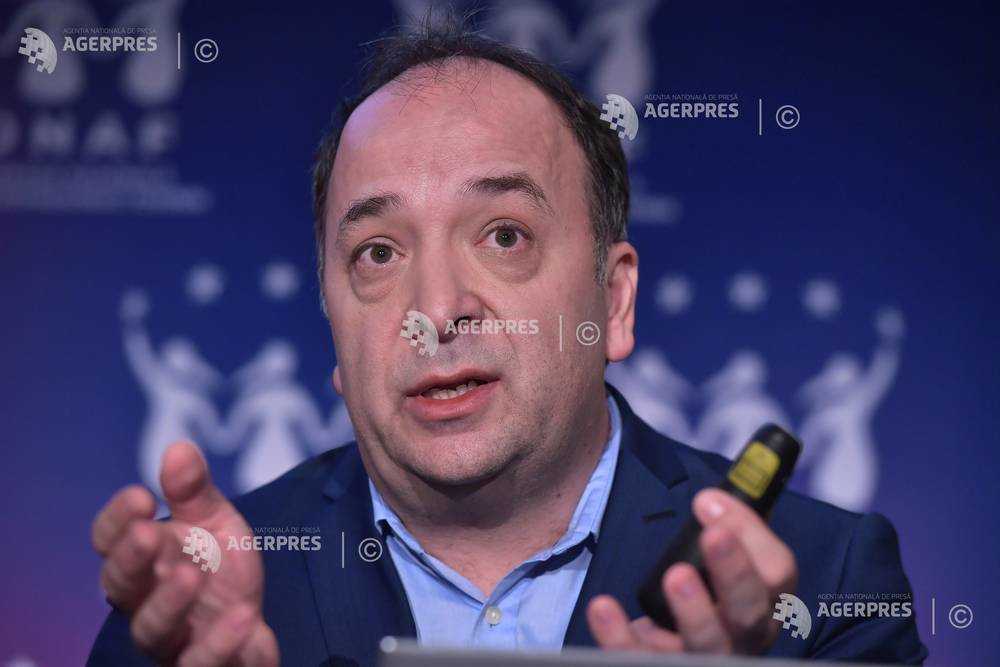
Romania's sovereign rating having been affirmed at the recommended investment grade is a breath of fresh air in a sea of problems facing Romania, economic consultant Adrian Negrescu told AGERPRES on Saturday, adding that 'this is not a time to pop the champagne.'
'It is a breath of fresh air in a sea of problems that Romania is facing. It is a yellow card that investors show us and that must be translated into a respite that, once again, the rating agencies give us to solve our problems related to the administration of this country,' Negrescu said.
He believes that Romania's main problem at the moment is not the financial situation, but the lack of decision-making and the absence of a government team to confirm the course taken before the investors.
'There is no financial issue at this moment. Romania's big problem at the moment is the lack of decision-making, the absence of a government agenda, of a government team that would confirm in one way or another the path that we have pledged to investors, those who lend Romania the equivalent of 1 billion euros per week. That is why it is absolutely essential to wake up the political class and in this 13th hour, to understand that this confirmation of the investment rating is not a moment to pop the champagne, but to get to work, to draw up a government agenda and to take the necessary restructuring measures to take up three essential things,' the economist said.
The three objectives that Romania should pursue moving forward are: narrowing the budget deficit, reducing public spending and attracting over EUR 20 billion in European funds.
'The three essential things are: narrowing the budget deficit, as we agreed in the agreement with the European Commission, two - reducing public spending and state debt, which is growing from one day to the next, and three - attracting the more than EUR 20 billion in European funds, cohesion funds that we have at our disposal until next year. There are the cohesion funds for the period 2021-2027, EUR 31 billion of which we have so far only managed to draw EUR 10 billion,' said Negrescu.
He warned that the time until the next assessment is limited, and the government must come up with a consistent agenda, clear deadlines and targets for restructuring public spending and increasing revenues.
'This yellow card that S&P shows us is valid only until spring. Let's not forget that next February the agencies will come to Bucharest again, and if at that time we do not have a consistent government agenda, clear deadlines and targets, with measures to restructure public spending and optimise revenues from the economy, I am afraid that the idea of 'junk' will become a reality,' said Negrescu.
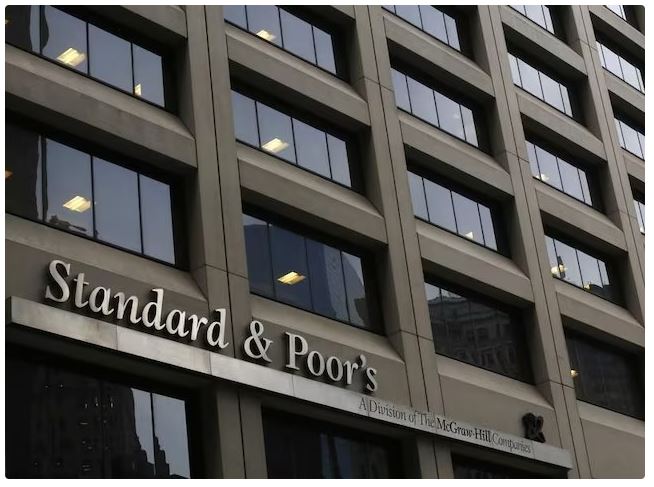
On October 2, 2026, Standard&Poor Global Ratings (S&P) affirmed its 'BBB-/A-3' long- and short-term foreign and local currency sovereign credit ratings on Romania, as the outlook remains negative.
The agency could lower their ratings on Romania if the protracted government formation process following the collapse of the coalition in May 2026 could hinder fiscal deficit reduction in 2027 and 2028.
S&P said in its report late on Friday that it could also consider a downgrade if external pressures intensify - for example, if energy market dislocations derail Romania's medium-term inflation expectations while materially weakening growth, the balance of payments, and fiscal outcomes.
On the other hand, S&P could revise their outlook to stable if Romania's external and fiscal deficits narrow, arresting the erosion of government and external balance sheets. This scenario would be supported by a credible medium-term policy plan--possibly anchored in a broad-based political consensus--alongside a rebound in economic growth. AGERPRES (RO - editing by: Mariana Nica; EN - writing by: Corneliu-Aurelian Colceriu)
- Category: English
- Date: 2026-10-03 14:56:54
- Foto: Grigore POPESCU / AGERPRES Photo