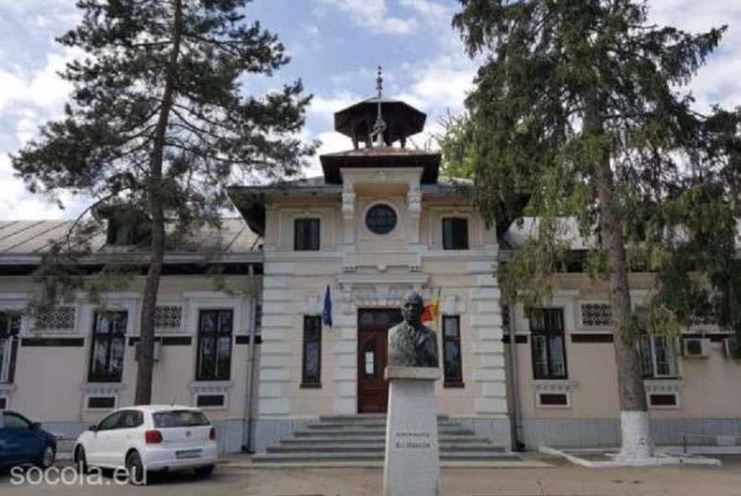


The new Cardiovascular Surgical Centre at the Emergency Institute for Cardiovascular Diseases and Transplantation (IUBCvT) in Targu Mures represents the fulfilment of a decades-long dream, according to cardiac surgeon Professor Radu Deac, who helped establish the city as Romania's second cardiac surgery centre and a national leader in heart transplantation.
'It is a very pleasant feeling. A decades-long dream is coming true, and I am fortunate to live to see it. I dreamed of having this centre, of moving away from the old hospital and of continuing heart transplantation and paediatric cardiac surgery. I have reached the age of 86 and I am still dreaming, still reading, still working - not in medicine, because the law does not allow me to, but what is inside, in the heart, cannot disappear,' Deac told AGERPRES.
Professor Radu Deac said one of his greatest satisfactions was having trained generations of specialists at IUBCvT Targu Mures, singling out Dr Horatiu Suciu as a highly accomplished successor.
'When I came to Targu Mures at the age of 24, I found two wards in the old hospital, and that is where it all began, because I was a third-year student. When the time came, we did something special, because Professor Tiberiu Maros and Professor Zoltan Papai were here. In other words, Targu Mures offered ideal working conditions, and we, the young people, that generation that came here, needed nothing more than the right conditions and acceptance, because in Cluj, for example, there was fierce conservatism. But the specialists in Targu Mures embraced the idea of getting things done and, little by little, we did it. Time passed, and I cannot say it did not ruffle feathers. But the most important thing is that I have an outstanding successor in Dr Horatiu Suciu. I can tell you that when Dr Suciu was due to be made a professor, I received anonymous letters, but I felt it was my duty to say loud and clear that my final professional wish was to see Dr Suciu become a professor, and that is what happened. I should be envious of how young he is - he is not yet 60 and he is doing extraordinary things,' Radu Deac said.
Referring to the relatively small number of heart transplants performed, Deac said such procedures depend entirely on the availability of donors and noted the importance of younger donors in offering recipients the prospect of longer survival.

'The longest-surviving transplant recipient is Nagy Gyorgy. It has been 26 years since the transplant I performed myself in Targu Mures. It is a rarity in the world. I remember that for that heart I flew to Timisoara on 10 January 2000 and returned at night on a private plane. The flight back to Targu Mures took place in very difficult weather conditions, but the heart arrived in Targu Mures in time for the transplant. It is an extraordinary feeling! I am proud that we now have three generations of surgeons ready to work here, in the new Heart Institute. Patients have two- or four-bed rooms, which did not exist in the old hospital,' Deac said.
The first heart transplant in Targu Mures was performed on 14 November 1999 by a team led by Deac at the Cardiovascular Surgery Clinic, three weeks after Romania's first heart transplant.
Deac was also part of the team that assisted Dr Serban Bradisteanu on 24 October 1999, when Romania's first heart transplant was performed at the Cardiovascular Surgery Clinic of Bucharest's Floreasca Hospital.
Professor Marius Barnard, brother of Christiaan Barnard, who performed the world's first human-to-human heart transplant, also participated in Romania's first heart transplant.
At the end of August, the Emergency Institute for Cardiovascular Diseases and Transplantation in Targu Mures inaugurated its new Cardiovascular Surgical Centre, one of Romania's largest medical infrastructure investments and one of its most modern facilities.
The project is worth more than 770 million lei, of which almost 500 million lei comes from Romania's National Recovery and Resilience Plan (NRRP), with the remainder provided from national funds. AGERPRES (RO - writing by: Dorina Matis; EN - writing by: Simona Iacob)
- Category: English
- Date: 2026-09-10 19:04:55
- Foto: Dorina MATIS / AGERPRES Photo