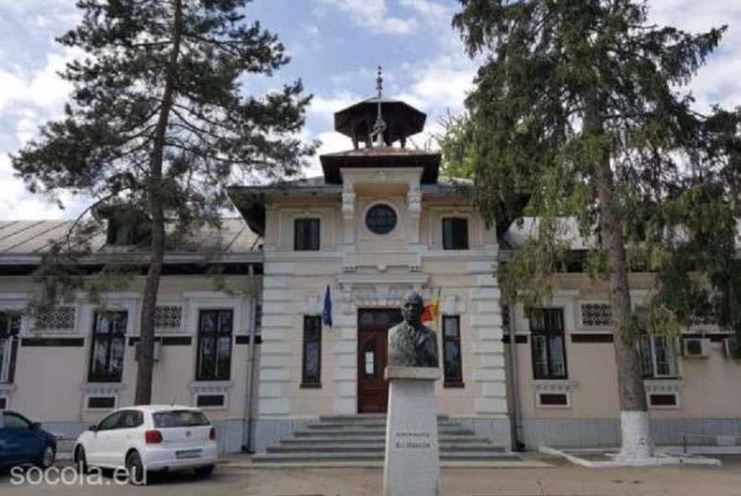

The researchers of the Plant Genetic Resources Bank for Vegetable, Floriculture, Aromatic and Medicinal Plants (BRGV) Buzau aim to digitise the plant collections and systematically assess species' drought tolerance following the International Horticultural Congress in Kyoto, with the institution's management pointing out that Romania can draw inspiration from the Japanese model regarding Genetically Modified Organisms (GMO) legislation, the applicability of technology in agriculture, types of greenhouses and respect for the environment.
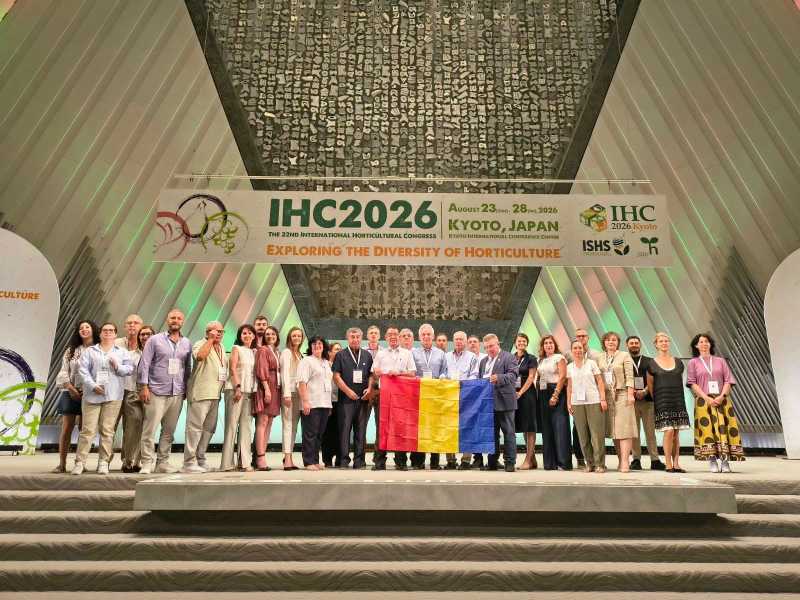
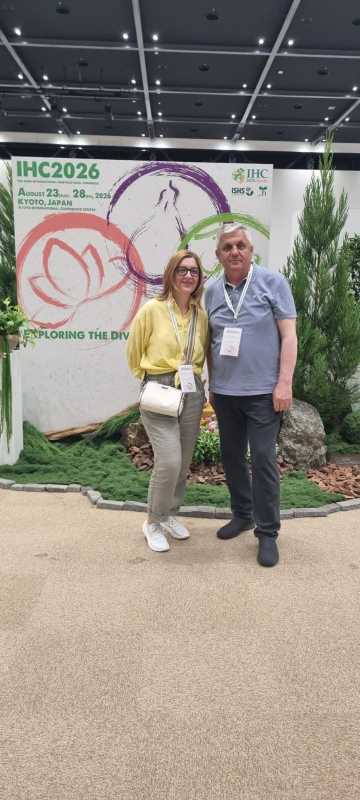
A BRGV Buzau delegation, made up of the institution's director, Costel Vinatoru, and researcher Geanina Negosanu, attended the 32nd International Horticultural Congress (IHC2026), held at the Kyoto International Conference Center (ICC Kyoto) in Japan from 23-28 August.
The congress brought together researchers from more than 70 countries and included 27 symposia, plenary sessions, posters, workshops and technical visits.
According to the BRGV Buzau, the international visibility of research at the Buzau institution was confirmed by the interest shown in genotypes of hot peppers, bitter cucumber (Momordica charantia), iris, basil and the Sideritis cypria variety, a species capable of acting as a plant filter for particulate matter.

'It surprised them greatly, first of all, because we managed to acclimatise the Momordica species and what fascinated them most was that we managed to obtain distinct varieties in terms of colour and size, although they are much closer to the species' origin. Regarding the paper on hot peppers, there were many competitors in this area and they were impressed by Romania, which is not known as a country with results in this area. Many of them also showed great interest in the paper presented by my colleague on Sideritis cypria. We presented the plant as an ornamental and medicinal species that can contribute to air purification, especially by retaining suspended matter in the air, dust and other particles,' Director of the BRGV Buzau Costel Vinatoru told AGERPRES.
For the BRGV, he added, the directions with the most realistic immediate applicability following the congress are the digitisation of collections, standardised phenotypic characterisation, systematic assessment of drought tolerance and the correlation of biochemical data with genetic and phenotypic data, in collaboration with universities and laboratories specialising in genomics.
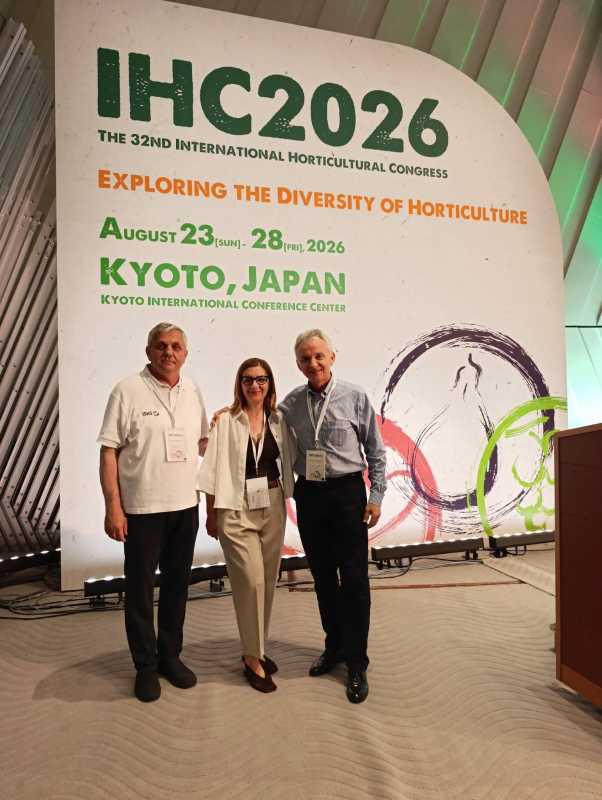
'This trip is helping us greatly to develop a projection regarding equipment and, subsequently, how to make our work easier in this area of resource conservation, because there was a very important stand where they had state-of-the-art equipment used for the preservation of DNA and RNA, keeping them for a long period of time and even preserving the resources themselves,' Costel Vinatoru said.
He also pointed out that Japan could become a model in horticulture.
'Romania has a great deal to learn from the Japanese, first of all, the manner in which they use technology in agriculture. I asked them, for example, what their legislation on genetically modified organisms (GMOs) and biotechnology was like and they said, yes, we accept them, but only for research. Even though they have cutting-edge capabilities to produce GMOs, all of these are preserved only for restrictive measures, otherwise, they are very careful when it comes to conserving biodiversity, health and the environment. In fact, from one end to the other, you can see Japan as a botanical garden. I saw a very strong respect for the environment. They have bioinformatics laboratories up and running. Here, bioinformatics is still in its early stages in certain areas. Then there are protected spaces: they have greenhouses that would be much more suitable than those we have, with moderate heights. I believe these types would have been great to implement in Romania, given the climatic conditions here,' the director of BRGV Buzau underscored.
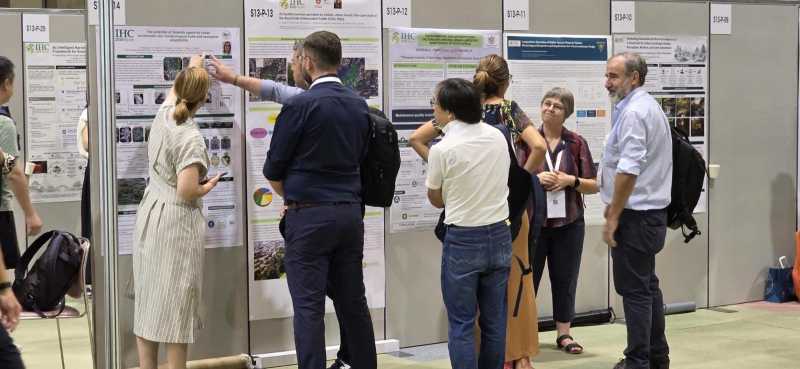
The BRGV Buzau researchers presented six scientific papers at the International Horticultural Congress in Kyoto, documenting the hottest varieties of chilli peppers in the collection, with concentrations of up to 2.6 million Scoville units, papers on bitter cucumber and Sideritis, which were highly regarded in the medicinal area, research on iris flowers and a basil collection. AGERPRES (RO - writing by: Florin Zafiu; EN - writing by: Rodica State)
Photo source: BRGV Buzau
Display count: 374- Category: English
- Date: 2026-09-03 10:03:07
- Foto: BRGV Buzau