
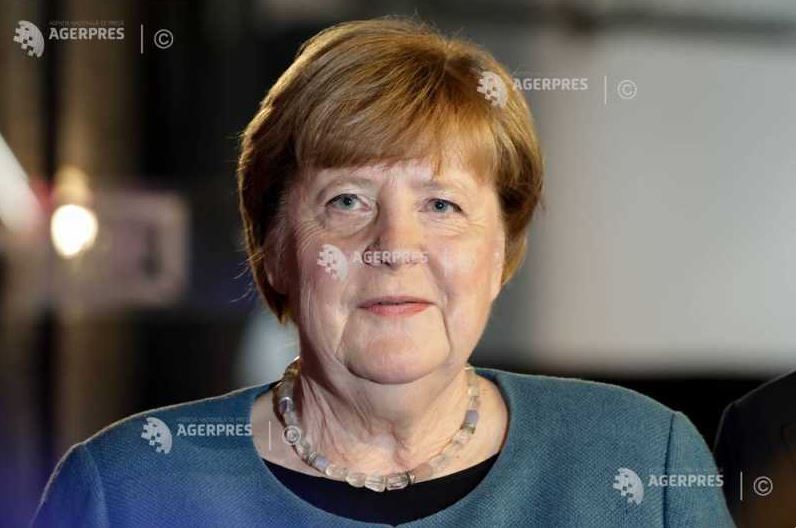
Former German Chancellor Angela Merkel on Tuesday expressed confidence that democracy and freedom can continue to guarantee a good and secure future, while saying that more will have to be spent on defence.
Merkel launched her memoir, 'Freedom: Memoirs 1954-2021', at the Romanian Athenaeum in Bucharest during a public conversation with diplomat and former Foreign Minister Emil Hurezeanu.
'First of all, I would ask him what political system he believes guarantees freedom, in other words, what political system he believes is safer, and I would discuss that system with him. The question many young people are asking today is understandable. If we look back, the Cold War was bad, but there was a certain security because there was nuclear deterrence. Weapons were not used after Hiroshima and Nagasaki. We had this extraordinary movement towards freedom in Europe in 1990, and we believed we would gain security and freedom. Suddenly, people, young people, are now talking about drones, about dangers. The Americans are no longer on our side, so there are a number of threats, and it is perfectly normal for them to ask these questions: 'Can you still offer us this promise of security? Can you still offer us the same security that you or your parents had?' And I continue to believe that democracy is an appropriate form for these values,' Merkel said, according to the official translation.
She was responding to a question from the audience about concerns that democracy and freedom may no longer be able to guarantee a good and secure future.
The former chancellor stressed, however, that 'we will have to spend more on defence than we have for many years'.
Other topics discussed included the decision at NATO's Bucharest summit to postpone a firm invitation for Ukraine to join the Alliance, Germany's relationship with Russia over Russian gas imports and the war in Ukraine. Merkel said she admired 'President Volodymyr Zelenskyy's courage in standing up to the Russians'.
'President Joe Biden offered President Zelenskyy the opportunity to leave Ukraine and receive asylum in America. But President Zelenskyy stayed, and if he had not done so, the sovereign and independent Ukraine that exists today would no longer exist. And he decided to fight,' Merkel said.
Asked by Hurezeanu whether she had been approached about becoming Germany's next federal president or whether anyone had considered proposing her as 'Europe's chief diplomatic envoy in relations with Putin', Merkel said that such talks should be conducted by those who currently hold political power.
'Putin (...) respects only those who have political power. So the people who talk to him must have political power. Those who bear political responsibility today are the ones who must hold talks with Putin,' Merkel said.
As for the possibility of becoming Germany's federal president, she dismissed the idea.
'The part about the federal presidency... That is absurd. I don't want to concern myself with that. I spent 30 years in politics, 16 years as federal chancellor. I enjoyed it very much, although it was very hard, very difficult work. I enjoyed it, but now I am very happy that I can do something else with my life. There are many other wonderful things, as those of you here in the audience who are not politicians know. There are many wonderful things to do in life,' Merkel said. AGERPRES (RO - writing by: Daniel Popescu; EN - writing by: Simona Iacob)
- Category: English
- Date: 2026-09-02 08:54:42
- Foto: FILIP SINGER/EPA