

Doina Banciu, President of the Romanian Academy of Scientists (AOSR), delivered on Wednesday what she called 'a plea' for the library during the National Conference of the Romanian Librarians' Association, held in Brasov, arguing that the institution must be supported because it represents knowledge. She also drew a parallel between librarians and IT specialists, who share the same object of work: information.
'Libraries promote knowledge, and this is the motto that must be understood both by those who were here with us and by those above us who make decisions - namely that a library means free spirit, constructive spirit and creation. At the Academy, at least since I was elected to this position, I have tried to promote actions related to libraries. (...) This century belongs to libraries, not in a figurative sense, but in the sense of information. I tell you with the responsibility of 50 years since we have been together: both librarians and IT specialists have the same object of work, namely information. And I say this with full responsibility: libraries are the precursor of artificial intelligence. I encountered your world almost half a century ago and understood that it is one we must cherish, we who come from other professions - I myself being an engineer. (...) So far, libraries have kept pace with technology, more slowly, some more developed, others less developed, but they have always been present among the top institutions implementing technology,' said Prof. Dr. Eng. Doina Banciu.
In her turn, Mireille Radoi, director general of the 'Carol I' Central University Library in Bucharest, stressed that the rise of piracy websites is putting pressure on the field and 'pushing the librarian profession toward reinvention,' meaning that the librarian's role is no longer limited to managing collections but also involves actively guiding users toward legal and verified sources.
In a context where the public may believe that 'you can find anything online for free' and ignore the real value of professional expertise, she said it is essential to promote legal resources, educate users about open access to verified institutional repositories, and strengthen 'information literacy,' which helps distinguish between verified sources and pirated or unverified ones.
'The library offers free and open access to publications of the Romanian cultural heritage, available anytime, from anywhere, without an account or payment, digitised by the institution in compliance with copyright legislation; unique content - manuscripts and rare books, some impossible to find on other online platforms; safe, long-term availability without the risk of the domain being blocked at any time; and specialised cataloguing - bibliographic descriptions verified and catalogued according to professional standards,' Radoi said.
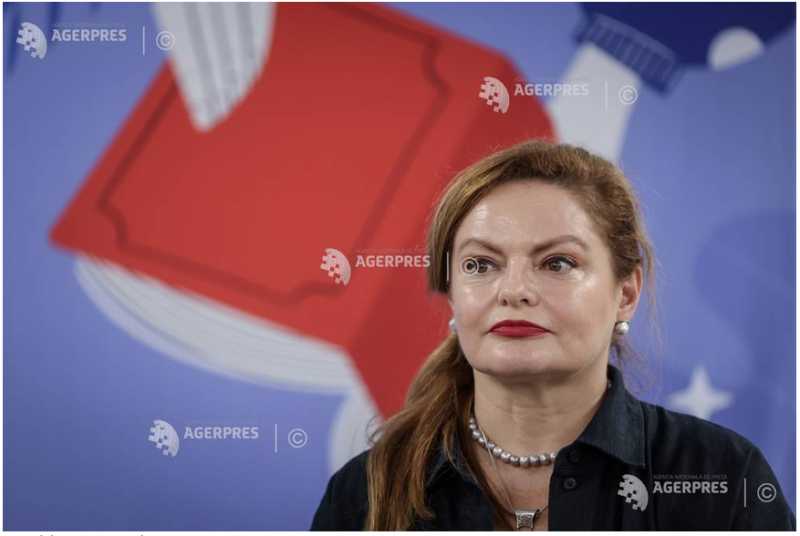
Daniel Nazare, director of the 'George Baritiu' County Library in Brasov, spoke about the link between the city's development and that of both the public and university libraries, emphasising that both 'have a chance in this decade' of technology. He pointed out that despite digitisation, the reading rooms of his institution 'are full.'
'In Brasov, first the engine was invented and only afterwards did people go to the library to see how it should actually have been made. Let's not end up there - let's always keep the book close to us, reflect on what the generations before us have done, and go to the library, which can offer an answer for anything,' Nazare pointed out.
Claudia Nicolae, AGERPRES Director General, offered a different kind of plea for the library, reminding the audience that beyond major public and university libraries, there are also communal and village libraries - 'the ones nobody photographs anymore because they don't produce breaking news' - which AGERPRES reporters have been documenting in a project running since May.
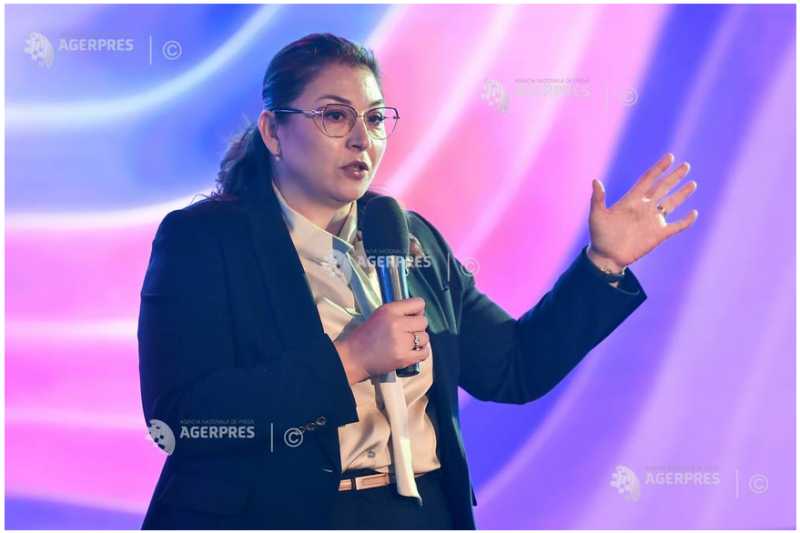
'The village or communal library is not a smaller version of the big city library. It is, in many cases, the only cultural institution left in a locality. And when a television station or a central news agency ignores this, an entire community becomes invisible to the rest of the country. This is where the press has a direct responsibility. A national news agency has a network of correspondents in all counties, the capacity to produce quality photography, an audience, and - most importantly - institutional credibility. By putting this infrastructure at the disposal of small libraries, we are not just producing a pleasant cultural feature - we are building, episode by episode, a kind of living archive of these institutions, visible at national level, precisely at a time when many of them are fighting for funding, for donations, for a reason to carry on,' Nicolae said. AGERPRES (RO - writing by: Diana Dumitru; EN - writing by: Simona Klodnischi)
- Category: English
- Date: 2026-09-02 18:08:41
- Foto: Alex MICSIK / AGERPRES Photo