
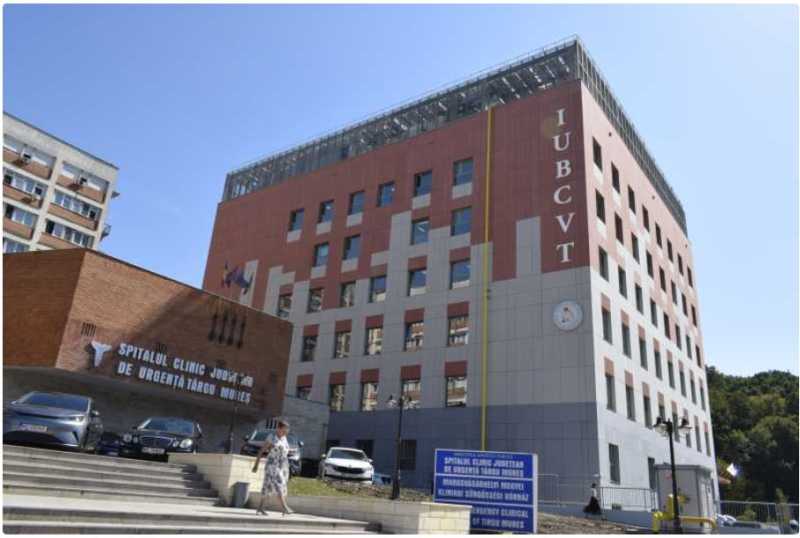
The new Cardiovascular Surgical Center of the Targu Mures Institute for Cardiovascular Diseases and Transplant (IUBCvT) - a gleaming, high-rise glass-and-steel structure - now stands as one of the few fully delivered NRRP hospital projects in Romania. Its inauguration was celebratory, but behind the polished floors and brand-new medical equipment lies a story of brinkmanship, bureaucratic paralysis, and a private company that gambled its own survival to keep the project alive.
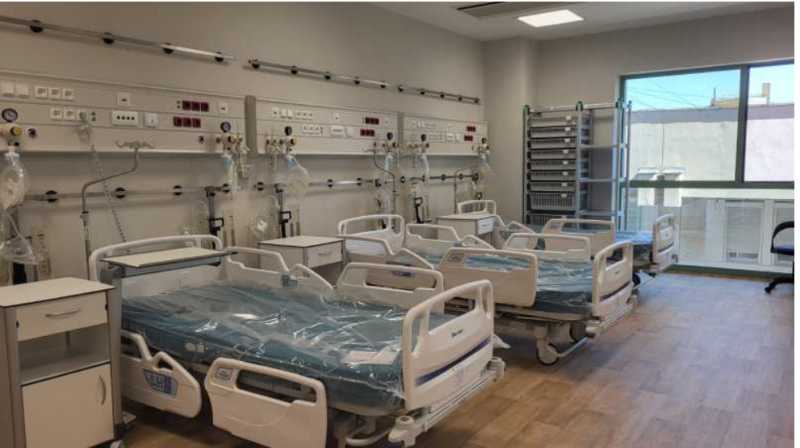
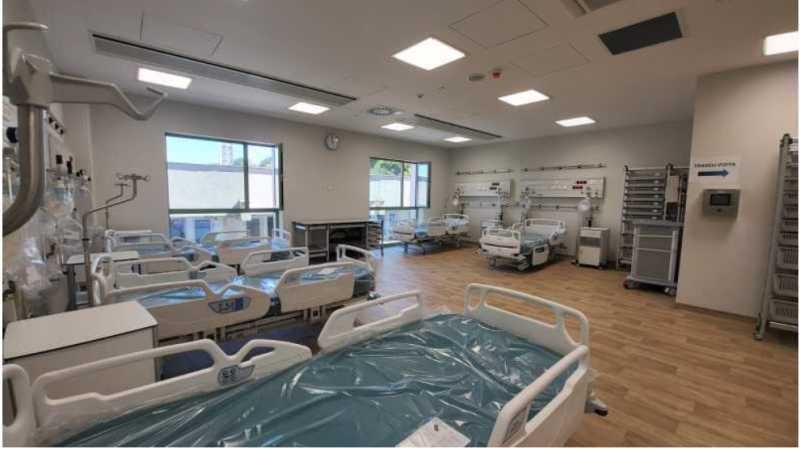
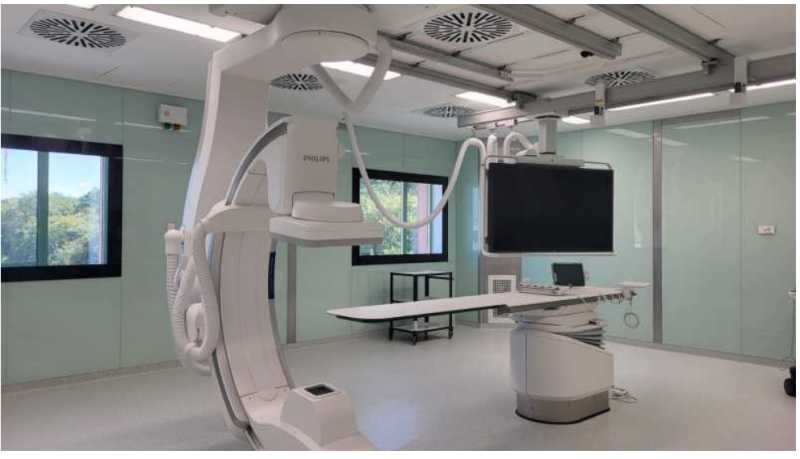
The hospital - the first of its kind built from scratch in Targu Mures in half a century - equipped with an ultramodern surgical suite, intensive care units, pediatric cardiology wards and next-generation diagnostic labs, was completed in record time: less than 17 months from a barren plot to a fully functional medical facility. In April 2025, the site was still an empty yard. By August 2026, the keys were handed over.
But the speed came at a cost - borne almost entirely by the contractor.
The hospital would not exist, company officials say, had the private builder not chosen to 'play Russian roulette' with its own finances. Sorin Cristea, CEO of the CON-A group, described the ordeal at the opening ceremony, calling it 'the most brutal test of nerves and responsibility' in his career.
By late summer 2025, the structure had already reached the third floor. Yet the Romanian state had not paid a single leu. Meanwhile, CON-A had advanced millions of euros from its own reserves to secure heavy medical equipment and critical materials from international suppliers.
'From the outside, these may look like administrative questions,' Cristea told the audience. 'For me, they weren't. I run a group of companies with around 1,000 employees. Behind them are families, salaries, factories, suppliers, responsibilities you cannot put on hold while someone clarifies a piece of paper. If the project had been blocked then, with millions already spent, the group would have entered a major financial collapse. I took a very big risk - for the company, for the group, and for the people.'
The delays were not technical - they were bureaucratic. Permits were stalled for months. Payments were frozen. Decisions were postponed. At one point, Cristea said, the company's biggest fear was not engineering failure but political indecision: 'Will this project remain in the NRRP? Will funding be cut? Who will reimburse the millions already invested?'
When subcontractors failed to deliver, the site entered 'code red.' With critical medical installations stuck at 20% completion, CON-A and the hospital leadership responded with what Cristea called 'surgical measures': removing inefficient partners and reorganizing the entire workflow 'in military mode,' injecting new teams, resources and funds overnight.
Work continued 24 hours a day, seven days a week - through dust, mud, freezing winter, snowstorms and heatwaves. Meanwhile, Cristea noted, 'a single official sheet of paper could sit untouched for weeks on a civil servant's desk.'
The contrast, he said, revealed a painful Romanian paradox: 'Completing an Excel table and approving a signature can be harder and more energy-consuming than building a modern hospital from foundation to roof in 500 days.'
Cristea's speech - applauded at length - doubled as a rare, unfiltered indictment of Romania's administrative machinery. But it was also a declaration of purpose.
'This construction is not about concrete, steel or equipment,' he said. 'It is about people. And the people who will come here will be, in most cases, people in suffering.'
The hospital's medical leadership echoed the sentiment. Dr. Horatiu Suciu, head of cardiovascular surgery at IUBCvT, called the inauguration 'the most important day of my career,' noting that the center continues a 50-year tradition of excellence in cardiac surgery and transplants.
He credited the builder's determination: 'We had the chance of an exceptional constructor who, beyond exemplary mobilization, had something very few entrepreneurs still have in Romania: soul. Without that, this hospital would not be ready.'
The center is the only facility in Romania performing heart transplants for children and handles half of the country's neonatal cardiac emergencies. Manager Mariana Ciorba emphasized that the project - financed with RON 770 million through the NRRP - 'belongs to the entire country.'
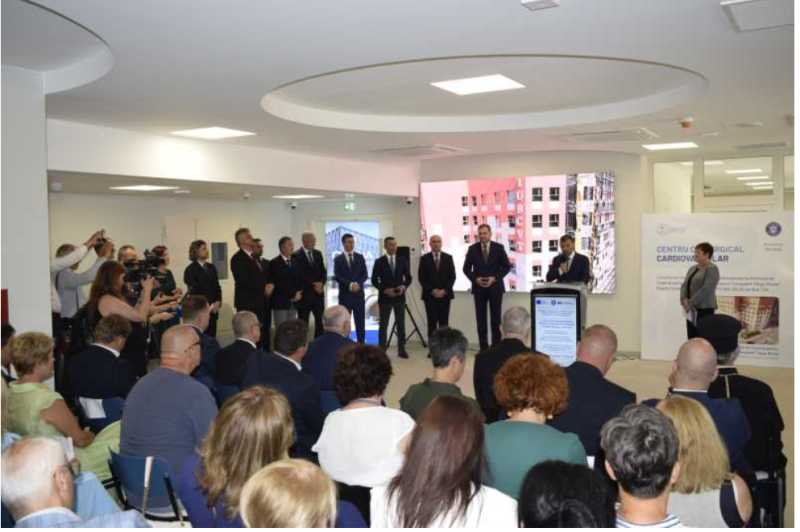
She thanked CON-A for 'the titanic rigor and ambition' shown, noting that the hospital was completed 'despite all technical and financial blockages.'
Acting Prime Minister Ilie Bolojan acknowledged the troubled path, saying the investment was initially slowed 'by delayed decisions, bureaucratic challenges and procurement procedures.' He praised the collective effort that ultimately delivered the project: 'a strong constructor able to finance the works, the Prefecture, local authorities, the Health Ministry and all partners who supported it.'
Once the construction teams departed, social media lit up with self-congratulation from institutions that had previously contributed to delays. For many attendees, the question lingering after the inauguration was blunt: 'How many more hospitals will Romania have to build on the back of private heroism and sacrifice before the public system learns to honor its own deadlines?'
For the patients who will walk out of the new center with their health restored, the sleepless nights on scaffolding and the millions advanced by the contractor were worth it. But the story of the Targu Mures facility remains a stark reminder: in Romania, sometimes the only way to build a hospital is to defy the system meant to support it. AGERPRES (RO - writing by: Dorina Matis; EN - writing by: Simona Klodnischi)
- Category: English
- Date: 2026-09-01 17:44:41
- Foto: Dorina MATIS / AGERPRES