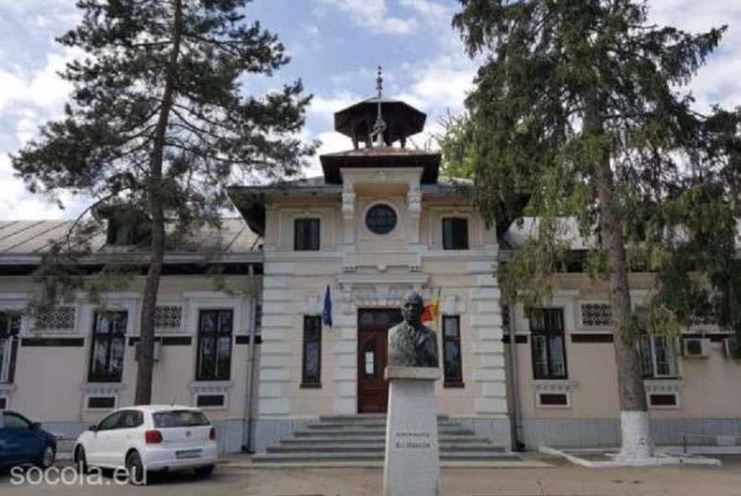


The Battle of Mohacs and its consequences in Central Europe are the theme of an exhibition that opened at the Sighisoara Medieval Fortress as part of the ProEtnica Intercultural Festival, now in its 25th edition.
The event, organised by the German Cultural Forum for Eastern Europe (Deutsches Kulturforum Ostliches Europa), in cooperation with the Department for Interethnic Relations (DRI), attracted a large audience and will be hosted by the Sighisoara Monastery Church until Sunday.
Saturday, August 29 marks 500 years since the decisive confrontation in which the army of the Ottoman Empire, led by Sultan Suleiman the Magnificent, defeated the army of the Kingdom of Hungary, led by King Louis II.
Representatives of the Department for Interethnic Relations, Dincer Geafer and Thomas Sindilariu, attended the opening.
'I have brought this exhibition before you for one simple reason: we would not be in a Lutheran church today without that battle; we would be in a Catholic one. Whether that is good or bad is another matter,' Sindilariu said.
He recalled that after King Louis II died in the Battle of Mohacs, the way was opened for the Habsburgs to take the crowns of Bohemia and Hungary, while the treaty concluded marked the new map of Central Europe.
On the first evening of the ProEtnica Festival, hundreds of spectators attended a performance by several ensembles representing national minorities.
Representing the Union of Serbs in Romania - the Sannicolau Mare local organisation, the Sveti Sava Ensemble took to the stage in Sighisoara with traditional dances and songs.
Performances in which costumes, music and folk dances spoke of an identity preserved and passed down from generation to generation were also presented by representatives of the Union of Bulgarians in Banat, through the Horo Ensemble; the Union of Croats in Romania, through the KUD Karasevska Zora ensemble; the Union of Poles in Romania, through Dom Polski Poiana Micului and the 'Mala Pojana' Polish Highlanders' Ensemble; artists from the Association of Macedonians in Romania, through the Soarele - Sontse Ensemble; and the Greek Community of Onesti, a member of the Hellenic Union of Romania.
The first evening of the festival ended to the sound of songs and dances performed by the ensemble of the Democratic Forum of Germans in Romania. AGERPRES (RO - writing by: Catalina Matei; EN - writing by: Simona Iacob)
- Category: English
- Date: 2026-08-27 16:50:50
- Foto: Alex MICSIK / AGERPRES Photo