

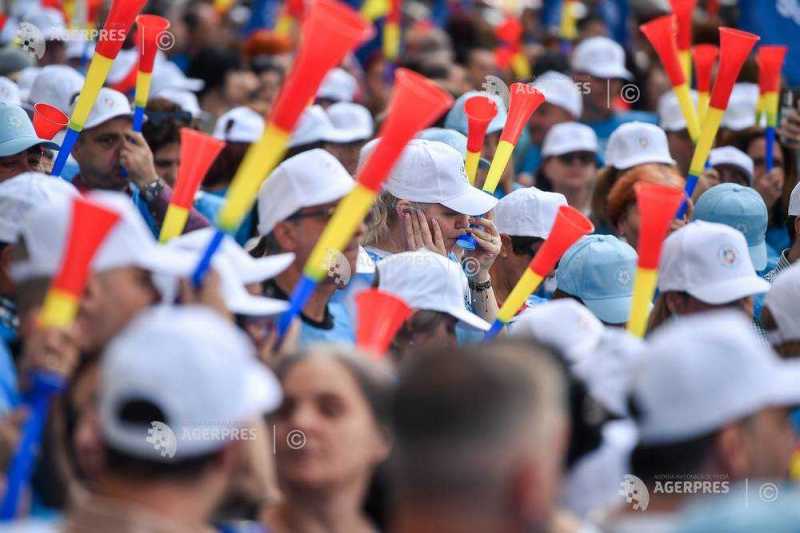
The negotiation of collective labour agreements at sectoral level is facing blockages in several areas of the private sector, including retail, IT and banking, according to the leaders of the trade union federations participating in Tuesday's protest outside the Ministry of Labour.
'We are protesting because there are structural blockages in the approach to and initiation of collective bargaining processes at sectoral level, making Romania's target of having at least 80% of employees covered by a collective labour agreement, in line with European requirements, impossible to achieve. There are major problems in negotiating sectoral agreements, even where such agreements have existed, for example in the banking sector, where companies are withdrawing from employers' associations and we no longer have anyone to negotiate with, or there are delays and negotiations that are slow to non-existent in retail, while negotiations have not even been initiated in other sectors,' president of the IT & Communications Trade Union Federation Florentin Iancu told AGERPRES.
According to him, the problems in the private sector are comparable to those in the public sector.
'The protest is a continuation of discussions we have previously had at the Ministry of Labour. Things have not been unblocked, on the contrary, they are getting worse and employee representation is weakening by the day,' Iancu said.
The trade union leader also drew attention to restructuring in the IT sector.
'At the moment there is an enormous amount of restructuring. A sectoral agreement could create a minimum framework regarding the social plans under which these people are being made redundant. (...) There are quite a lot of people in more basic jobs, such as support, who are not paid the amounts mentioned in the press and who are currently at serious risk of losing their jobs. Dozens of people are being made redundant. Of course, this is not visible because it is done by mutual agreement, but the IT sector is perhaps going through a more turbulent period than retail or other sectors in terms of the number of employees affected by staff cuts,' he said.
The trade unionist stressed that finding a new job in the sector is currently more difficult and could take as long as 10 months.
Meanwhile, president of the Commerce Trade Union Federation Vasile Gogescu said that organising trade unions in the private sector is difficult because employers do not allow it.
'In the private sector, the unionisation rate is below 5%. Elsewhere, employers do not allow it. We commend those who have allowed it, those who have managed to establish trade unions in the private sector, but generally speaking, it is an almost lost battle when you try to set up a trade union in a private-sector company. I can tell you, for example, that a retail employee receives an additional allowance of 3 lei per hour for working on a Sunday. That is the average allowance paid in the retail sector. And bear in mind that there are around 800,000 employees in this sector. It is the largest sector of the national economy, with the highest number of employees,' Gogescu told AGERPRES.
He estimates that approximately 60% of retail employees are paid the minimum wage or incomes close to it.
Gogescu also complained about difficulties in negotiating collective agreements at sectoral level.
'Employers, the major companies, find all sorts of loopholes to refuse negotiations or, if they rarely agree to them, find reasons to ensure that they do not apply erga omnes (to everyone, ed. n.) or, even worse, that the outcome of the negotiations is effectively zero, if they do not try to cut something else. That is what happens in the private sector, where the state has withdrawn from these workers and leaves them at the mercy of employers,' the president of the Trade Union Federation of Commerce warned.
Problems with collective bargaining are also found in the banking sector, according to president of the Insurance and Banks Trade Union Federation Constantin Paraschiv.
'The main purpose of the protest is to send a warning to the authorities in particular, who have undertaken, through the European Directive on adequate minimum wages, to seek solutions to encourage collective bargaining so that 80% of sectors of activity are covered by collective agreements. This has not happened. Moreover, companies have resorted to an even more dangerous tactic. For example, in the banking system, the employers' organisation in the banking sector was representative at sectoral level and, following negotiations, employees throughout the banking system could benefit from the collective agreement,' Paraschiv told AGERPRES.
He said that the loss of the employers' organisation's representative status had changed the scope of the collective agreement.
'Smaller banks, seeing that they were required to apply the provisions of the agreement everywhere, erga omnes, tried to exert influence in such a way that the major companies that were members of CPBR (Romanian Banking Employers' Council - ed. n.) withdrew, leaving CPBR without representative status. Under these circumstances, without representative status, the collective labour agreement applies only to the signatory companies. So, at the level of a group of establishments, not at sectoral level,' the trade unionist explained.
Constantin Paraschiv announced that the action would not stop with Tuesday's protest in Bucharest but would also reach Brussels, with trade union action scheduled for 30 September.
The protest outside the Ministry of Labour is scheduled for Tuesday between 11:00 and 13:00. According to Vasile Gogescu, the demonstration has been authorised for 150 people.
The trade unions are also calling for an increase in the national minimum wage from 1 January 2027, which is the second demand of the protest action. AGERPRES (RO - writing by: George Banciulea; EN - writing by: Adina Panaitescu)
Trade unions protest against blockage in collective bargaining in private sector
Conţinutul website-ului www.agerpres.ro este destinat exclusiv informării publice. Toate informaţiile publicate pe acest site de către AGERPRES sunt protejate de dispoziţiile legale incidente. Sunt interzise copierea, reproducerea, recompilarea, modificarea, precum şi orice modalitate de exploatare a conţinutului acestui website. Informaţiile transmise pe www.agerpres.ro pot fi preluate, în conformitate cu legislaţia aplicabilă, în limita a 500 de semne. Detalii în secţiunea Condiţii de utilizare. Dacă sunteţi interesaţi de preluarea ştirilor AGERPRES, vă rugăm să contactaţi Direcţia Marketing - marketing@agerpres.ro.
Alte știri din categorie
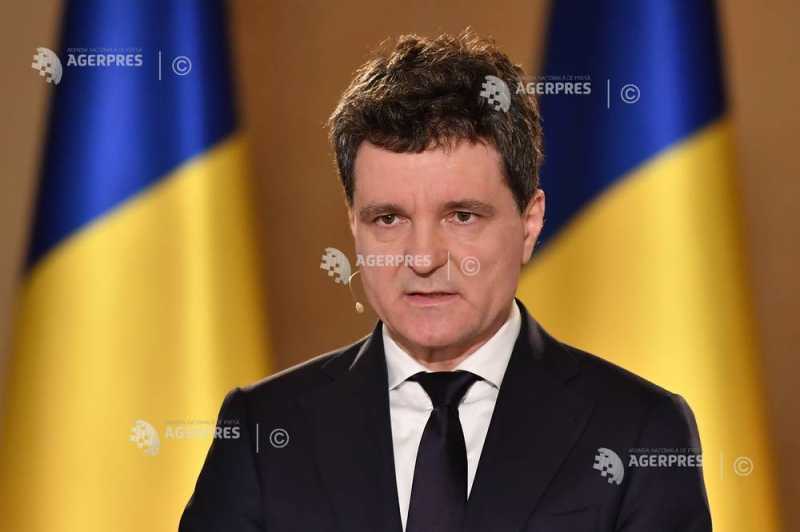
President Nicușor Dan to attend the High-Level Week of the UN General Assembly
President Nicușor Dan has several meetings and events scheduled in New York between 20 and 23 September, as part of his participation in the 81st session of the United Nations General Assembly, according to the agenda published by the Presidential Administration. The President is scheduled to deliver Romania's national statement during the High-Level Week of the session

President Dan says Foreign Ministry investigating Orlivka school case
President Nicusor Dan said on Friday that Romania's Foreign Ministry has opened an investigation into the case of the school in Orlivka, Odesa region, where a Year 1 class taught in Romanian was closed. Speaking at a news conference held after the Carpathian Integration Initiative 'Carpathian 8' Summit, he said that 'remarkable progress has bee

Bolojan: We will try, within our possibilities and depending on our electoral weight, to form a Government
President of the National Liberal Party (PNL) Ilie Bolojan said on Friday that, although Siegfried Muresan's nomination for prime minister came three months late, the party would deal with the situation 'responsibly' and seek to form a Government based on its electoral weight. 'Yesterday, about 30 minutes beforehand, I learned from the piece of

Siegfried Muresan: We will start work on a government programme; beginning of next week - discussion with MPs
Prime Minister-designate Siegfried Muresan announced on Friday that he was starting work on the government programme together with the National Liberal Party (PNL), Save Romania Union (USR) and the Hungarian Democratic Union of Romania (UDMR), mentioning that he would present the priorities at the beginning of next week and, based on these, would hold an "extremely tran

CCIR's Daraban: The diaspora is not a sentimental issue but a chapter in the national economy
The experience gained by Romanians in the diaspora in competitive markets must be transformed into investment, jobs and exports, believes Mihai Daraban, President of the Chamber of Commerce and Industry of Romania (CCIR). According to a press release from the organisation sent to AGERPRES, the institution is strengthening its partnership with ROUNIT - Reunited
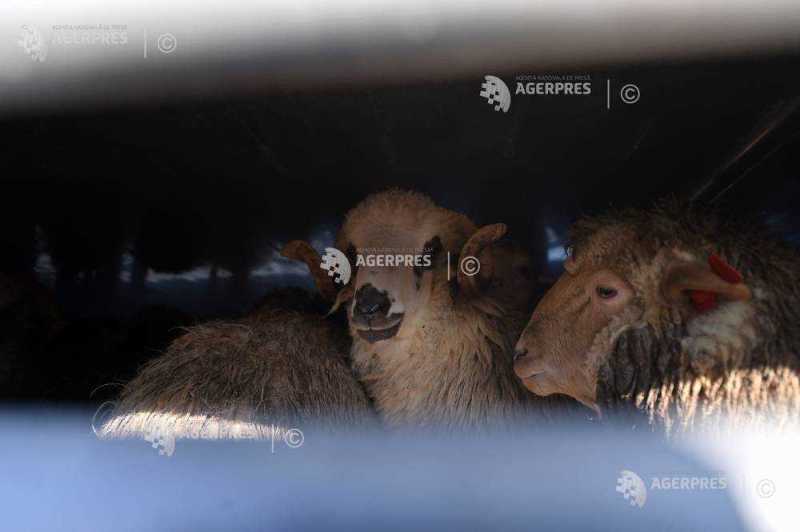
European Commission approves ANSVSA's Action Plan to unblock sheep and goat exports
The Action Plan of the National Veterinary Sanitary and Food Safety Authority (ANSVSA) for unblocking exports of sheep and goats has been approved by the European Commission, allowing exports of carcasses and products to resume under the differentiated vaccination scheme. According to an ANSVSA release sent to AGERPRES on Friday, the approved solution protects
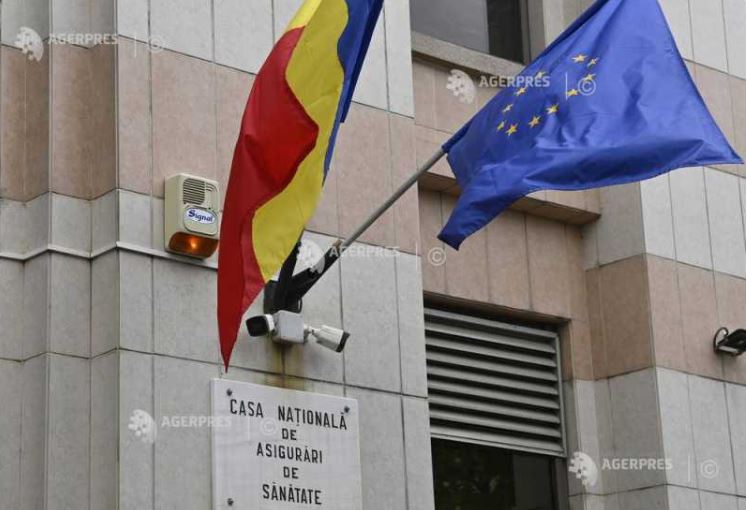
Health Insurance House launches project on cross-border exchange of medical images, laboratory results, discharge reports
The National Health Insurance House (CNAS) announced on Friday the launch of the European project 'Romanian Medical Images, Laboratory Results and Discharge Reports' (RO-MI-LR-DR), for the cross-border exchange of medical images, laboratory results and discharge reports. The project is funded through the EU4Health programme, with the European Health an
'Socola' Institute of Psychiatry in Iasi to hold new memory testing campaign at weekend
The 'Socola' Institute of Psychiatry in Iasi has announced that it will hold the third edition of its 'Memory Testing Campaign' on Saturday and Sunday, a campaign addressing people of all ages and aimed to identify individual risk factors that may predispose people to memory disorders, while also providing participants with specialist counselling.