
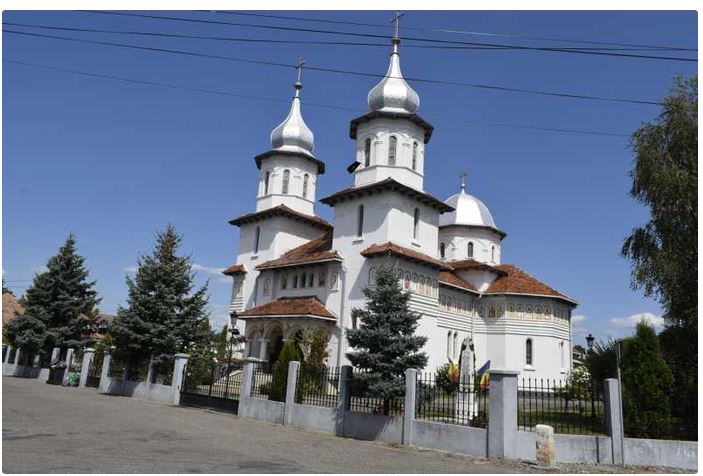
In an age when shopping centres have become the main spaces for socialising and the daily rush isolates us behind screens, a community on the outskirts of Reghin refuses to forget its roots and has decided to reopen the gates of time, so that neighbours can once again live for one another.
The Iernuteni district, a former village with a distinctive character that was incorporated into the city seven decades ago, is preparing to rediscover its old-time charm by organising a unique street ball in September.
The initiative was born from a simple conversation between two local women, Ibolya Mester and Annamaria Szekely, the wife of a local priest.
Ibolya Mester, born and raised on Oltului Street, nostalgically recalls the Iernuteni of her childhood, which she describes as an extremely vibrant community.
'I knew that if I needed a pot, I would go to Mrs Marioara; if I needed tomatoes, I knew that Mrs Demeter had the best tomatoes, and if I needed onions, I knew we had onions in the garden,' Ibolya Mester said.
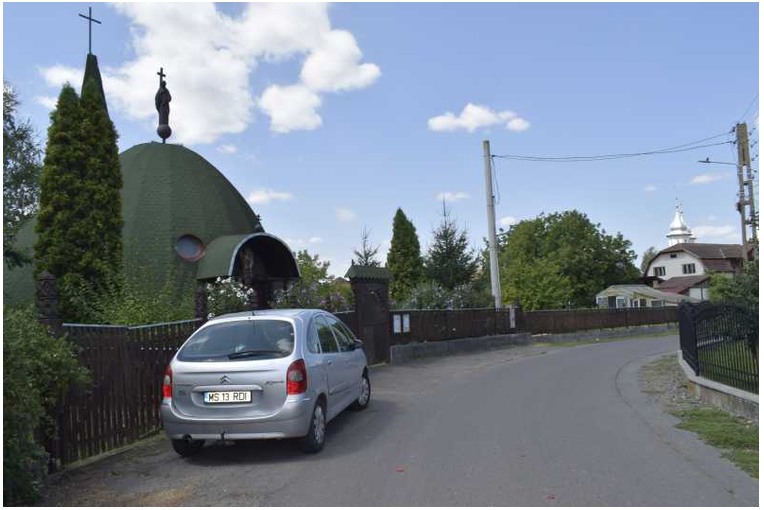
Concerned that people no longer have time for one another and that the old meeting place, the Mures River, no longer serves this purpose, Ibolya Mester and Annamaria Szekely took the model of a street festival in Budapest.
The objective is clear: to bring those who have left back home, spend an afternoon together and erase cultural boundaries through games, as the district is multi-confessional and multi-ethnic.
A huge competition between streets will be held on the football pitch, while women will relax at yoga and Zumba classes, and the day will symbolically end around a cauldron.
'Everything ends with a goulash that we prepare and eat together, with folk dancing. Hungarians and Romanians live on the street. We want to learn each other's dances,' said the organiser.
The same warm, peaceful atmosphere, free from the stress of modern-day hustle and bustle, is also evoked by Father Claudiu Chiorian, the priest of the Orthodox church in Iernuteni.
Raised in this community, which developed over time and through industrialisation, he recalls that differences of ethnicity or religion did not exist in everyday life, when people primarily enjoyed one another's company, did not isolate themselves and sought to help one another.
'I do not remember us making distinctions based on ethnicity, religion and so on; we danced together and learned dances,' Father Claudiu Chiorian said.
A clear example of this natural ecumenism is the memory of Popa Sandu, a renowned icon painter from the area's past. Although Father Chiorian only found out much later that the celebrated artist was in fact Greek Catholic, his cultural value remained undiminished.
'For me, he was Popa Sandu, and by applying what we learned from him, we teach children from our community to paint on glass, of course in a naive, folk style,' said the priest, who explained that the icons from Iernuteni are easily recognisable throughout the country, being large, gilded pieces featuring the traditional dress of the Mures region.
History teacher Nagy Ferenc Attila brings to the fore the documented past of the settlement, a former royal estate included in the Gurghiu region. Thus, Iernuteni was once the venue for memorable hunting parties for crowned heads such as Prince Rudolf and King Ferdinand.
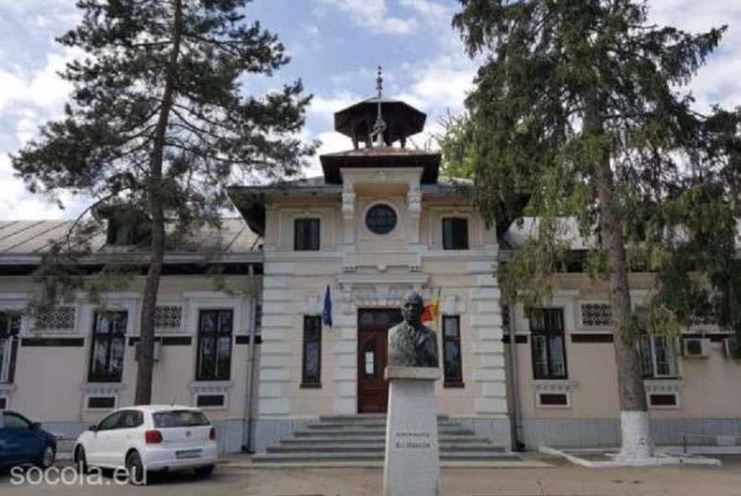
The old layout, with streets named after Romania's rivers - Oltului, Siretului and Argesului - which start near the cultural centre, has always been a nucleus of Transylvanian coexistence among Romanians, Hungarians, Saxons, Jews and Armenians.
Historical research has brought to light prominent figures who shaped the area. They include biologist Kiss Zoltan, Grama Janos, who suffered in the aftermath of the 1956 revolution, and Reformed priest Gergely Lajos, founder of the local Reformed church. The area is also associated with the name of renowned photographer Georg Heiter (1871-1947), who became the photographer of the Romanian Royal Court, as well as the history of the Romanian-origin Macskasi family, which owned an imposing castle there that was sold and partly demolished in 1921.
To celebrate this past, Professor Nagy announced that a special tent featuring a historical exhibition of the district would be set up at the festival.
'We also want to collect some old objects and photographs. We have found maps from the 1700s as well, so there will be a tent here where we will bring together these images of old Iernuteni,' the professor said.
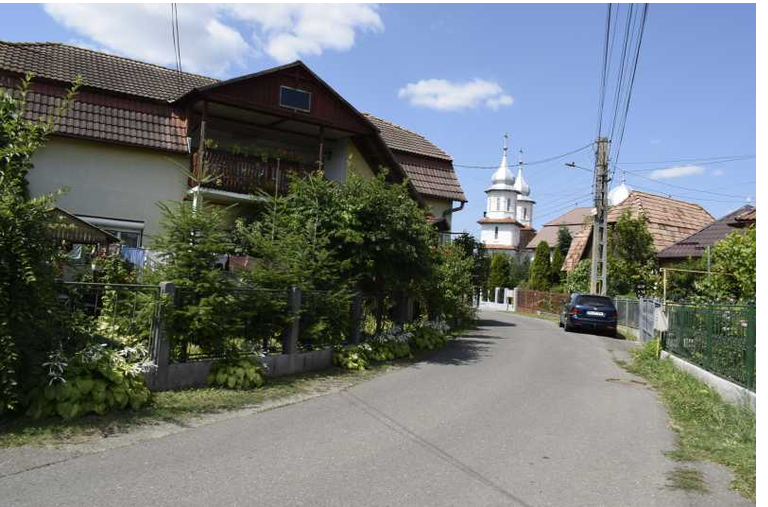
The past, however, will not remain locked away in archives, and on the occasion of the street party, the community will launch an interactive mobile phone application designed as a treasure hunt for the whole family.
'The old houses. They are part of our history, and you have to go and look for them based on a map. It will be an interactive map. You go there, look for them, scan them, take a photo, and then you find out a lot of information,' Ibolya Mester explained, describing the mechanism designed to put Iernuteni on Reghin's tourist map.
Participants will receive prizes at the end, while the organisers hope to expand the platform to the entire city, offering tourists a modern and playful way to discover the secrets of Reghin.
On September 5, in Iernuteni, nostalgia will not be a reason for sadness, but the main ingredient of a celebration that shows that when people join hands, the spirit of neighbourliness can overcome the isolation of the 21st century. AGERPRES (RO - writing by: Dorina Matis; EN - writing by: Simona Iacob)
- Category: English
- Date: 2026-08-14 19:00:13
- Foto: Dorina MATIS / AGERPRES