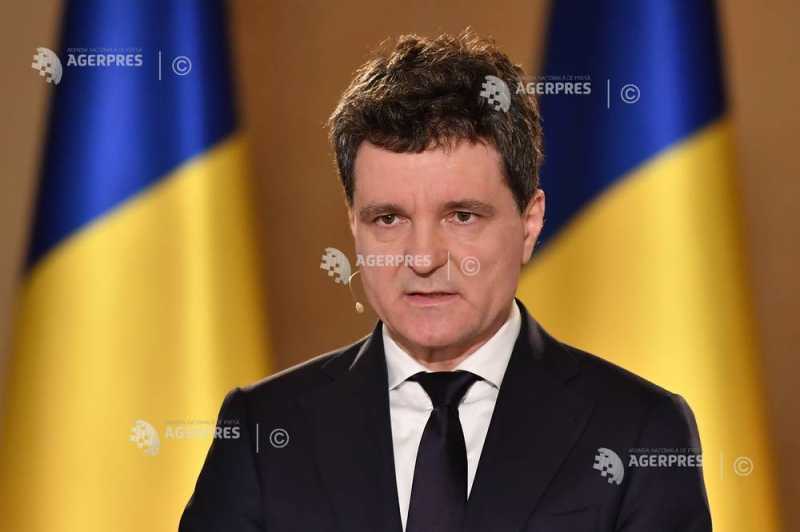

The rise of ultra-identitarian and sovereignist currents cannot be explained exclusively by manipulation, but is based on structural causes - the crisis of democratic representation, inequalities, distrust in institutions and a European project that 'speaks the language of the administration' in an era of emotions, according to the Report of the Strategic Reflection Group 'Romania in the EU' - National Identity, European Identity and the Challenge of Populism, published by the Presidential Administration.
According to the document, public opinion data show that Romanians' support for the European Union is majority, but pragmatic and conditional - a pro-Europeanism 'by calculation, not by conviction', easily eroded in the absence of clearly felt benefits.
The report outlines a unitary thesis: national and European identity are not competing loyalties, but concentric, and the tension between them is not inevitable, but politically induced.
The authors of the document believe that the answer to radicalism is neither minimization nor demonization, but good governance, the reduction of inequalities, civic and historical education, the recovery of patriotism by democratic forces, the protection of the information space and the assertive affirmation of Romania as an influential actor in the Union. Combating extremism is done on the ground of ideas, not through criminal instruments, and the defense of democracy requires firmness in the face of hostile operations, but openness towards citizens attracted by these ideas.
Overall, the document proposes a vision in which the Romanian specifics and the European vocation mutually reinforce each other. Romania is European not in spite of its identity, but through the way it was built at the intersection of tradition and modernity, of diversity and unity.
'The ultimate stake is not the choice between the national and the European, but the quality of the democracy capable of harmonizing them - a democracy that demonstrates that solidarity, pluralism and cooperation are resources of strength, not weakness, in an increasingly fragmented world,' the report states.
Among the authors of the contributions are Teodor Baconschi, Sergiu Miscoiu, Adrian Papahagi, Remus Stefureac and Sever Voinescu.
The report also emphasizes that patriotism and membership of the European Union are compatible. 'Loving one's country and supporting the European project are objectives that can reinforce each other,' the report states.
At the same time, the document highlights the importance of consolidating democracy by reducing inequalities, developing civic and historical education, combating disinformation and promoting democratic patriotism.
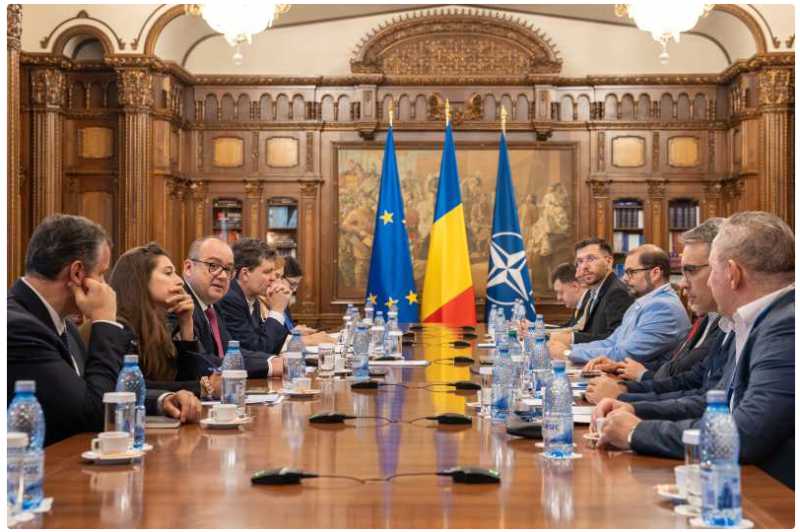
The Strategic Reflection Group 'Romania in the EU' (RUE) brings together independent experts who analyze developments in the European Union and propose solutions for Romania to consolidate its position and make the most of the opportunities offered by EU membership.
RUE was established at the level of the Presidential Administration and is coordinated by presidential advisor Valentin Naumescu. AGERPRES(RO - writing by: Oana Ghita; EN - writing by: Bogdan Gabaroi)
- Category: English
- Date: 2026-07-22 21:22:23
- Foto: presidency.ro