
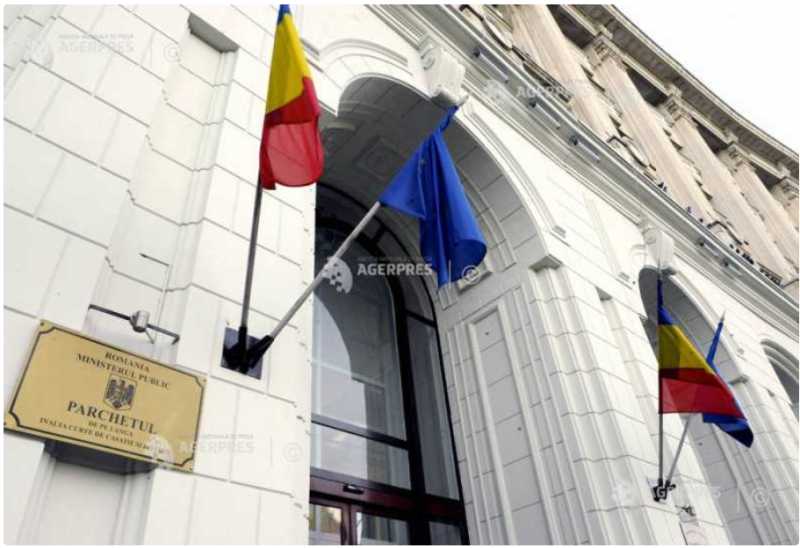
MEP Diana Sosoaca has been sent to trial by the Prosecutor's Office attached to the High Court of Cassation and Justice on four counts of unlawful deprivation of liberty, after allegedly preventing an Italian journalist from leaving her office during an interview in December 2021.
Her former husband, Silvestru Sosoaca, has also been sent to trial, charged with four counts of unlawful deprivation of liberty and one count of assault or other violence.
This case represents the portion of the file for which the European Parliament lifted Diana Sosoaca's immunity. The remaining accusations, concerning legionary propaganda, were severed and are being investigated separately.
In December 2021, RAI Uno journalist Lucia Goracci filed a criminal complaint against Sosoaca, accusing the lawmaker of having detained her in her Bucharest law office due to disagreements over an interview.
A team from Italy's public broadcaster RAI Uno, including Goracci, went to Sosoaca's law office to conduct an interview. The incident escalated after the former senator changed her mind about the questions, locked the door and called the police.
Officers from Police Station 4 arrived at the scene, but Silvestru Sosoaca allegedly assaulted one of the officers.
The Prosecutor's Office states: 'On December 10, 2021, the two defendants unlawfully deprived four persons (three injured parties and one witness) of their liberty, after they had been invited into the Bucharest law office of the defendant for conducting an interview. In the same context, the second defendant exercised acts of violence against one of the injured parties, hitting her with his fists in the shoulder area and on the arm, and tearing off her sanitary mask. The prosecutor found that the act of unlawful deprivation of liberty was generated by the defendant's dissatisfaction with the questions addressed by one of the injured parties (a journalist), and not by the commission of any offences by the injured parties, who were supervised throughout the interview by the other defendant and a witness.'
The Prosecutor's Office notes that at the time of the incident, Diana Sosoaca was serving as a senator.
Under Romanian law, deputies and senators benefit from the protection of authority during their parliamentary term, as bearers of state public authority.
At that time, Sosoaca benefited from parliamentary immunity for political opinions, as regulated by Articles 20 - 22 of Law No. 96/2006 and Article 72 of the Constitution. Parliamentary immunity is limited to political opinions - meaning lawmakers cannot be held legally liable for votes or political opinions expressed in the exercise of their mandate.
However, deputies and senators may be criminally investigated and sent to trial for acts not related to votes or political opinions expressed in the exercise of their mandate. AGERPRES (RO - writing by: Eusebi Manolache; EN - writing by: Simona Klodnischi)
- Category: English
- Date: 2026-07-16 16:59:44
- Foto: Sorin Lupsa / Agerpres Photo