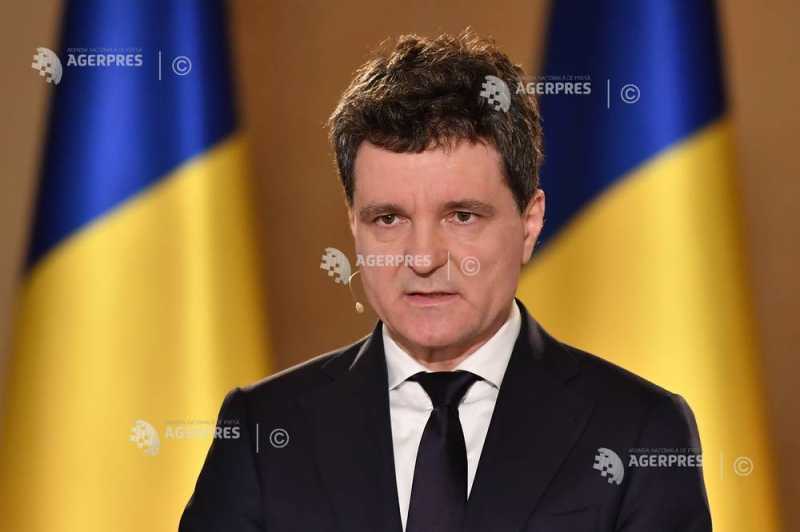

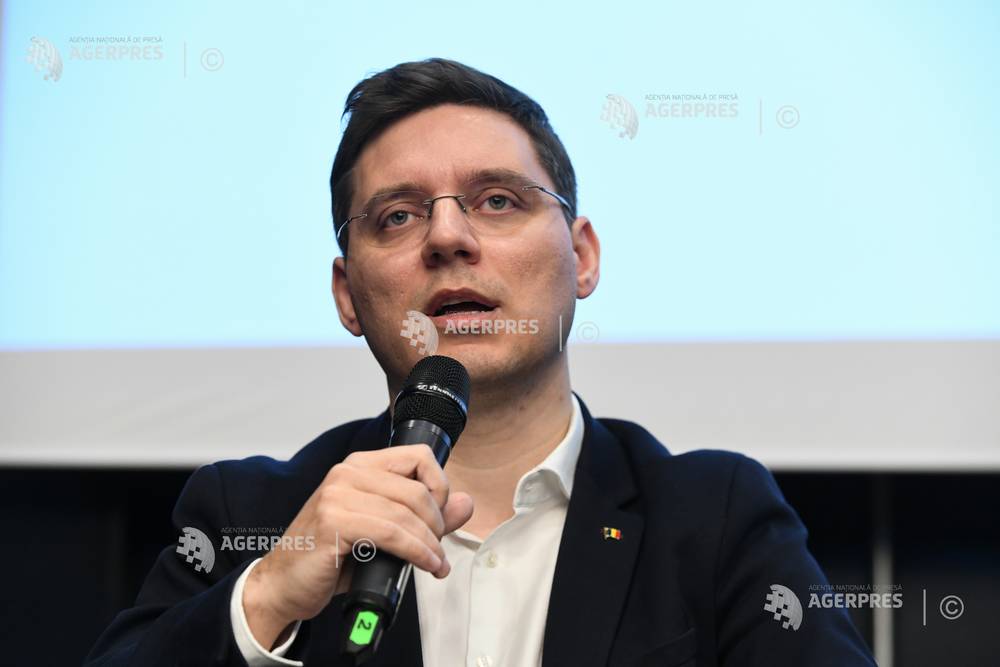
Romania must secure a financial allocation from European funds in the next multiannual financial framework that is comparable to the current €60 billion; otherwise, this could pose a major risk to the country's economic development, European Parliament Vice-President Victor Negrescu stated on Wednesday at a specialized event.
'We must ensure that Romania continues to receive a financial allocation from European funds comparable to what we currently receive. The European Commission's proposal mentions a figure of 60 billion euros. When adjusted for inflation and price trends, this amount is similar to the funding we receive under the current multiannual financial framework. Anything less than 60 billion euros could pose a major risk to Romania's economic development. Therefore, we must fight to maintain at least this level of funding. We must ensure that local development and cohesion funds are maintained at similar levels and that accessing these resources does not become overly complex due to conditions linked to new reforms—reforms which, in recent years, have proven not to be the most conducive to Romania's economic development,' said Negrescu.
On the other hand, he advocates for the European Competitiveness Fund to be distributed equitably.
'We must also fight to ensure that the European Competitiveness Fund is distributed equitably, including from a geographical perspective. We need to develop a financing mechanism here in the country that is directly accessible to SMEs. And if we look at the NRRP, the funds allocated to SMEs were insufficient relative to actual needs. We are now seeing issues with the utilization of these resources, with many projects stalling during the implementation phase precisely because a genuine partnership with SMEs was not developed,' the European official added.
According to him, Romania must act in a united manner in Brussels.
'With this in mind, we need a common national mandate—developed in collaboration with the business community, local authorities, and civil society—because Romania can no longer afford to go to Brussels with twenty different positions only to return with a single explanation: that it couldn't be done! I am fed up with politicians who blame Brussels for absolutely everything! Negotiations there are not simple, but to secure outcomes that serve the country's interests, one must arrive well-prepared; above all, we must all work as a team, because in Brussels, we do not have a political affiliation. Our only affiliation is—and remains—Romania!' emphasized the Vice-President of the European Parliament.
Victor Negrescu attended the launch of the 24th edition of the SME White Paper, prepared by the SME Romania Employers' Confederation, at the headquarters of the National Bank of Romania (BNR).
Conducted during the first half of this year on a nationally representative sample comprising approximately 1,800 small and medium-sized enterprises from all counties and sectors of activity, the document provides a detailed snapshot of the local entrepreneurial landscape.
The Charter focuses primarily on how SMEs approach fundamental issues such as business financing, access to European funds, and personnel policies. At the same time, the document outlines a complex profile of the typical entrepreneur, capturing their perceptions of the current economic climate and their vision for the future. AGERPRES (RO - writing by: Cristian Anghelache; EN - writing by: Catalin Cristian Trandafir)
- Category: English
- Date: 2026-07-15 16:26:03
- Foto: Cristian NISTOR / AGERPRES Photo