

Romania can no longer be seen as a state on the outskirts of NATO, but as an essential actor for the balance of the eastern flank, the security of the Black Sea, the support provided to Ukraine and the Republic of Moldova and for the credibility of the Euro-Atlantic deterrence in the region, Nicoleta Pauliuc, chair of Romania's Senate Defence Committee, said on Tuesday.
Pauliuc added that Romania needs not only correct decisions, but also 'a mature strategic conversation' about its role in the region and in the European security architecture, recalling that the Supreme council for National Defence set Romania's objectives for the NATO summit in Ankara.
She described the meeting as a 'test of strategic coherence' for the entire Alliance.
'Romania must go to Ankara with a clear message: the security of the eastern flank cannot be complete without a robust, coherent and permanent approach to the Black Sea. We need a strong defence and deterrence posture, an adequate allied presence in air defence, air surveillance and mobility, maritime security and the protection of critical infrastructure. Here Romania no longer comes only with requests, but with deeds,' Pauliuc said at the round table 'The road to Ankara. Eastern Flank Priorities', organized by the AGORA Centre for Democracy, with support from Policy Path and the Committee on Defence, Public Order and National Security.
Pauliuc criticised the perception that Romania is defined only by its vulnerabilities, that it is close to war, has drone incidents, hybrid risks, pressures on critical infrastructure, noting that all these things are true, but 'a country is not defined by its exposure, but by the ability to transform that exposure into strategic relevance.'
'Romania can no longer be seen as a state on the outskirts of NATO, but as an essential state for the balance of the eastern flank, for the security of the Black Sea, for the support provided to Ukraine and the Republic of Moldova and for the credibility of the Euro-Atlantic deterrence in this part of Europe. Romania's security does not end at the Prut and does not begin in Constanta; it is built in all the space where instability can become a threat. Therefore, support for Ukraine and the Republic of Moldova does not mean only solidarity, but even strategic lucidity. The better Ukraine resists, the safer the eastern flank. The more stable the Republic of Moldova, the more protected Romania is, the safer the Black Sea, the safer Europe is. That is the equation we are taking to Ankara,' said Pauliuc.
She added that 'in defence, good intentions do not defend borders, only capabilities defend them.'
'Deterrence is not a word in the wind, but capacity, presence, industry, infrastructure and last but not least political will. We cannot ask for a stronger allied posture without building, at the same time, a stronger Romania. That means serious investment in defence, budgetary predictability, timely execution, infrastructure that allows real military mobility, interoperability and institutions that can work together at the pace that the security reality requires. Peace is not defended with improvisation. One of the great lessons of the war in Ukraine is related to the defence industry. In a security crisis, it's not just what you bought that matters, but what you can produce, repair, adapt and deliver on time. Romania must not remain just a procurement market, but must become a space for production, maintenance, research, innovation, allied industrial cooperation,' Pauliuc said.
Senior official with Romania's Foreign Ministry Ana Tinca said that the summit in Ankara has a very important stake.
'This summit is one with stakes and I think that when we characterise it as such, we must start from the current security situation, which is, unfortunately, truly exceptional. The allied leaders will meet in Ankara in an extremely complicated security environment, with the war in Ukraine on Romania's border, which has been going on for more than four years, with the emergence of new conflict zones, which affect partner countries, but also affect us in various ways and with a recalibration of American security and defence policy, a major ally in NATO, which we need to talk about to ensure that we manage this natural process of recalibration through the contributions of all allies in a way that ensures a very solid deterrence and defence posture, without the emergence of new vulnerabilities,' Tinca said.
She added that 'the meeting in Ankara is a very important opportunity for NATO to project an image of solidarity and power.'
'We need to make sure that the message is clear about NATO's determination to counter all these threats very effectively. The political message has no value unless it is supported by some very concrete commitments, which we already made at the Hague summit, at the previous summit, where we spoke very seriously about the fact that we need to increase the financial resources allocated to defence, and we need to make sure that the Alliance has the military capabilities it needs to counter all these threats and, first of all, the Russian threat,' said Tinca.
The Turkish ambassador in Bucharest, Ozgur Kivanc Altan, said that the summit in Ankara is expected to send a strong, unambiguous message regarding transatlantic solidarity.
Ankara is hosting this summit at a time when unity and solidarity are needed more than ever in recent history; the war in the neighbourhood continues immorally, involving developments on the battlefield and with the effort to reach an agreement, the ambassador said.
He added that the arc of instability surrounding the alliance has never been so wide.
In this environment, the Ankara summit must deliver results as a host ally, according to the ambassador.
We expect to send a strong, unambiguous message on transatlantic solidarity, which will reflect the determination of European allies to strengthen their role in the alliance, to strengthen the relationship between our spending commitments and to reaffirm our commitment to a 360-degree approach to security, and to underline our strong support, continuously towards Ukraine, the ambassador said.
According to him, the commitments made to increasing defence spending to 5% will feature on the agenda of the summit. AGERPRES (RO - editing by: Alina Novaceanu; EN - writing by: Corneliu-Aurelian Colceriu)
Road to Ankara/Romania, an essential state for Eastern Flank balance, Black Sea security (official)

Conţinutul website-ului www.agerpres.ro este destinat exclusiv informării publice. Toate informaţiile publicate pe acest site de către AGERPRES sunt protejate de dispoziţiile legale incidente. Sunt interzise copierea, reproducerea, recompilarea, modificarea, precum şi orice modalitate de exploatare a conţinutului acestui website. Informaţiile transmise pe www.agerpres.ro pot fi preluate, în conformitate cu legislaţia aplicabilă, în limita a 500 de semne. Detalii în secţiunea Condiţii de utilizare. Dacă sunteţi interesaţi de preluarea ştirilor AGERPRES, vă rugăm să contactaţi Direcţia Marketing - marketing@agerpres.ro.
Alte știri din categorie
President Nicușor Dan to attend the High-Level Week of the UN General Assembly
President Nicușor Dan has several meetings and events scheduled in New York between 20 and 23 September, as part of his participation in the 81st session of the United Nations General Assembly, according to the agenda published by the Presidential Administration. The President is scheduled to deliver Romania's national statement during the High-Level Week of the session

President Dan says Foreign Ministry investigating Orlivka school case
President Nicusor Dan said on Friday that Romania's Foreign Ministry has opened an investigation into the case of the school in Orlivka, Odesa region, where a Year 1 class taught in Romanian was closed. Speaking at a news conference held after the Carpathian Integration Initiative 'Carpathian 8' Summit, he said that 'remarkable progress has bee

Bolojan: We will try, within our possibilities and depending on our electoral weight, to form a Government
President of the National Liberal Party (PNL) Ilie Bolojan said on Friday that, although Siegfried Muresan's nomination for prime minister came three months late, the party would deal with the situation 'responsibly' and seek to form a Government based on its electoral weight. 'Yesterday, about 30 minutes beforehand, I learned from the piece of

Siegfried Muresan: We will start work on a government programme; beginning of next week - discussion with MPs
Prime Minister-designate Siegfried Muresan announced on Friday that he was starting work on the government programme together with the National Liberal Party (PNL), Save Romania Union (USR) and the Hungarian Democratic Union of Romania (UDMR), mentioning that he would present the priorities at the beginning of next week and, based on these, would hold an "extremely tran

CCIR's Daraban: The diaspora is not a sentimental issue but a chapter in the national economy
The experience gained by Romanians in the diaspora in competitive markets must be transformed into investment, jobs and exports, believes Mihai Daraban, President of the Chamber of Commerce and Industry of Romania (CCIR). According to a press release from the organisation sent to AGERPRES, the institution is strengthening its partnership with ROUNIT - Reunited
European Commission approves ANSVSA's Action Plan to unblock sheep and goat exports
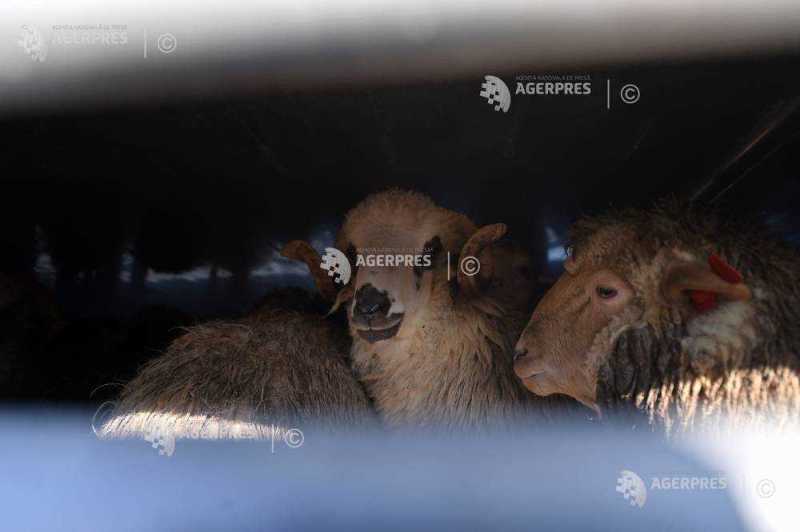
The Action Plan of the National Veterinary Sanitary and Food Safety Authority (ANSVSA) for unblocking exports of sheep and goats has been approved by the European Commission, allowing exports of carcasses and products to resume under the differentiated vaccination scheme. According to an ANSVSA release sent to AGERPRES on Friday, the approved solution protects
Health Insurance House launches project on cross-border exchange of medical images, laboratory results, discharge reports
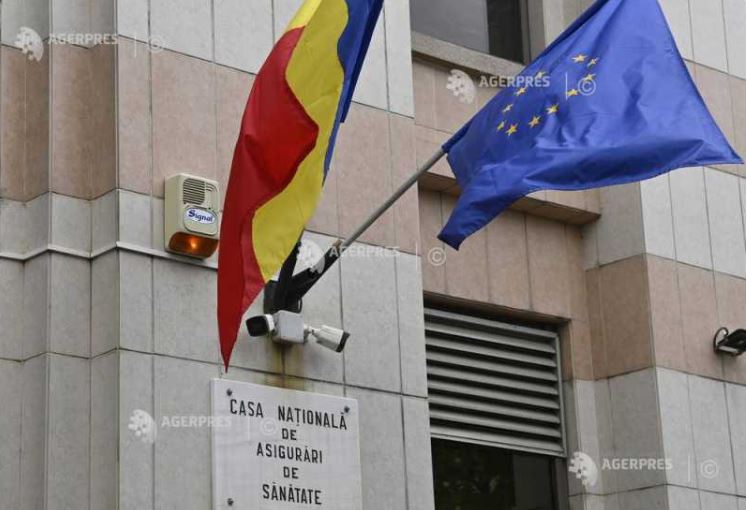
The National Health Insurance House (CNAS) announced on Friday the launch of the European project 'Romanian Medical Images, Laboratory Results and Discharge Reports' (RO-MI-LR-DR), for the cross-border exchange of medical images, laboratory results and discharge reports. The project is funded through the EU4Health programme, with the European Health an
'Socola' Institute of Psychiatry in Iasi to hold new memory testing campaign at weekend
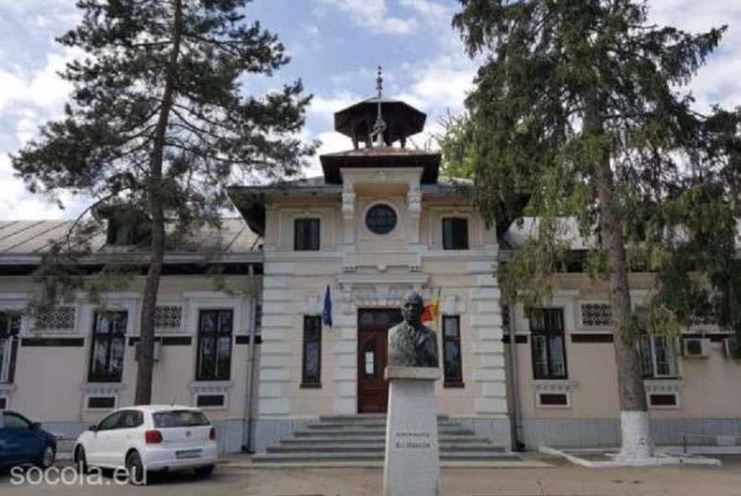
The 'Socola' Institute of Psychiatry in Iasi has announced that it will hold the third edition of its 'Memory Testing Campaign' on Saturday and Sunday, a campaign addressing people of all ages and aimed to identify individual risk factors that may predispose people to memory disorders, while also providing participants with specialist counselling.