

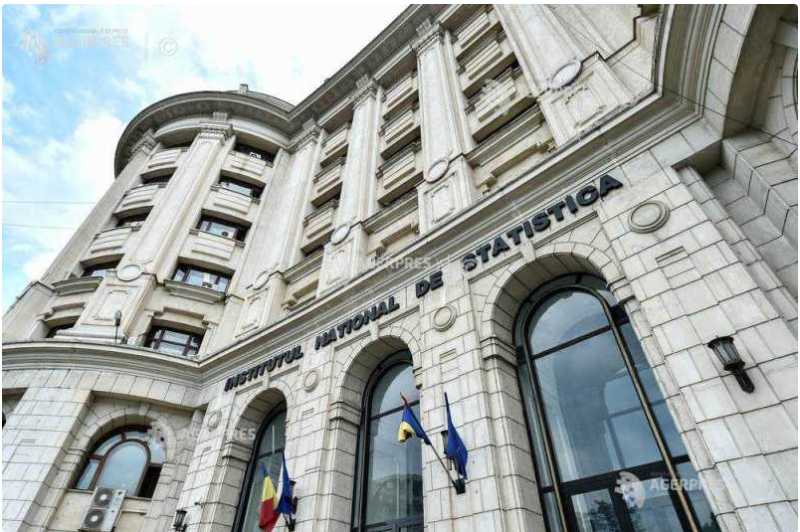
The number of people living in poverty in Romania stood at 3.468 million in 2025, down 3.5% from the previous year, while the at-risk-of-poverty rate (AROP) was 18.4%, 0.6 percentage points lower than the level reported a year earlier, according to data the National Institute of Statistics (INS) published on Monday.
According to the institute, the poverty rate was higher among women than men by 0.7 percentage points, at 18.7% compared with 18%.
The highest incidence of poverty was recorded among people aged 18 to 24, at 25.8%, followed by children and adolescents aged 0 to 18, at 23.6%.
The poverty rate among people living in households with children and dependent young adults aged 18 to 24 was 21.2% in 2025, down 1.4 percentage points from 2024, but still 6.7 percentage points higher than for people living in households without children or dependent young adults.
INS data also show that the relative poverty threshold during the period analysed was 24,435 Romanian lei per person per year.
In 2025, the severe material and social deprivation rate in Romania stood at 16.8%, down 0.4 percentage points from the previous year. The total number of people affected by severe material and social deprivation reached 3.16 million, with women accounting for a larger share than men, at 55.9% compared with 44.1%.
Severe material and social deprivation affected population groups differently depending on age and household income. In 2025, the highest incidence was recorded among people aged up to 18, at 21.1%, and those aged 65 and over, at 19.2%.
Also in 2025, 785,000 people under the age of 65 lived in households with very low work intensity, defined as households in which working-age adults carried out work amounting to less than 20% of their total work potential. Compared with the previous year, the share of people living in such households increased by 1.3 percentage points, to 5.6% from 4.3%.
The gender breakdown shows that the number of women in this category exceeded that of men by 125,000. The proportion of people under 65 living in households with very low work intensity was 2.1 percentage points higher among women than men, at 6.7% compared with 4.6%.
As for the at-risk-of-poverty or social exclusion rate (AROPE), it stood at 27.4%, corresponding to 5.2 million people. Compared with 2024, the indicator fell by 0.5 percentage points, representing a decrease of 125,000 people.
At the same time, around 403,000 people experienced all three forms of disadvantage simultaneously: they were at risk of poverty, suffered from severe material and social deprivation and lived in households with very low work intensity. AGERPRES (RO - writing by: Daniel Badea; EN - writing by: Adina Panaitescu)
Number of people living in poverty down 3.5% in 2025 (statistics)
Conţinutul website-ului www.agerpres.ro este destinat exclusiv informării publice. Toate informaţiile publicate pe acest site de către AGERPRES sunt protejate de dispoziţiile legale incidente. Sunt interzise copierea, reproducerea, recompilarea, modificarea, precum şi orice modalitate de exploatare a conţinutului acestui website. Informaţiile transmise pe www.agerpres.ro pot fi preluate, în conformitate cu legislaţia aplicabilă, în limita a 500 de semne. Detalii în secţiunea Condiţii de utilizare. Dacă sunteţi interesaţi de preluarea ştirilor AGERPRES, vă rugăm să contactaţi Direcţia Marketing - marketing@agerpres.ro.
Alte știri din categorie

President Nicușor Dan to attend the High-Level Week of the UN General Assembly
President Nicușor Dan has several meetings and events scheduled in New York between 20 and 23 September, as part of his participation in the 81st session of the United Nations General Assembly, according to the agenda published by the Presidential Administration. The President is scheduled to deliver Romania's national statement during the High-Level Week of the session

President Dan says Foreign Ministry investigating Orlivka school case
President Nicusor Dan said on Friday that Romania's Foreign Ministry has opened an investigation into the case of the school in Orlivka, Odesa region, where a Year 1 class taught in Romanian was closed. Speaking at a news conference held after the Carpathian Integration Initiative 'Carpathian 8' Summit, he said that 'remarkable progress has bee

Bolojan: We will try, within our possibilities and depending on our electoral weight, to form a Government
President of the National Liberal Party (PNL) Ilie Bolojan said on Friday that, although Siegfried Muresan's nomination for prime minister came three months late, the party would deal with the situation 'responsibly' and seek to form a Government based on its electoral weight. 'Yesterday, about 30 minutes beforehand, I learned from the piece of

Siegfried Muresan: We will start work on a government programme; beginning of next week - discussion with MPs
Prime Minister-designate Siegfried Muresan announced on Friday that he was starting work on the government programme together with the National Liberal Party (PNL), Save Romania Union (USR) and the Hungarian Democratic Union of Romania (UDMR), mentioning that he would present the priorities at the beginning of next week and, based on these, would hold an "extremely tran

CCIR's Daraban: The diaspora is not a sentimental issue but a chapter in the national economy
The experience gained by Romanians in the diaspora in competitive markets must be transformed into investment, jobs and exports, believes Mihai Daraban, President of the Chamber of Commerce and Industry of Romania (CCIR). According to a press release from the organisation sent to AGERPRES, the institution is strengthening its partnership with ROUNIT - Reunited
European Commission approves ANSVSA's Action Plan to unblock sheep and goat exports
The Action Plan of the National Veterinary Sanitary and Food Safety Authority (ANSVSA) for unblocking exports of sheep and goats has been approved by the European Commission, allowing exports of carcasses and products to resume under the differentiated vaccination scheme. According to an ANSVSA release sent to AGERPRES on Friday, the approved solution protects

Health Insurance House launches project on cross-border exchange of medical images, laboratory results, discharge reports
The National Health Insurance House (CNAS) announced on Friday the launch of the European project 'Romanian Medical Images, Laboratory Results and Discharge Reports' (RO-MI-LR-DR), for the cross-border exchange of medical images, laboratory results and discharge reports. The project is funded through the EU4Health programme, with the European Health an
'Socola' Institute of Psychiatry in Iasi to hold new memory testing campaign at weekend
The 'Socola' Institute of Psychiatry in Iasi has announced that it will hold the third edition of its 'Memory Testing Campaign' on Saturday and Sunday, a campaign addressing people of all ages and aimed to identify individual risk factors that may predispose people to memory disorders, while also providing participants with specialist counselling.