

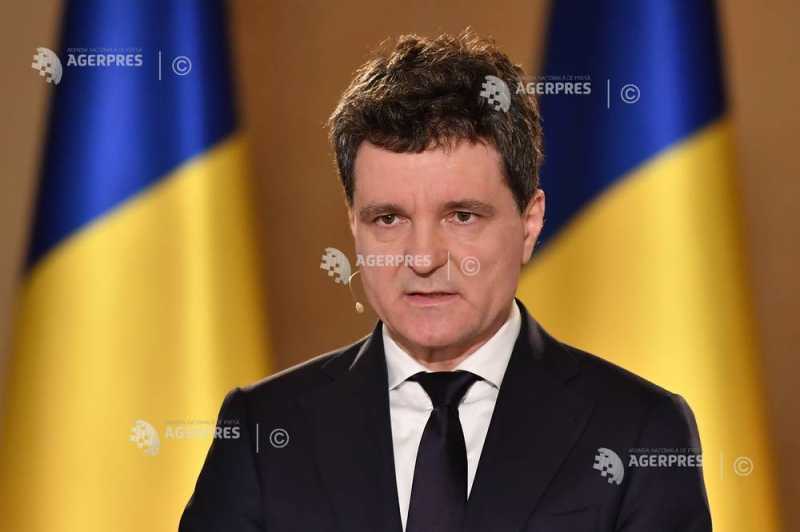
The June 1941 Iasi Pogrom remains a deep scar on Romania's history and national conscience, a devastating consequence of antisemitism, intolerance and hatred directed against fellow human beings, President Nicusor Dan said in a message delivered on Sunday at a ceremony commemorating the victims of the Iasi Pogrom.
The message, presented by State Counsellor Vlad Ionescu during the ceremony at the Jewish Cemetery in Iasi, attended by Israeli President Isaac Herzog, paid tribute to the victims, the survivors and all those who had the courage to resist evil and save lives during 'times of moral darkness.' It added that their memory calls for constant vigilance and the daily defence of the values of humanity, dignity and peaceful coexistence.
'At the 85th anniversary of these atrocities, we have a duty to bow our heads before the memory of the victims and to reaffirm, with full responsibility, our commitment to historical truth. Commemoration is not only an act of remembrance, but also an expression of respect for human dignity and a guarantee that the lessons of the past will not be forgotten. The Iasi Pogrom was not only the tragedy of one community, but also a profound trauma for Romanian society as a whole. It reminds us how fragile the values of civilisation can become when prejudice, disinformation and hate speech replace respect for life and for our fellow human beings. History shows that evil does not begin with acts of extreme violence, but with the tolerance of discrimination, stereotypes and exclusion,' the president's message reads.
It also stresses that education remains the most effective safeguard against the recurrence of such tragedies.
'Young people must know the truth about the Holocaust and about the responsibilities that made these crimes possible. Only through knowledge, critical thinking and cultivating respect for diversity can we build a society resilient to manipulation, hatred and extremism. At the same time, we have a duty to preserve and promote places of remembrance, survivors' testimonies and the findings of historical research, so that future generations understand not only what happened, but also why such atrocities must never be allowed to happen again,' the message added.
The Romanian president also said the country had made significant progress in protecting human rights and strengthening legislation against antisemitism.
'Romania has made significant progress both in protecting human rights, by strengthening its legal and institutional mechanisms and aligning them with European standards, and in developing a solid legislative framework to combat antisemitism, racism, xenophobia and hate speech. These achievements do not bring the process of remembrance to an end; rather, they continue it, demonstrating the commitment of a democratic and mature society capable of confronting its past and turning its lessons into guiding principles for the future. Together, today in Iasi, we commit ourselves not to fall into the trap of the 'banality of evil', a concept formulated by Hannah Arendt, and to remain vigilant in the face of intolerance, discrimination and hatred,' Nicusor Dan's message said.
According to the president, 'the erosion of civic spirit and the abandonment of solidarity and compassion in the face of the radicalisation of public discourse' prompted one of the clearest witnesses of the era, writer Mihail Sebastian, to write in his Journal that 'the Iasi massacre is an obsession we cannot escape,' capturing 'the way violence was tolerated, encouraged and turned by the authorities of the time into a systematic policy of persecution against Jews.'
On Monday, Romanian President Nicusor Dan is due to receive Israeli President Isaac Herzog at the Cotroceni Presidential Palace. AGERPRES (RO - writing by: Petronius Craiu; EN - writing by: Simona Iacob)
Nicusor Dan: Iasi Pogrom remains a deep scar on Romania's history and national conscience

Conţinutul website-ului www.agerpres.ro este destinat exclusiv informării publice. Toate informaţiile publicate pe acest site de către AGERPRES sunt protejate de dispoziţiile legale incidente. Sunt interzise copierea, reproducerea, recompilarea, modificarea, precum şi orice modalitate de exploatare a conţinutului acestui website. Informaţiile transmise pe www.agerpres.ro pot fi preluate, în conformitate cu legislaţia aplicabilă, în limita a 500 de semne. Detalii în secţiunea Condiţii de utilizare. Dacă sunteţi interesaţi de preluarea ştirilor AGERPRES, vă rugăm să contactaţi Direcţia Marketing - marketing@agerpres.ro.
Alte știri din categorie
President Nicușor Dan to attend the High-Level Week of the UN General Assembly
President Nicușor Dan has several meetings and events scheduled in New York between 20 and 23 September, as part of his participation in the 81st session of the United Nations General Assembly, according to the agenda published by the Presidential Administration. The President is scheduled to deliver Romania's national statement during the High-Level Week of the session

President Dan says Foreign Ministry investigating Orlivka school case
President Nicusor Dan said on Friday that Romania's Foreign Ministry has opened an investigation into the case of the school in Orlivka, Odesa region, where a Year 1 class taught in Romanian was closed. Speaking at a news conference held after the Carpathian Integration Initiative 'Carpathian 8' Summit, he said that 'remarkable progress has bee

Bolojan: We will try, within our possibilities and depending on our electoral weight, to form a Government
President of the National Liberal Party (PNL) Ilie Bolojan said on Friday that, although Siegfried Muresan's nomination for prime minister came three months late, the party would deal with the situation 'responsibly' and seek to form a Government based on its electoral weight. 'Yesterday, about 30 minutes beforehand, I learned from the piece of

Siegfried Muresan: We will start work on a government programme; beginning of next week - discussion with MPs
Prime Minister-designate Siegfried Muresan announced on Friday that he was starting work on the government programme together with the National Liberal Party (PNL), Save Romania Union (USR) and the Hungarian Democratic Union of Romania (UDMR), mentioning that he would present the priorities at the beginning of next week and, based on these, would hold an "extremely tran

CCIR's Daraban: The diaspora is not a sentimental issue but a chapter in the national economy
The experience gained by Romanians in the diaspora in competitive markets must be transformed into investment, jobs and exports, believes Mihai Daraban, President of the Chamber of Commerce and Industry of Romania (CCIR). According to a press release from the organisation sent to AGERPRES, the institution is strengthening its partnership with ROUNIT - Reunited
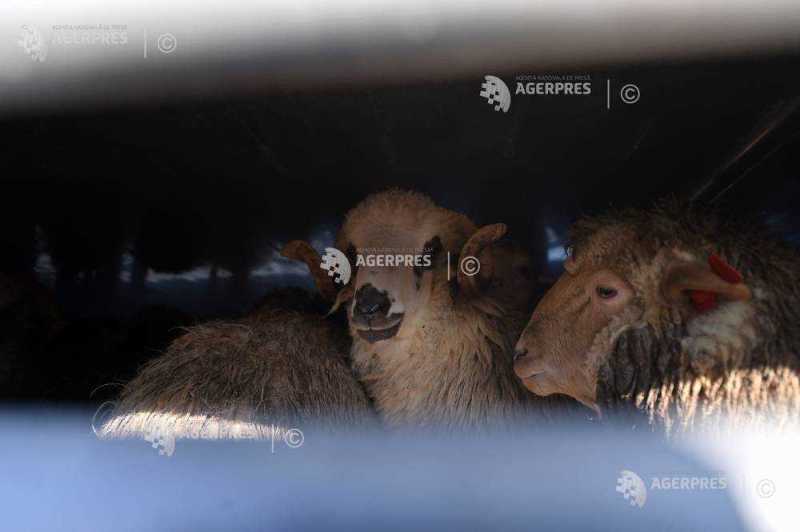
European Commission approves ANSVSA's Action Plan to unblock sheep and goat exports
The Action Plan of the National Veterinary Sanitary and Food Safety Authority (ANSVSA) for unblocking exports of sheep and goats has been approved by the European Commission, allowing exports of carcasses and products to resume under the differentiated vaccination scheme. According to an ANSVSA release sent to AGERPRES on Friday, the approved solution protects
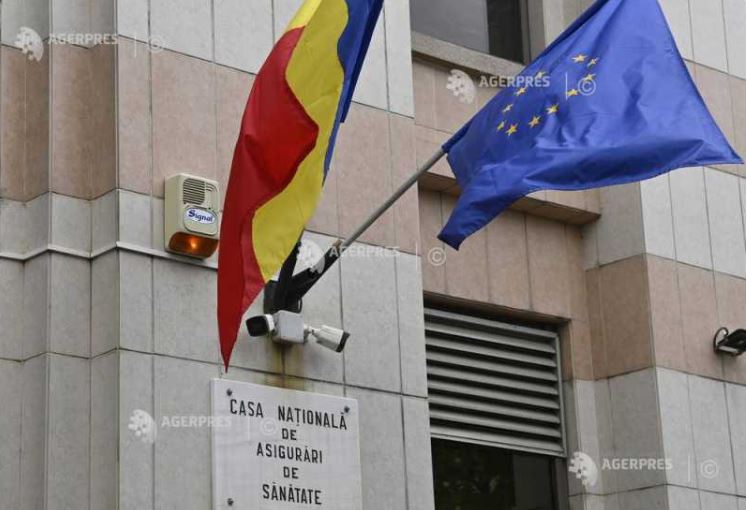
Health Insurance House launches project on cross-border exchange of medical images, laboratory results, discharge reports
The National Health Insurance House (CNAS) announced on Friday the launch of the European project 'Romanian Medical Images, Laboratory Results and Discharge Reports' (RO-MI-LR-DR), for the cross-border exchange of medical images, laboratory results and discharge reports. The project is funded through the EU4Health programme, with the European Health an
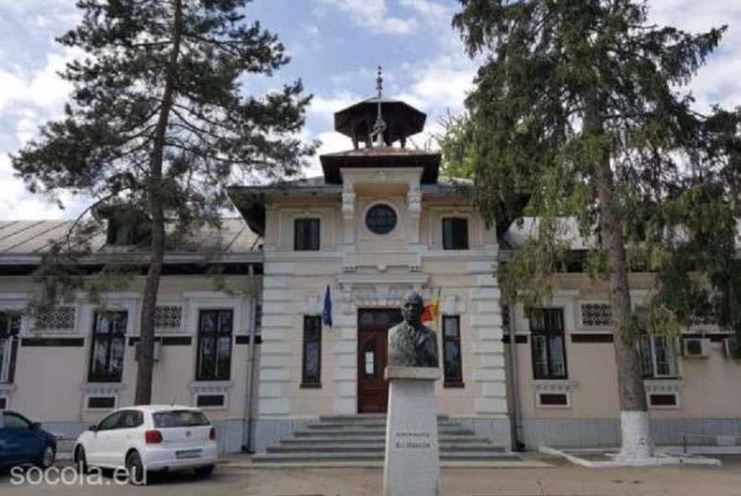
'Socola' Institute of Psychiatry in Iasi to hold new memory testing campaign at weekend
The 'Socola' Institute of Psychiatry in Iasi has announced that it will hold the third edition of its 'Memory Testing Campaign' on Saturday and Sunday, a campaign addressing people of all ages and aimed to identify individual risk factors that may predispose people to memory disorders, while also providing participants with specialist counselling.