

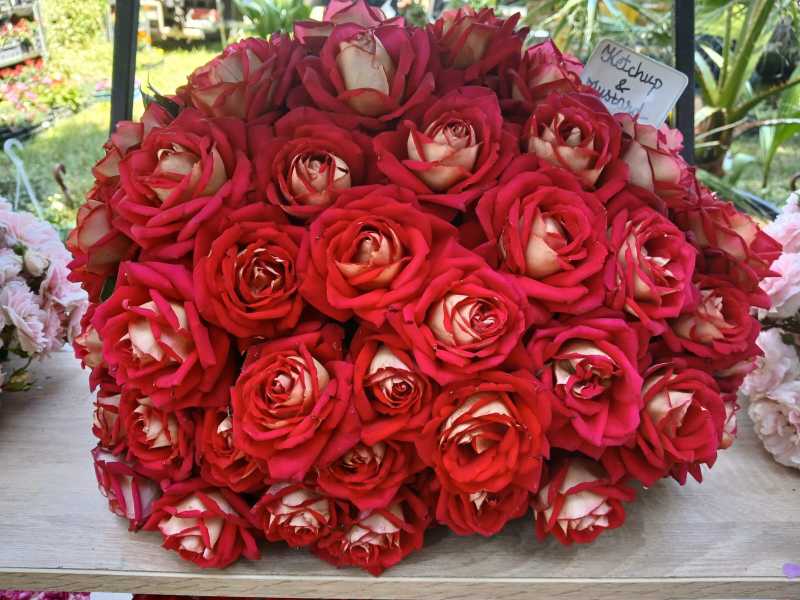
Thousands of visitors, many travelling hundreds of kilometres from across Romania and neighbouring Hungary, attended the annual Rose Festival in Ciumbrud over the weekend, celebrating one of Europe's largest centres of rose cultivation, where more than one million roses from hundreds of varieties are produced every year.
Despite yellow and red heatwave warnings issued over the two-day event, visitors from across Romania, including Bucharest, Constanta and Botosani, as well as Hungary, flocked to the festival, judging by the registration plates of parked cars and coaches.
Many braved the high temperatures to visit Ciumbrud's vast rose fields, which became a popular setting for photo sessions, while the nearby dendrological park, the festival's main venue, offered some respite from the heat.
'We have been coming every year for about five years, whenever the event takes place. We meet collaborators and friends. (...) We enjoy being together. We discover many new and old rose varieties that we add to our own list of favourites,' Lorincz Istvan, a horticultural engineer from Baia Mare who manages the Vida Gheza cactus collection in the city's Central Park, told AGERPRES.
Two visitors from Cluj-Napoca said they had travelled specifically to enjoy 'the scent of the roses.'
'There are more people than last time. There are also more flowers, more floral arrangements and more stalls,' said one of the visitors, who was attending the festival for the third time.
Now in its 23rd edition, the festival opened on Saturday in the nearby town of Aiud, to which Ciumbrud belongs. Last year, Aiud was officially designated Romania's 'City of Roses' by a local council decision.
The event included the coronation of the first 'Rose Queen' and ambassador of the 'Land of Roses', Imola Bakk, who comes from one of Ciumbrud's long-established rose-growing families.
Participants then joined the traditional Rose Parade, travelling on foot, by bicycle or aboard flower-covered agricultural trailers decorated with thousands of roses. Younger visitors were able to ride the route aboard the 'Rose Train'.
One of this year's floral installations paid tribute to Constantin Brancusi's 'Gate of the Kiss', marking 2026 as the Year of Constantin Brancusi in Romania. Elaborate floral displays depicting peacocks, butterflies and wine decanters required up to two days of work and, in some cases, as many as 5,000 roses.
Although concerts and artistic performances were part of the programme, the floral installations remained the festival's main attraction.
The 'Rose of the Year 2026' title was awarded to 'Campfire' ('Foc de tabara'), a variety created in 1970 by celebrated Romanian horticulturist Stefan Wagner, often referred to as the 'father of Romanian roses'. A bust honouring Wagner was also unveiled during the festival.
'It is a top-quality rose. One of Stefan Wagner's finest creations, developed in 1970 at the Fruit Research Station in Cluj-Napoca. It is fragrant, with a superb deep-red colour. It flowers continuously throughout the season, as it belongs to the Floribunda group. It has also received international recognition, winning awards in Rome in 1973 and in the Czech Republic in 1975,' Mirela Cordea, a professor at the Faculty of Horticulture in Cluj-Napoca, explained.
Born in Alba County in 1932, Stefan Wagner created more than 50 rose varieties. After 1990, he became a mentor to rose growers in Ciumbrud and Aiud, contributing significantly to the development of what is now proudly known as the 'Land of Roses.'
Among his best-known varieties are Petrina, Romania's first thornless rose, Rosadora, Judit, Nobilia, Pearl of Transylvania and Campfire.
Rose production in Ciumbrud has expanded significantly over the past decade. While growers cultivated around 400,000 roses from about 70 varieties ten years ago, annual production now exceeds one million plants representing between 200 and 300 varieties.
'Every year we cultivate around seven to eight hectares, which means roughly one million rose plants. We currently grow between 200 and 300 varieties,' Andrei Molnar, head of the Alba branch of the Friends of Roses Association, told AGERPRES.
According to Molnar, between 10% and 15% of the locally produced rose plants are exported, mainly to Poland, Italy and France.
'We mainly focus on selling plants. (...) Our biggest customers are retail chains. Behind almost every producer stands a major retailer. Generally, we manage to sell our entire production. (...) It is hard work, but it also brings rewards,' he said.
Several family-run businesses operate in Ciumbrud, some now employing workers from Nepal.
One such business is Ciumbrud Nursery.
'Our grandparents ran a nursery in Gambas. We, their grandchildren, took it over. We initially focused on fruit trees, then started growing roses about 17 years ago. Today we have a nursery with around 70,000 roses. We produce rooted plants and have contracts with companies in Romania and Hungary,' Stefan Megyesi told AGERPRES.
Visitors were also able to buy rose syrup and join guided tours led by local growers to learn more about rose cultivation and the area's long horticultural tradition.
Officials attending the festival congratulated local producers for helping establish Ciumbrud as Romania's leading centre for rose cultivation.
Known as Romania's 'rose capital', Ciumbrud produces around 80% of the country's rose planting material.
FEATURE Romania's 'rose capital' Ciumbrud draws thousands to annual Rose Festival
Conţinutul website-ului www.agerpres.ro este destinat exclusiv informării publice. Toate informaţiile publicate pe acest site de către AGERPRES sunt protejate de dispoziţiile legale incidente. Sunt interzise copierea, reproducerea, recompilarea, modificarea, precum şi orice modalitate de exploatare a conţinutului acestui website. Informaţiile transmise pe www.agerpres.ro pot fi preluate, în conformitate cu legislaţia aplicabilă, în limita a 500 de semne. Detalii în secţiunea Condiţii de utilizare. Dacă sunteţi interesaţi de preluarea ştirilor AGERPRES, vă rugăm să contactaţi Direcţia Marketing - marketing@agerpres.ro.
Alte știri din categorie
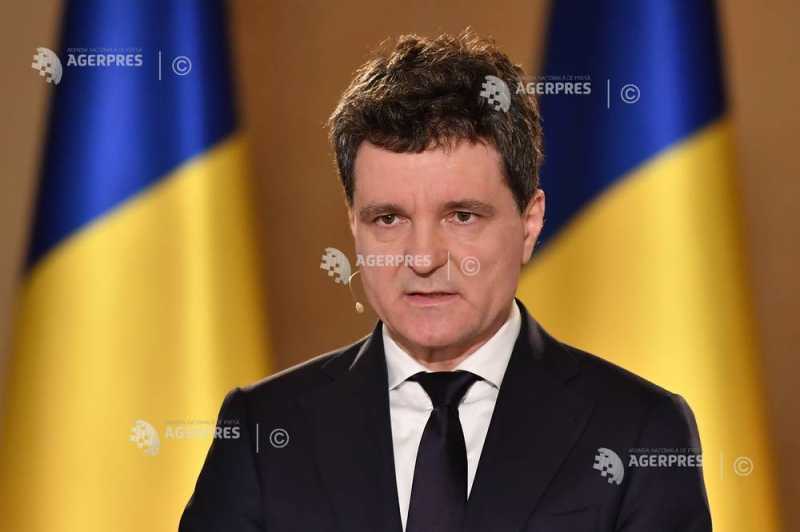
President Nicușor Dan to attend the High-Level Week of the UN General Assembly
President Nicușor Dan has several meetings and events scheduled in New York between 20 and 23 September, as part of his participation in the 81st session of the United Nations General Assembly, according to the agenda published by the Presidential Administration. The President is scheduled to deliver Romania's national statement during the High-Level Week of the session

President Dan says Foreign Ministry investigating Orlivka school case
President Nicusor Dan said on Friday that Romania's Foreign Ministry has opened an investigation into the case of the school in Orlivka, Odesa region, where a Year 1 class taught in Romanian was closed. Speaking at a news conference held after the Carpathian Integration Initiative 'Carpathian 8' Summit, he said that 'remarkable progress has bee

Bolojan: We will try, within our possibilities and depending on our electoral weight, to form a Government
President of the National Liberal Party (PNL) Ilie Bolojan said on Friday that, although Siegfried Muresan's nomination for prime minister came three months late, the party would deal with the situation 'responsibly' and seek to form a Government based on its electoral weight. 'Yesterday, about 30 minutes beforehand, I learned from the piece of

Siegfried Muresan: We will start work on a government programme; beginning of next week - discussion with MPs
Prime Minister-designate Siegfried Muresan announced on Friday that he was starting work on the government programme together with the National Liberal Party (PNL), Save Romania Union (USR) and the Hungarian Democratic Union of Romania (UDMR), mentioning that he would present the priorities at the beginning of next week and, based on these, would hold an "extremely tran

CCIR's Daraban: The diaspora is not a sentimental issue but a chapter in the national economy
The experience gained by Romanians in the diaspora in competitive markets must be transformed into investment, jobs and exports, believes Mihai Daraban, President of the Chamber of Commerce and Industry of Romania (CCIR). According to a press release from the organisation sent to AGERPRES, the institution is strengthening its partnership with ROUNIT - Reunited
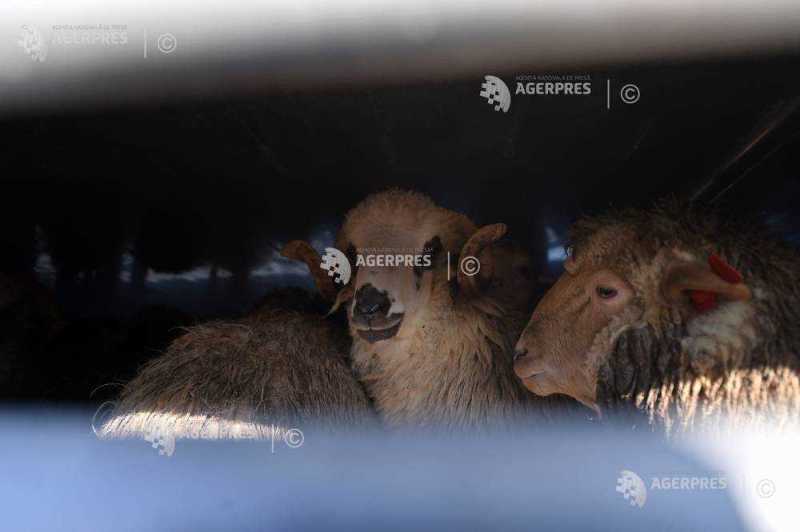
European Commission approves ANSVSA's Action Plan to unblock sheep and goat exports
The Action Plan of the National Veterinary Sanitary and Food Safety Authority (ANSVSA) for unblocking exports of sheep and goats has been approved by the European Commission, allowing exports of carcasses and products to resume under the differentiated vaccination scheme. According to an ANSVSA release sent to AGERPRES on Friday, the approved solution protects
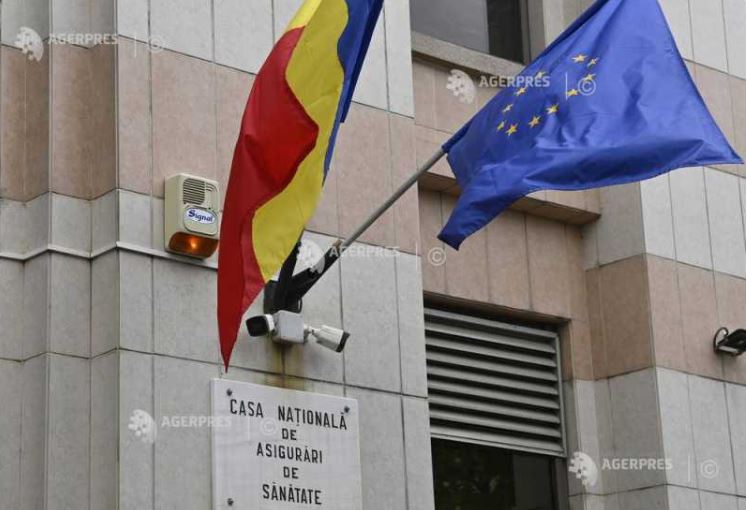
Health Insurance House launches project on cross-border exchange of medical images, laboratory results, discharge reports
The National Health Insurance House (CNAS) announced on Friday the launch of the European project 'Romanian Medical Images, Laboratory Results and Discharge Reports' (RO-MI-LR-DR), for the cross-border exchange of medical images, laboratory results and discharge reports. The project is funded through the EU4Health programme, with the European Health an
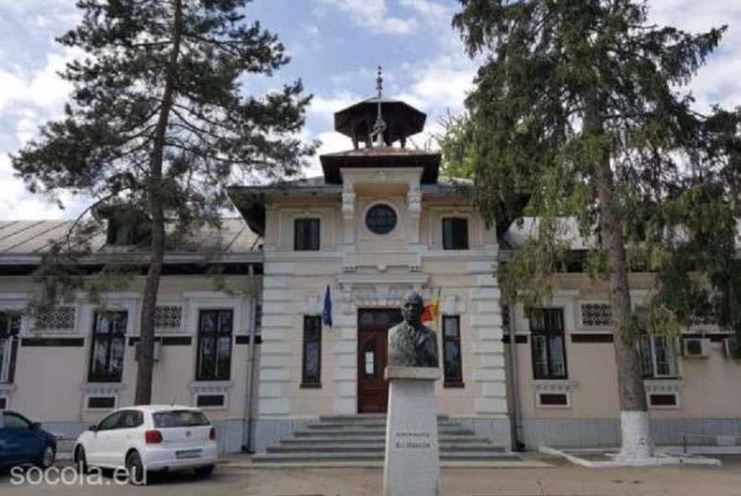
'Socola' Institute of Psychiatry in Iasi to hold new memory testing campaign at weekend
The 'Socola' Institute of Psychiatry in Iasi has announced that it will hold the third edition of its 'Memory Testing Campaign' on Saturday and Sunday, a campaign addressing people of all ages and aimed to identify individual risk factors that may predispose people to memory disorders, while also providing participants with specialist counselling.