

Romania's public debt is estimated at 61.6% of GDP in 2026, will rise to 63.4% of GDP in 2027 and is projected to reach around 90% of GDP in 2036, according to the Convergence Report for 2026, published on Wednesday by the European Commission.
'The public debt-to-GDP ratio increased from 54.8% in 2024 to 59.3% in 2025 and is estimated to reach 61.6% in 2026 and 63.4% in 2027, amid a high primary deficit and rising interest payments. Risks to public debt sustainability appear elevated in the medium term, with debt projected to grow rapidly, to around 90% of GDP in 2036,' the report says.
In light of the assessment of legal compatibility and the fulfilment of the convergence criteria, as well as taking into account other relevant factors, the Commission announced on Wednesday that it does not consider that Romania meets the conditions for adopting the euro.
The report points out a series of incompatibilities related to the independence of the central bank or its integration into the Eurosystem.
Also, according to the European Commission, Romania does not meet the criterion on price stability. The average inflation rate in Romania in the 12 months to May 2026 was 8.4%, well above the reference value of 2.7%.
'It is projected to decline in the second half of 2026, but will remain significantly above the reference value until the end of the year. It is also projected to continue to decline in 2027, but will remain above the reference value until the end of that year,' the report said.
The Commission's Spring 2026 Economic Forecast projects that the average annual inflation rate will increase slightly, to 7.0%, in 2026 and then decline to 3.7% in 2027.
The European Commission report also indicates that Romania does not meet the criterion on public finances, the country being the subject of a Council decision on the existence of an excessive deficit. The general government deficit improved from 9.3% of GDP in 2024 to 7.9% in 2025, but remained well above the treaty reference value of 3% of GDP.
'This improvement was due to more efficient tax collection and the adoption of two major fiscal consolidation packages in 2025, which together had an estimated impact of around 3.7 percentage points of GDP through revenue increases and expenditure reductions. The Commission's 2026 spring economic forecast projects the general government deficit to decline to 6.2% of GDP in 2026, reflecting the full-year effect of the fiscal adjustment measures adopted in 2025, as well as additional revenues raised in 2026 through VAT and excise duty increases, dividend tax increases, property tax changes and broadening of the healthcare contribution base, together with tighter control of current expenditure. For 2027, the deficit is forecast at 5.8% of GDP,' the document states.
On 8 July 2025, the Council revised the fiscal adjustment path under the excessive deficit procedure (EDP), establishing that Romania must keep nominal net expenditure growth below 2.8% in 2025, 2.6% in 2026, 4.6% in 2027, 4.4% in 2028, 4.2% in 2029 and 4.0% in 2030. The deadline for correcting the deficit is 2030, when the revised recommendation of July 2025 foresees a deficit of 2.8% of GDP.
Regarding Romania's fiscal framework, the cited source emphasizes that significant deficiencies persist related to the appointment of Fiscal Council members and the management of public investments.
The European Commission also notes in the report that Romania does not meet the exchange rate criterion, as the Romanian leu does not participate in the Exchange Rate Mechanism II (ERM II). Romania employs a 'crawl-like' exchange rate regime, which allows for central bank interventions in the foreign exchange market. Exchange rate stability has been used by the National Bank of Romania (BNR) as a key mechanism to ensure financial stability and anchor inflation expectations.
Also, another observation is related to the fact that Romania does not meet the criterion on the convergence of long-term interest rates. The average long-term interest rate in the 12 months to May 2026 was 6.7%, well above the reference value of 5.1%.
The Commission also looked at other relevant factors, including balance of payments developments, market integration and the institutional environment. Romania's external balance (current account and capital account combined) improved slightly from -6.7% of GDP in 2024 to -6.0% in 2025, mainly due to better absorption of EU funds. The current account deficit, however, remained high, at 7.9% of GDP in 2025, the report highlights.
He also points out that indicators regarding the institutional environment show that Romania has weaker performances than many eurozone member states, especially in areas such as corruption control.
As for the banking sector, the document states that it is well integrated into the euro area financial system, in particular due to the high level of foreign ownership of banks. However, financing through capital markets is less developed, as reflected in the small size of private equity and bond markets.AGERPRES (RO - writing by: Nicoleta Gherasi; EN - writing by: Catalin Cristian Trandafir)
Romania's public debt will increase to 63.4% of GDP in 2027,will reach about 90% in 2036 (convergence report)
Conţinutul website-ului www.agerpres.ro este destinat exclusiv informării publice. Toate informaţiile publicate pe acest site de către AGERPRES sunt protejate de dispoziţiile legale incidente. Sunt interzise copierea, reproducerea, recompilarea, modificarea, precum şi orice modalitate de exploatare a conţinutului acestui website. Informaţiile transmise pe www.agerpres.ro pot fi preluate, în conformitate cu legislaţia aplicabilă, în limita a 500 de semne. Detalii în secţiunea Condiţii de utilizare. Dacă sunteţi interesaţi de preluarea ştirilor AGERPRES, vă rugăm să contactaţi Direcţia Marketing - marketing@agerpres.ro.
Alte știri din categorie
President Nicușor Dan to attend the High-Level Week of the UN General Assembly
President Nicușor Dan has several meetings and events scheduled in New York between 20 and 23 September, as part of his participation in the 81st session of the United Nations General Assembly, according to the agenda published by the Presidential Administration. The President is scheduled to deliver Romania's national statement during the High-Level Week of the session

President Dan says Foreign Ministry investigating Orlivka school case
President Nicusor Dan said on Friday that Romania's Foreign Ministry has opened an investigation into the case of the school in Orlivka, Odesa region, where a Year 1 class taught in Romanian was closed. Speaking at a news conference held after the Carpathian Integration Initiative 'Carpathian 8' Summit, he said that 'remarkable progress has bee

Bolojan: We will try, within our possibilities and depending on our electoral weight, to form a Government
President of the National Liberal Party (PNL) Ilie Bolojan said on Friday that, although Siegfried Muresan's nomination for prime minister came three months late, the party would deal with the situation 'responsibly' and seek to form a Government based on its electoral weight. 'Yesterday, about 30 minutes beforehand, I learned from the piece of

Siegfried Muresan: We will start work on a government programme; beginning of next week - discussion with MPs
Prime Minister-designate Siegfried Muresan announced on Friday that he was starting work on the government programme together with the National Liberal Party (PNL), Save Romania Union (USR) and the Hungarian Democratic Union of Romania (UDMR), mentioning that he would present the priorities at the beginning of next week and, based on these, would hold an "extremely tran

CCIR's Daraban: The diaspora is not a sentimental issue but a chapter in the national economy
The experience gained by Romanians in the diaspora in competitive markets must be transformed into investment, jobs and exports, believes Mihai Daraban, President of the Chamber of Commerce and Industry of Romania (CCIR). According to a press release from the organisation sent to AGERPRES, the institution is strengthening its partnership with ROUNIT - Reunited
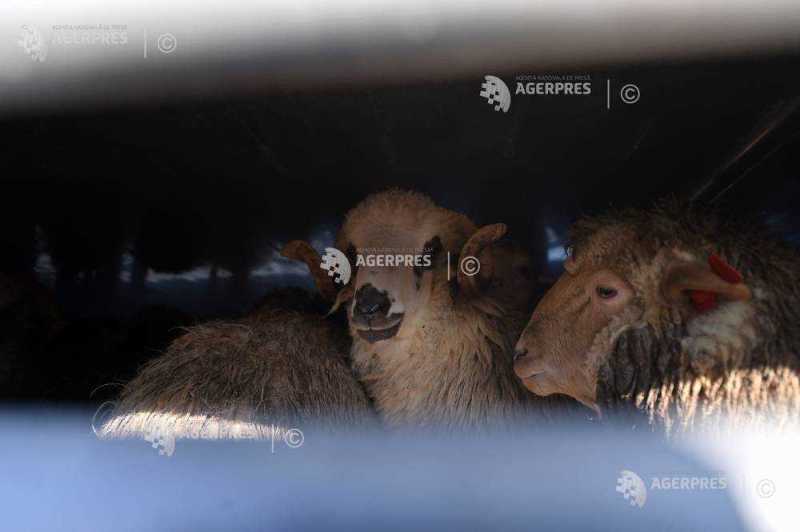
European Commission approves ANSVSA's Action Plan to unblock sheep and goat exports
The Action Plan of the National Veterinary Sanitary and Food Safety Authority (ANSVSA) for unblocking exports of sheep and goats has been approved by the European Commission, allowing exports of carcasses and products to resume under the differentiated vaccination scheme. According to an ANSVSA release sent to AGERPRES on Friday, the approved solution protects
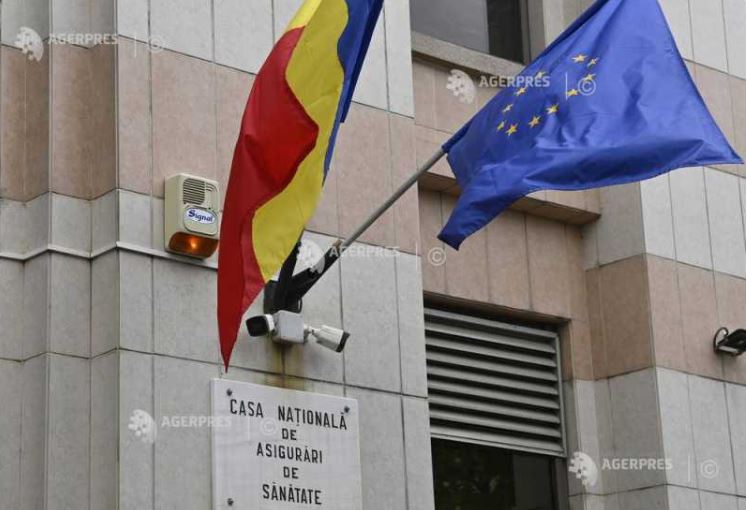
Health Insurance House launches project on cross-border exchange of medical images, laboratory results, discharge reports
The National Health Insurance House (CNAS) announced on Friday the launch of the European project 'Romanian Medical Images, Laboratory Results and Discharge Reports' (RO-MI-LR-DR), for the cross-border exchange of medical images, laboratory results and discharge reports. The project is funded through the EU4Health programme, with the European Health an
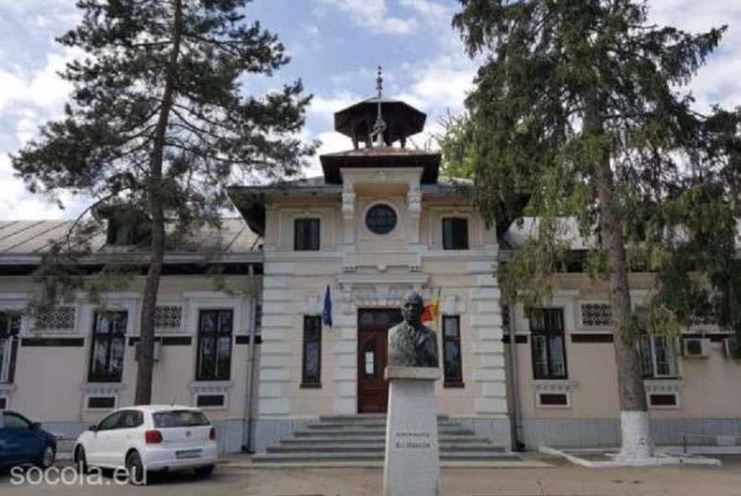
'Socola' Institute of Psychiatry in Iasi to hold new memory testing campaign at weekend
The 'Socola' Institute of Psychiatry in Iasi has announced that it will hold the third edition of its 'Memory Testing Campaign' on Saturday and Sunday, a campaign addressing people of all ages and aimed to identify individual risk factors that may predispose people to memory disorders, while also providing participants with specialist counselling.