

Two international experts are taking part in the mission to revalidate the UNESCO status of the Hateg Country Global Geopark, assessing its progress over the past four years.
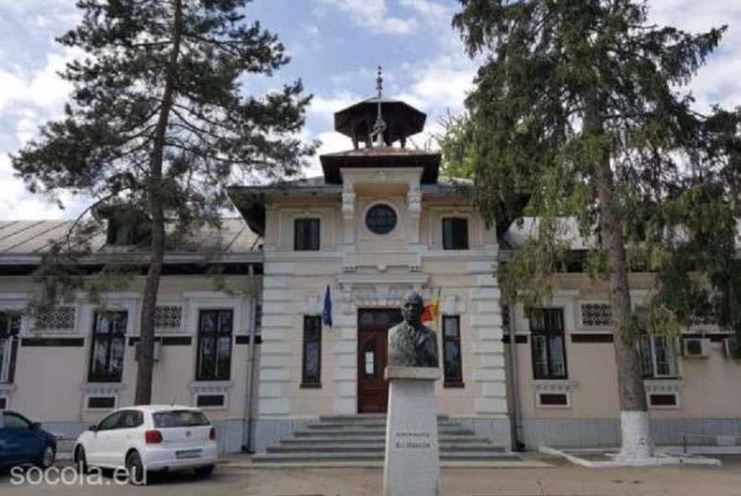
On Tuesday, representatives of the geopark, the leadership of the University of Bucharest - which administers the site - and local and county authorities met at Nopcsa Castle in Sacel to present recent projects and outline future plans.
University of Bucharest Rector Marian Preda said the geopark's activity is highly regarded both internationally and within the university.
'I believe the geopark's activity is extremely well regarded, both internationally and from our perspective at the University of Bucharest, given the role we assumed - as a local catalyst and promoter of community development in Hateg Country and Hunedoara County. Everyone has seen that the university has been the right catalyst to build bridges between communities and help people and institutions make use of this enormous potential,' Marian Preda said.
He highlighted Hunedoara County's exceptional natural and historical assets and the university's long-standing involvement in research and community development. Preda stressed the importance of education and said the university will expand its projects in the region. A new space has been acquired next to the geopark's Hateg headquarters, allowing for a larger museum building, a research laboratory and accommodation for students doing summer fieldwork.
Geopark coordinator Cristian Ciobanu said the institution has become deeply rooted in the local community over more than two decades.

'The geopark is already part of community life in many ways. We would have liked to calculate an economic and social impact - it's almost impossible, but it can be felt and seen. The fact that the dinosaur fossil heritage has entered the pantheon of Hateg Country values is one indicator. The growth in tourism quality and numbers is another. I believe we are one of the mature geoparks, among the best in Europe, but we certainly still have things to learn. (...) We genuinely want constructive criticism and examples from elsewhere so we can do even better,' Ciobanu said.
The two evaluators praised the landscape and the community's involvement.

Spanish expert Ivan Cortijo Sanchez said: 'We are here to share experiences, to learn from one another, and to see the work done by the geopark's representatives in developing sustainable strategies. I noticed the reconstruction of the castle and the way activities are carried out for the people, not just for visitors. I also noticed the educational projects through which scientific knowledge is passed on to local communities.'
Vietnamese evaluator, Professor Tran Tan Van added: 'The landscape here is very beautiful. It is a wonderful geopark. The local people are enthusiastic. There are excellent geological sites that we will see in the coming days. It is a senior, successful geopark, and I believe it can be a good example for other geoparks in Romania.'

By the end of the week, the experts will review achievements in geological, natural and cultural heritage conservation, education, and sustainable tourism, as well as future plans. The geopark's representatives intend to propose expanding the territory to include Banita commune, which would bring the entire Hateg Country under the geopark's umbrella.
The UNESCO revalidation mission will conclude on June 26, with visits to key sites including Sacel, Sanpetru, Bretea Romana, Rau de Mori, Sarmizegetusa, Densus and Banita. AGERPRES (RO - writing by: Sorin Blada; EN - writing by: Simona Klodnischi)