

Experts from the Danube Delta National Research and Development Institute (INCDDD), the Tulcea County Council, and the local private sector say they are committed to turning the Danube Delta Biosphere Reserve into 'the heart of Europe's aquatic resilience' through 'blue innovation', collaboration and projects - despite the difficulties encountered over time in working with various authorities.
The blue economy refers to the sustainable use of marine and aquatic resources for economic growth, job creation and improved livelihoods, while protecting ecosystem health. The concept is supported through several EU funding programmes.
INCDDD's scientific director Iulian Nichersu told AGERPRES at the end of the Blue Economy Experts' Forum, hosted this week in Tulcea, that the event reminded participants that modern governance means transnational cooperation and the exchange of best practices.
'Europe challenges us through the EU Mission Ocean initiative to be bold, to restore waters and protect biodiversity through innovation. Our response is firm - we officially commit to transforming the Danube Delta and the city of Tulcea into a regional hub for implementing the blue economy in the Black Sea. The hub is already functioning through a strategic partnership. (...) Through close cooperation between the County Council, INCDDD and the Delta complex, as well as other public authorities such as the Delta Administration, we show that Tulcea has the full formula: political vision, scientific rigour and an economic driver. Protecting the Delta does not mean isolating it from the world or blocking development; it means reinventing it through blue innovation. The County Council, INCDDD and the private sector assume the role of turning the Delta and Tulcea into the heart of Europe's aquatic resilience,' Nichersu said.
Although the Danube Delta Management Plan, the strategic document for the reserve, has not yet been adopted, Nichersu expressed confidence that the said document and other strategies for the area can become engines of transformation.
'The purpose of this forum was to outline the future. We analysed the stage of blue-economy implementation possibilities, and how planning tools - such as the Management Plan and the Delta Transport Strategy - can become drivers of transformation for the entire region. The key word is future, and that future is inseparable from a sustainable and innovative blue economy,' Nichersu concluded.
Over the years, several Delta-related research projects have faced obstacles or stalled - including a project that could have turned Tulcea Port into a 'green hub', publicly presented in 2021 during a symposium organized by the institute, though initiated earlier.
'Tulcea Port depends on the port of Galati, and we had a challenge from a lady there who said she wasn't interested (in the project). Tulcea, as a county, in terms of resource opportunities, research and implementation, is by far the most important county in Romania, leaving aside the fact that the Danube Delta is clearly the most important UNESCO heritage site in Europe and worldwide,' said Delia Dimitriu, board member of the Danube Delta Decarbonisation Association and expert with the European Commission.
The Danubius project - declared in 2013 a flagship of the EU Strategy for the Danube Region and intended to provide 18 types of customised services, including for Romania - has also had a difficult path.
'The first major hurdle has been passed, in the sense that construction has begun on the laboratories and the hub. The first big step was taken in 2024 when the construction contract was signed, and excavations for the foundation are already underway. (...) For the Romanian side, only 20% of services are functional, the rest are about to become functional because they depend on the laboratories now under construction,' said Simona Litescu, representative of the National Institute for Research and Development in Biological Sciences (INCDSB) in Bucharest.
She added that all other European supersites in the Danubius project already offer their full range of services, and that the Romanian supersite collaborates with them. She noted that Delta residents themselves will benefit from the data collected by researchers.
'We have technologies based on biomass recovery, for example. Certainly, in a Delta household there are plant residues. The resident can put them to good use and, instead of causing environmental pollution, provided that there is a viable solution in place, they can convert the biomass - the waste in their backyard - and obtain an extract for, say, the chicken they keep, because it makes it feel better, or it can be used by humans to make them feel better. It all depends on what we find there, in the household's yard,' Litescu said.
During her presentation at the forum, she expressed confidence that the Danube Delta supersite within the Danubius project will be operational in 2028.
Tulcea hosted over June 16 - 18 the forum 'Challenges and Opportunities in the Danube Delta: Developing the Blue Economy', organized by the County Council, INCDDD and the Delta hotel complex. The event aimed to intensify interconnected actions in the context of pressures from climate change, pollution and the need for regional development, and brought together researchers and university professors from Romania and abroad, as well as representatives of the European Commission.
The Danube Delta Management Plan is a strategic document for protecting nature and ensuring the sustainable development of communities within the reserve. AGERPRES (RO - writing by: Luisiana Bigea; EN - writing by: Simona Klodnischi)
Experts' forum conclusion: 'Blue economy' can turn Danube Delta into European aquatic-resilience hub

Conţinutul website-ului www.agerpres.ro este destinat exclusiv informării publice. Toate informaţiile publicate pe acest site de către AGERPRES sunt protejate de dispoziţiile legale incidente. Sunt interzise copierea, reproducerea, recompilarea, modificarea, precum şi orice modalitate de exploatare a conţinutului acestui website. Informaţiile transmise pe www.agerpres.ro pot fi preluate, în conformitate cu legislaţia aplicabilă, în limita a 500 de semne. Detalii în secţiunea Condiţii de utilizare. Dacă sunteţi interesaţi de preluarea ştirilor AGERPRES, vă rugăm să contactaţi Direcţia Marketing - marketing@agerpres.ro.
Alte știri din categorie
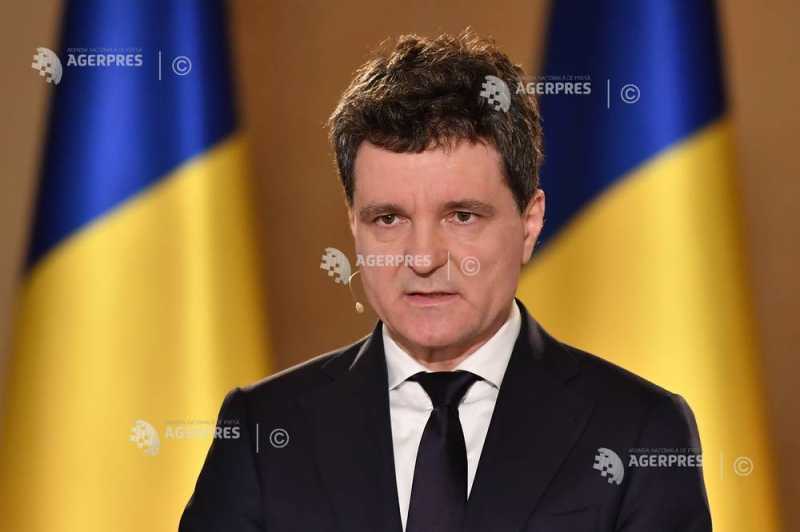
President Nicușor Dan to attend the High-Level Week of the UN General Assembly
President Nicușor Dan has several meetings and events scheduled in New York between 20 and 23 September, as part of his participation in the 81st session of the United Nations General Assembly, according to the agenda published by the Presidential Administration. The President is scheduled to deliver Romania's national statement during the High-Level Week of the session

President Dan says Foreign Ministry investigating Orlivka school case
President Nicusor Dan said on Friday that Romania's Foreign Ministry has opened an investigation into the case of the school in Orlivka, Odesa region, where a Year 1 class taught in Romanian was closed. Speaking at a news conference held after the Carpathian Integration Initiative 'Carpathian 8' Summit, he said that 'remarkable progress has bee

Bolojan: We will try, within our possibilities and depending on our electoral weight, to form a Government
President of the National Liberal Party (PNL) Ilie Bolojan said on Friday that, although Siegfried Muresan's nomination for prime minister came three months late, the party would deal with the situation 'responsibly' and seek to form a Government based on its electoral weight. 'Yesterday, about 30 minutes beforehand, I learned from the piece of

Siegfried Muresan: We will start work on a government programme; beginning of next week - discussion with MPs
Prime Minister-designate Siegfried Muresan announced on Friday that he was starting work on the government programme together with the National Liberal Party (PNL), Save Romania Union (USR) and the Hungarian Democratic Union of Romania (UDMR), mentioning that he would present the priorities at the beginning of next week and, based on these, would hold an "extremely tran

CCIR's Daraban: The diaspora is not a sentimental issue but a chapter in the national economy
The experience gained by Romanians in the diaspora in competitive markets must be transformed into investment, jobs and exports, believes Mihai Daraban, President of the Chamber of Commerce and Industry of Romania (CCIR). According to a press release from the organisation sent to AGERPRES, the institution is strengthening its partnership with ROUNIT - Reunited
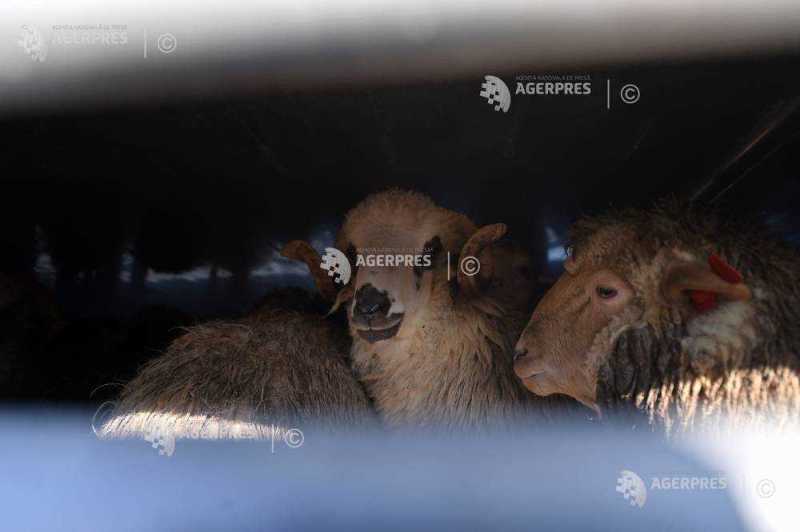
European Commission approves ANSVSA's Action Plan to unblock sheep and goat exports
The Action Plan of the National Veterinary Sanitary and Food Safety Authority (ANSVSA) for unblocking exports of sheep and goats has been approved by the European Commission, allowing exports of carcasses and products to resume under the differentiated vaccination scheme. According to an ANSVSA release sent to AGERPRES on Friday, the approved solution protects
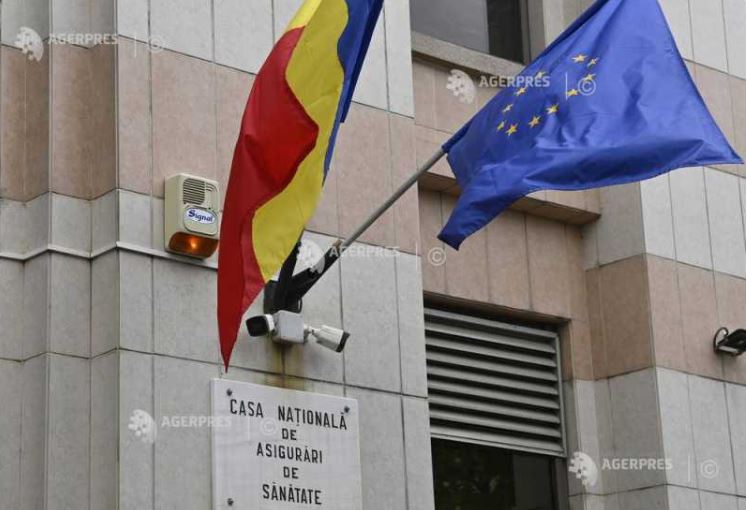
Health Insurance House launches project on cross-border exchange of medical images, laboratory results, discharge reports
The National Health Insurance House (CNAS) announced on Friday the launch of the European project 'Romanian Medical Images, Laboratory Results and Discharge Reports' (RO-MI-LR-DR), for the cross-border exchange of medical images, laboratory results and discharge reports. The project is funded through the EU4Health programme, with the European Health an
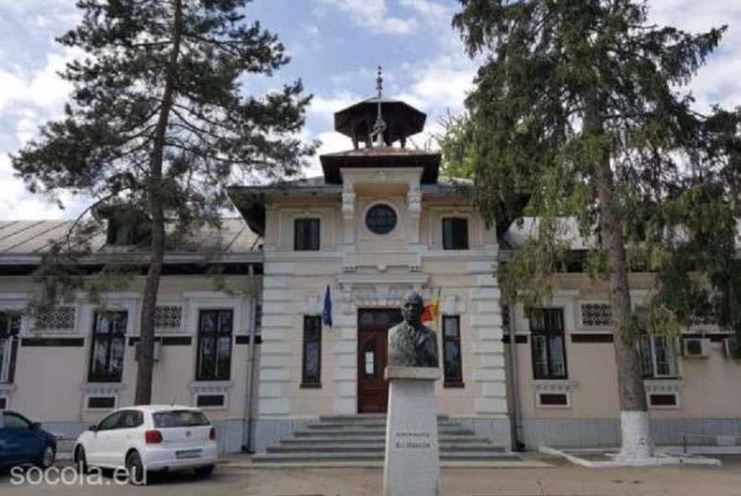
'Socola' Institute of Psychiatry in Iasi to hold new memory testing campaign at weekend
The 'Socola' Institute of Psychiatry in Iasi has announced that it will hold the third edition of its 'Memory Testing Campaign' on Saturday and Sunday, a campaign addressing people of all ages and aimed to identify individual risk factors that may predispose people to memory disorders, while also providing participants with specialist counselling.