

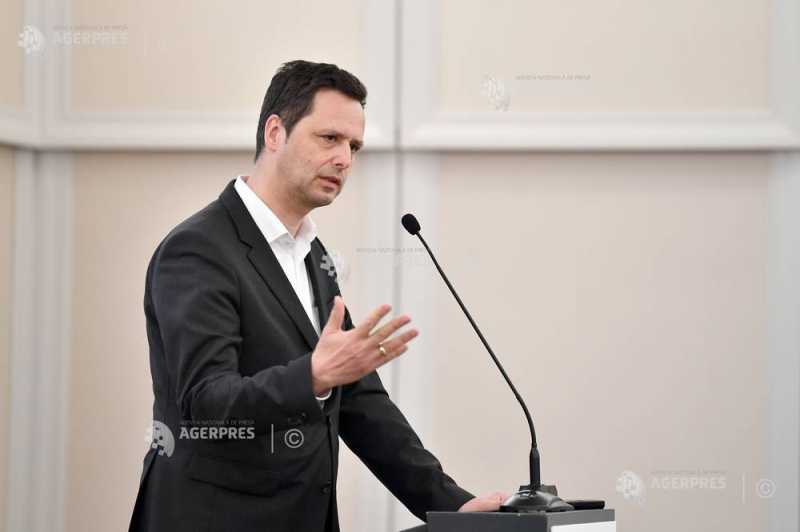
Energy prices in Europe are too high and, in Romania, they are even higher when measured against purchasing power, President of the Federation of the Association of Utility Companies in Romania (ACUE) and E.ON CEO Volker Raffel told an industry event on Thursday.
'Energy prices in Europe are too high, and we all know that. Prices in Romania are even higher. I recently saw statistics showing that industrial production in Germany has fallen by 10% in recent years, while energy-intensive production has declined by 20%. You can imagine what that means for the European economy. Industrial production in Romania has fallen even more sharply. Therefore, excessively high energy prices represent a huge risk for all of us, for budget revenues and for economic prosperity. Compared with purchasing power, energy prices are the highest in Romania. In Germany, I pay almost 40 cents per kWh, while here we offer prices below 30 cents. In absolute terms, prices here are substantially lower, but when compared with purchasing power, the average in Romania is among the highest in Europe for household consumers. The situation is similar for industry. If we do not take action, this trend will continue, with all the consequences I have described for industry, energy-intensive sectors and the wider economy. It is not us who are increasing energy bills,' Raffel said.
The ACUE representative also stressed that Romania has an extremely low distribution tariff compared with other European countries.
'Three years ago, I said that we needed to invest beyond the crisis period. We proposed investing in renewable energy because it is the fastest solution available. Nuclear reactors are attractive, but they cannot be built quickly. A photovoltaic panel can be installed very rapidly. You can imagine where we would be today without investment in renewables. Without renewable energy, it would have been a complete disaster. But that is not the whole story. We see these price peaks in the evenings because we struggle to find enough energy sources. The solution is storage, but that means we cannot simply continue connecting thousands of consumers every month. Last year, we connected 2,000 consumers per month to our network. Now we are connecting 3,000 every month. That creates costs and we also need to connect storage facilities belonging to prosumers, which are the largest. If we do not do this, we will continue to experience extraordinary price spikes in the evenings. If we have the opportunity to introduce dynamic tariffs, smart meters and, finally, batteries, we can reduce these price spikes during the evening period as well,' the head of E.ON said.
He also argued that the most expensive solution would be to stop investing in networks.
'The second most expensive solution is to continue connecting renewable energy projects while lacking the funds to connect batteries, new prosumers, new consumers and data centres, and we are at risk of that scenario. I have outlined the problem, but I would also like to propose a solution. If we can agree with the authorities on a package of measures to improve the situation, we in the private sector can mobilise private capital to invest beyond the crisis period and in the networks themselves. I often hear people say: 'If you invest more, those are additional costs. We do not want extra costs.' It is similar to Bucharest's district heating network. Nobody wants higher costs, but the result is a system that loses 40% of the energy it transports. The proposal is that if we make all these connections for storage facilities and new consumers, along the motorway corridor in Moldavia, which falls within our service area, we can keep distribution tariffs under control. At the same time, if we avoid evening price peaks, we could reduce Romania's wholesale electricity market price by more than 42% by 2035,' the specialist explained.
Representatives of central authorities, energy companies and industry associations are participating on Thursday in a new edition of the 'Energy Road - Energy in Your Home' event. AGERPRES (RO - writing by: Daniel Badea; EN - writing by: Adina Panaitescu)
Raffel (ACUE):Energy prices in Europe - too high, in Romania - even higher measured against purchasing power
Conţinutul website-ului www.agerpres.ro este destinat exclusiv informării publice. Toate informaţiile publicate pe acest site de către AGERPRES sunt protejate de dispoziţiile legale incidente. Sunt interzise copierea, reproducerea, recompilarea, modificarea, precum şi orice modalitate de exploatare a conţinutului acestui website. Informaţiile transmise pe www.agerpres.ro pot fi preluate, în conformitate cu legislaţia aplicabilă, în limita a 500 de semne. Detalii în secţiunea Condiţii de utilizare. Dacă sunteţi interesaţi de preluarea ştirilor AGERPRES, vă rugăm să contactaţi Direcţia Marketing - marketing@agerpres.ro.
Alte știri din categorie
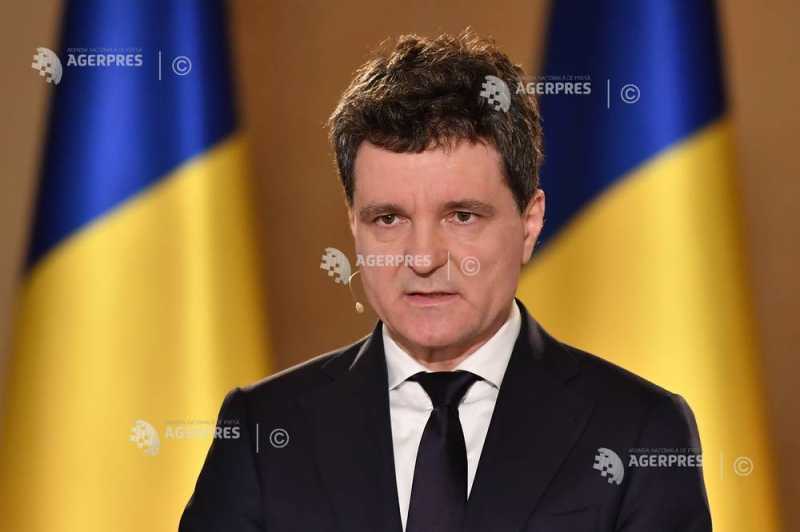
President Nicușor Dan to attend the High-Level Week of the UN General Assembly
President Nicușor Dan has several meetings and events scheduled in New York between 20 and 23 September, as part of his participation in the 81st session of the United Nations General Assembly, according to the agenda published by the Presidential Administration. The President is scheduled to deliver Romania's national statement during the High-Level Week of the session

President Dan says Foreign Ministry investigating Orlivka school case
President Nicusor Dan said on Friday that Romania's Foreign Ministry has opened an investigation into the case of the school in Orlivka, Odesa region, where a Year 1 class taught in Romanian was closed. Speaking at a news conference held after the Carpathian Integration Initiative 'Carpathian 8' Summit, he said that 'remarkable progress has bee

Bolojan: We will try, within our possibilities and depending on our electoral weight, to form a Government
President of the National Liberal Party (PNL) Ilie Bolojan said on Friday that, although Siegfried Muresan's nomination for prime minister came three months late, the party would deal with the situation 'responsibly' and seek to form a Government based on its electoral weight. 'Yesterday, about 30 minutes beforehand, I learned from the piece of

Siegfried Muresan: We will start work on a government programme; beginning of next week - discussion with MPs
Prime Minister-designate Siegfried Muresan announced on Friday that he was starting work on the government programme together with the National Liberal Party (PNL), Save Romania Union (USR) and the Hungarian Democratic Union of Romania (UDMR), mentioning that he would present the priorities at the beginning of next week and, based on these, would hold an "extremely tran

CCIR's Daraban: The diaspora is not a sentimental issue but a chapter in the national economy
The experience gained by Romanians in the diaspora in competitive markets must be transformed into investment, jobs and exports, believes Mihai Daraban, President of the Chamber of Commerce and Industry of Romania (CCIR). According to a press release from the organisation sent to AGERPRES, the institution is strengthening its partnership with ROUNIT - Reunited
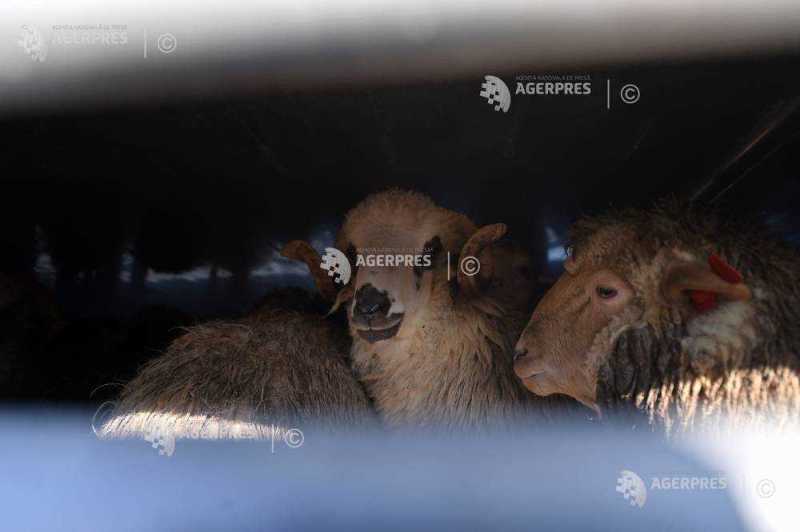
European Commission approves ANSVSA's Action Plan to unblock sheep and goat exports
The Action Plan of the National Veterinary Sanitary and Food Safety Authority (ANSVSA) for unblocking exports of sheep and goats has been approved by the European Commission, allowing exports of carcasses and products to resume under the differentiated vaccination scheme. According to an ANSVSA release sent to AGERPRES on Friday, the approved solution protects
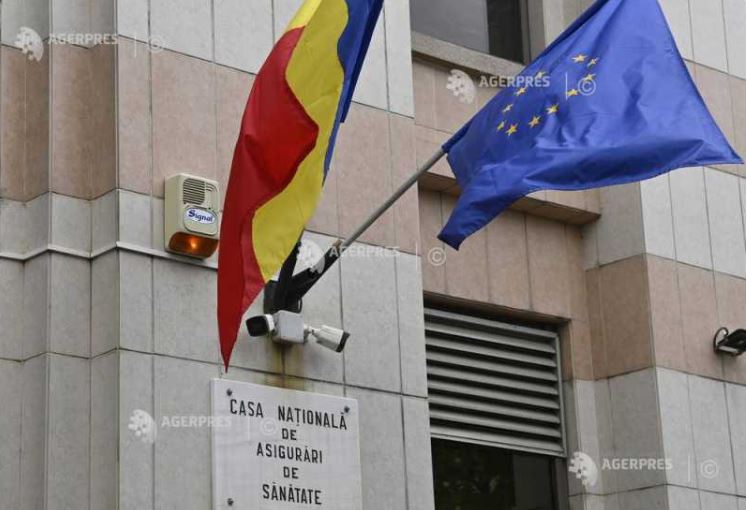
Health Insurance House launches project on cross-border exchange of medical images, laboratory results, discharge reports
The National Health Insurance House (CNAS) announced on Friday the launch of the European project 'Romanian Medical Images, Laboratory Results and Discharge Reports' (RO-MI-LR-DR), for the cross-border exchange of medical images, laboratory results and discharge reports. The project is funded through the EU4Health programme, with the European Health an
'Socola' Institute of Psychiatry in Iasi to hold new memory testing campaign at weekend
The 'Socola' Institute of Psychiatry in Iasi has announced that it will hold the third edition of its 'Memory Testing Campaign' on Saturday and Sunday, a campaign addressing people of all ages and aimed to identify individual risk factors that may predispose people to memory disorders, while also providing participants with specialist counselling.