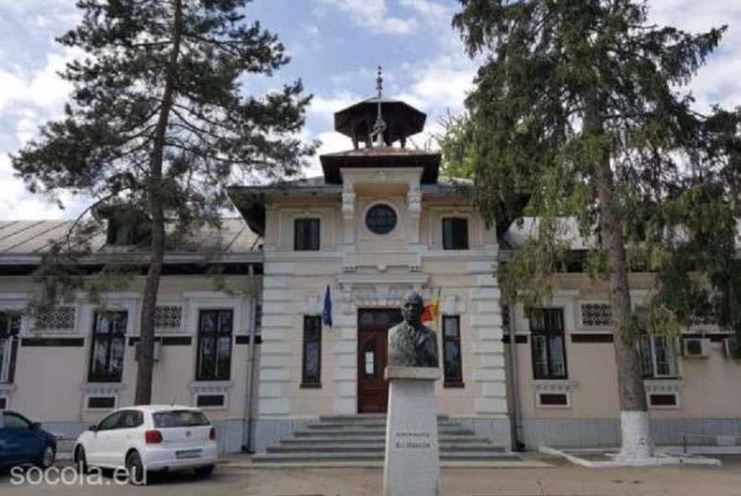

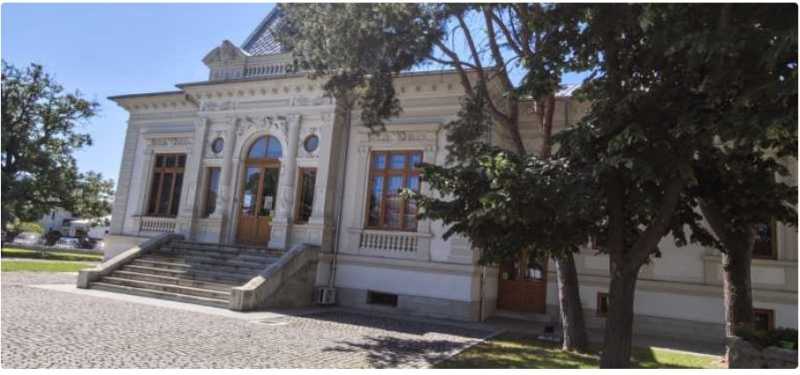
Among the documents, historical artefacts and exhibits recounting the past at the Museum of History and Archaeology in Focsani, several discreet plaques with special significance have appeared since Wednesday.
Inscribed in Braille, the plaques allow visually impaired visitors to navigate the museum more easily and better understand the context of the exhibits.
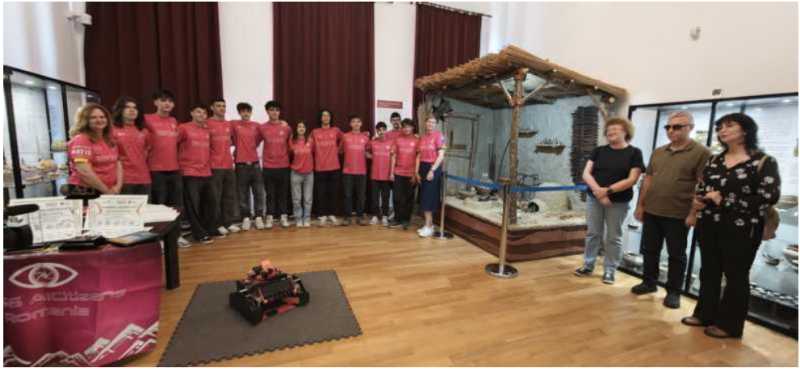
Behind the initiative is not a specialised company or a project financed by major organisations, but a team of robotics enthusiasts from Alexandru Ioan Cuza National College in Focsani.
For the members of the AI Citizens team, the project began with the desire to do something useful for the community, inspired by the theme of this year's FIRST Tech Challenge season.
'Our project started at the beginning of the FIRST Tech Challenge season and was called Decode. Inspired by the season's theme, 'decode', we wanted to help visually impaired people decode the artefacts in the history museum. We focused on the community because every season we carry out projects within and for the community. The collaboration was excellent and I think I speak on behalf of all my colleagues when I say that it helped us connect with such a community and understand the difficulties its members face. It meant a great deal for us to get involved and create a project for them. We visited the association several times, spoke with people dealing with visual impairments and even brought the plaque prototypes for testing. We had some incorrect letters and missing diacritics and wanted to create a quality product that would actually be used in the museum, not just for the competition. The Association of the Blind helped us tremendously, even providing Braille dictionaries, and it was the first time we had worked with such materials,' the robotics team's PR leader, Irina Curca, told AGERPRES.
Behind each plaque lay countless hours of work and multiple design versions. For the students, the challenge was not merely translating the information but converting it into a format perfectly readable for Braille users.
'There was a great deal of research involved. We consulted the Association of the Blind repeatedly to correct every version that was not right. The biggest challenge was that the plaques had to be designed manually, dot by dot, in the software. We had to remove and reposition elements to ensure the text could be read correctly. We went through numerous prototypes before reaching the final version. We refused to give up until the product became genuinely useful for those who would use it,' explained Mario Atanasiu, a volunteer with the team and one of the project's technical coordinators.
He said the process meant much more than a simple technical exercise.
'We went to the museum, collected the texts from the existing information panels and began translating them into Braille. It was a difficult project because everything had to be created manually using 3D design software. There were many failed attempts, spacing issues and printing problems. I think we produced at least seven series of prototypes. At first we had material adhesion problems, then issues with the distances between the dots. Every error meant starting over. But seeing the plaques installed and available to visitors is our greatest satisfaction. The most important reward is being able to give something back to the community and help create a more accessible space for everyone,' Atanasiu said.
Representatives of the Vrancea branch of the Association of the Blind said the students' initiative addresses a real need. Although visually impaired people can visit museums accompanied by guides, tactile reference points greatly facilitate orientation and understanding of historical context.
'It is not necessarily difficult to visit a museum, but the problem is that you cannot see the exhibits and do not always know which historical period is being presented or which section you are in. Guides can help, but these plaques provide greater autonomy. A blind person can immediately learn whether they are in a section dedicated to a particular historical period or a certain type of exhibit. They can build a mental image of the place and better understand what is being presented. These may seem like small things to sighted people, but they are extremely helpful in terms of orientation and accessibility,' said Florin Pasu, a representative of the Association of the Blind in Focsani.
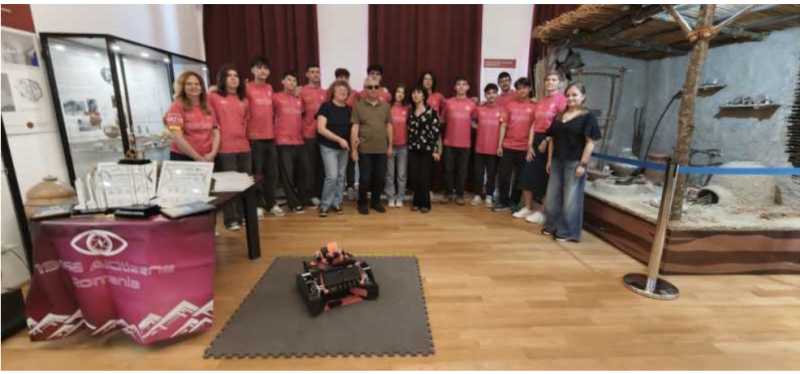
Museum specialists welcomed the accessibility initiative and hope the collaboration will continue.
'I thank the children for choosing us - the History and Archaeology Section of the Vrancea Museum - so that we can become more visible to those who cannot actually see us. As guides, we provide plenty of explanations, but unfortunately we are not always here. The children came up with this brilliant idea of Braille plaques and I hope we can continue our collaboration and create 3D replicas of certain artefacts so that visitors can understand exactly what the old objects we excavate - ceramics, metal objects or coins - actually look like,' archaeologist Madalina Stanescu said.
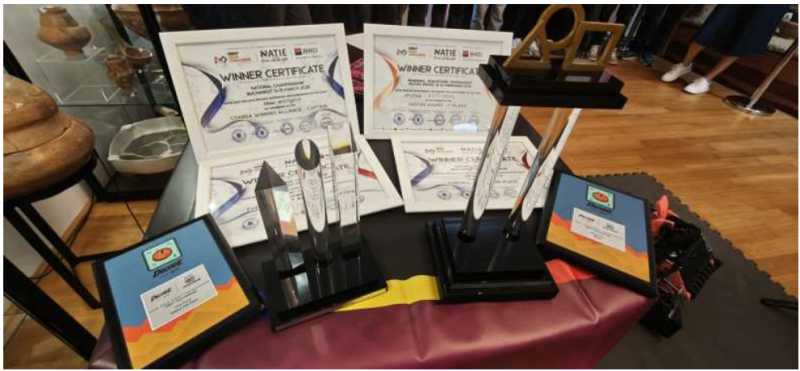
The museum project is only one of the initiatives through which AI Citizens seeks to bring technology closer to the community. The Focsani team is among Romania's most successful robotics teams and recently returned from the World Robotics Championship in Houston, where it placed fourth worldwide and won the Inspire Award, one of the competition's most prestigious distinctions.
For team members, international success and social projects are part of the same philosophy.
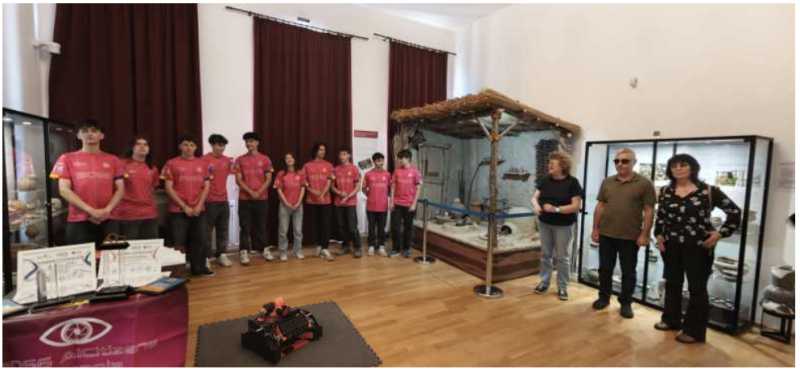
'The Inspire Award is presented to teams that excel across all competition criteria. We are convinced that the project carried out together with the museum and all our community activities mattered greatly. We like to say that our team is much bigger than the people who are seen at competitions. Our team also includes those who supported us, those who worked with us at the museum, the Association of the Blind, teachers, authorities and everyone who stood by us. Our achievements are the result of this collaboration,' AI Citizens representatives said.
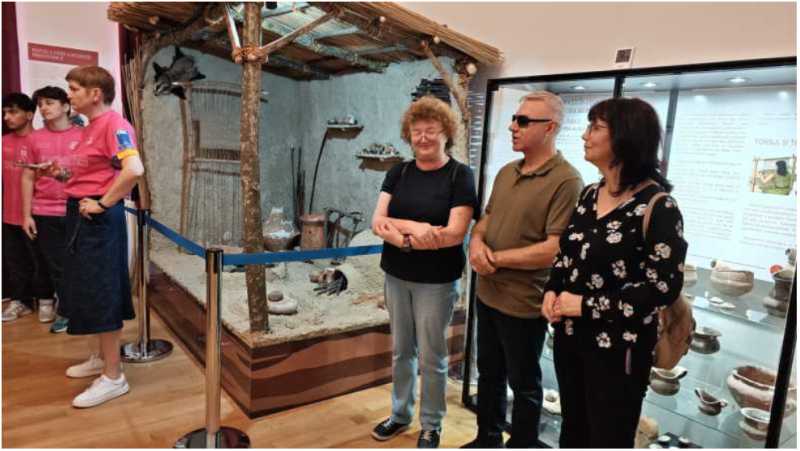
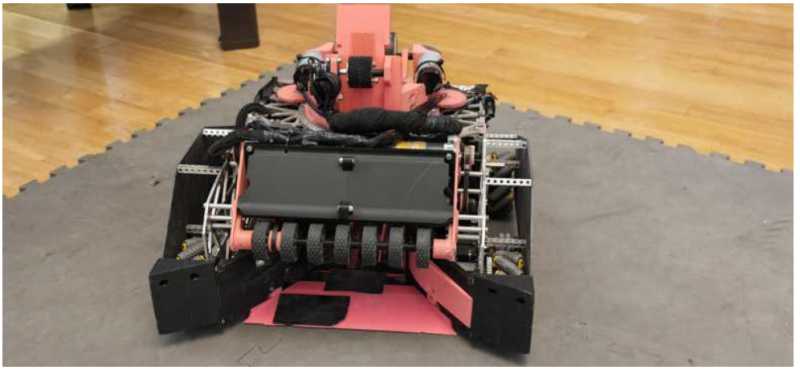
The robot built by the team for the World Championship in Houston was also displayed at the museum. It required around seven months of work, with all of its black and pink components produced on the team's 3D printer.
At a time when technology is most often associated with artificial intelligence, algorithms or international competitions, the students from Focsani have shown that it can also mean something else: a discreet bridge between history and accessibility, between excellence and solidarity.
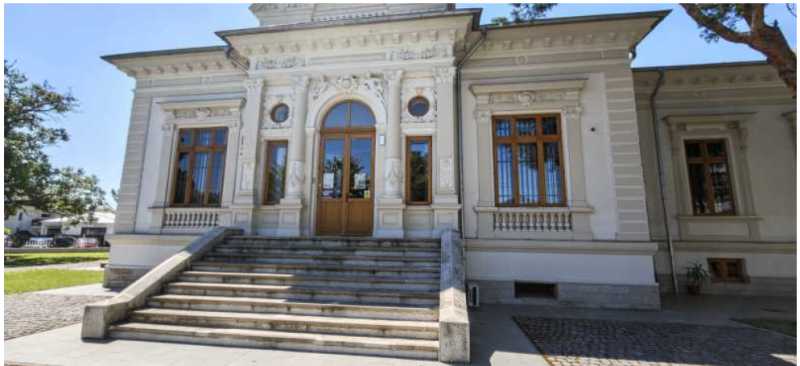
And for blind visitors to the Union Museum, a few lines written in Braille can make the difference between a simple visit and an experience in which the past finally becomes accessible. AGERPRES (RO - writing by: Dana Lepadatu; EN - writing by: Simona Iacob)
- Category: English
- Date: 2026-06-17 22:34:27
- Foto: Dana LEPADATU / AGERPRES