
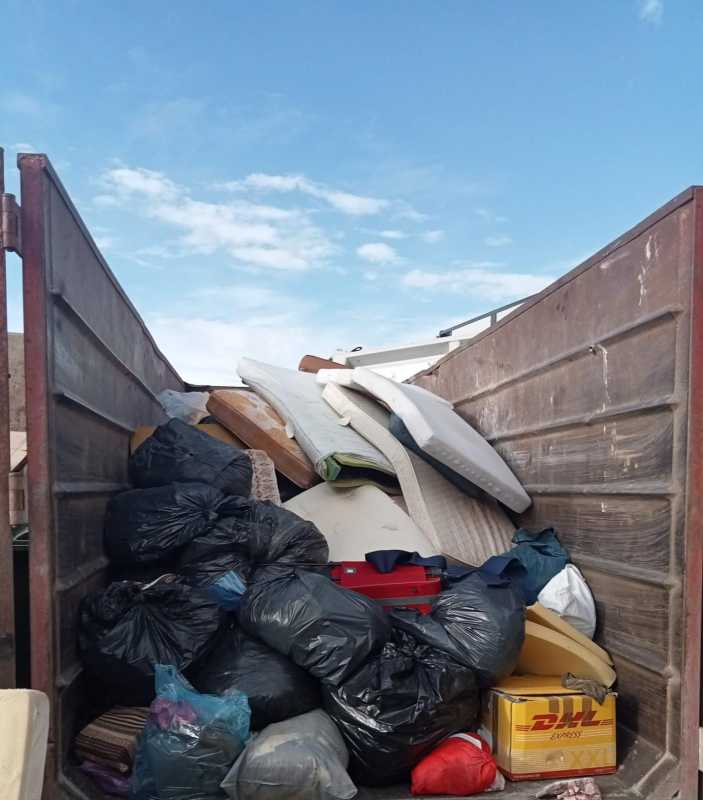
More than 50 tonnes of textile waste had been collected by the end of January 2026 through the 12 containers installed at the initiative of the Bucharest Metropolitan Area Intercommunity Development Association (ADIZMB) in the localities of Berceni, Branesti, Pantelimon, Popesti-Leordeni and Vidra as part of the Green-Tex project - 'Developing Sustainable Textile and Garment Production and Consumption in the Danube Region' (Green-Tex).
'Fifty tonnes of used clothing, bedding, footwear and other textile materials have been collected free of charge in five localities in Ilfov County through 12 dedicated containers installed by the Bucharest Metropolitan Area Intercommunity Development Association (ADIZMB) as part of the transnational project ‘Developing Sustainable Textile and Garment Production and Consumption in the Danube Region'/‘Enhancing Danube Green Textile and Garment Production and Consumption' - Green-Tex. On Wednesday, June 17, ADIZMB will present the results of this innovative pilot scheme during the conference ‘Sustainability in the Textile Industry - Developing Sustainable Textile and Garment Production and Consumption in the Danube Region' (...). The event marks the completion of the Green-Tex project, funded through the Danube Transnational Programme, which brought together 11 partner organisations from nine countries in the Danube region,' the association said in a press release.
Through the 12 dedicated containers placed in locations accessible to local communities, approximately 50 tonnes of textile waste had been collected by the end of 2025 and redirected for sorting, reuse and recycling.
'The results of the project demonstrate that appropriate infrastructure, supported by citizen involvement and cooperation between public authorities and the private sector, can make a significant contribution to reducing environmental impact and changing behaviour within communities. The fact that the Ministry of Environment was an associated partner in the Green-Tex project provides us with a direct channel to ensure that these results do not remain merely a report - we will submit the data and conclusions to support the development of future national solutions for textile waste management,' said Gianina Panatau, head of ADIZMB, as quoted in the press release.
According to data generated by the project, citizens who used the dedicated containers helped reduce CO2 emissions by approximately 1,051 tonnes. These emissions are associated both with the production of new textile and footwear items and with the disposal of textile waste. The initiative also saved more than 108,000 square metres of water resources typically required for the cultivation of raw materials and industrial processes. Analysis of the collected materials showed that clothing accounted for the largest share (37%), followed by household textiles such as pillows, bed linen and similar items (28.5%), footwear (16.2%), curtains and drapes (9.1%), and natural leather or fur products (3%), the press release added.
Bringing together 11 partner organisations from nine countries, Green-Tex aims to strengthen transnational cooperation and innovation within the sustainable textile and garment sector in partner countries, enabling them to become more resilient and adaptable to global trends. The project develops and tests new solutions for stakeholders throughout the textile industry value chain - from fashion design, production and use to textile waste collection - to enhance resilience and competitiveness in response to global changes by transitioning from traditional practices to environmentally friendly textile practices based on a more regenerative circular economy.
ADIZMB's role within the project focuses on testing and validating efficient textile waste collection models through the implementation of a pilot programme in the Bucharest metropolitan area. This component is being developed in parallel with similar initiatives in Sarajevo (Bosnia and Herzegovina) and Trenein (Slovakia), contributing to the exchange of best practices and the development of a model that can be replicated across the region.
The project has a total budget of 1.79 million euros, of which ADIZMB's budget amounts to 152,000 euros. AGERPRES (RO - writing by: Nicoleta Gherasi; EN - writing by: Cristina Zaharia)
- Category: English
- Date: 2026-06-17 09:19:19