

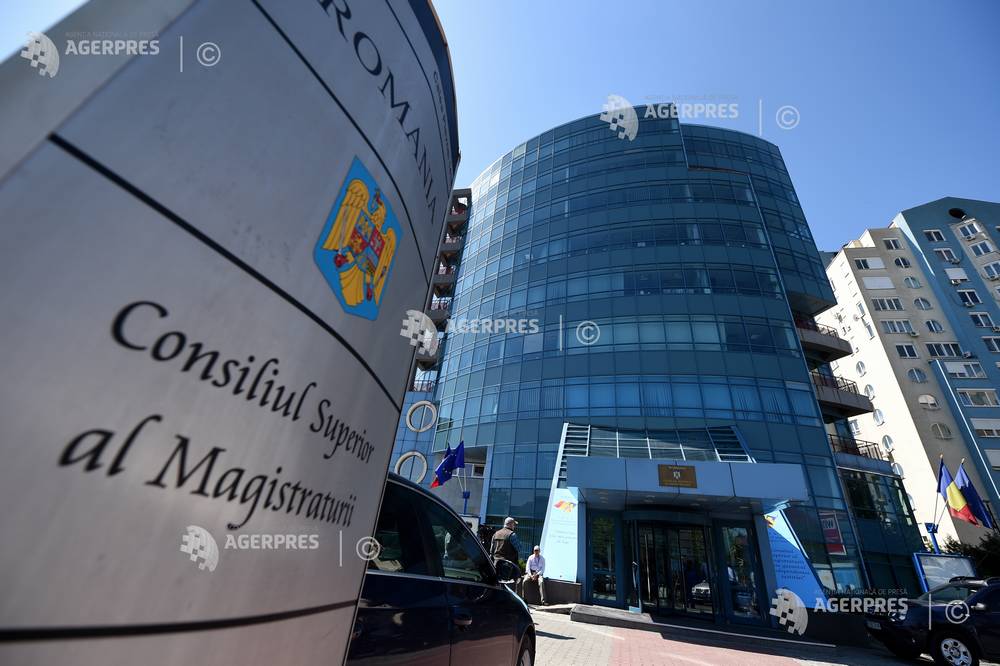
The Superior Council of Magistracy announced on Tuesday that it had sent the European Commission a letter with the decision of the Section for Judges, which established that there was 'a sustained and coordinated campaign' aimed at discrediting the judiciary, in which political actors, affiliated media institutions and civil society organizations participated.
The letter is signed by the President of the Supreme Court of Romania, Liviu Gheorghe Odagiu, and is addressed to the President of the European Commission, Ursula von der Leyen, and the Commissioner for Democracy, Justice, the Rule of Law and Consumer Protection, Michael McGrath.
We remind you that the decision of the Section for Judges of June 9 has a 76-page document attached, in which the SCM lists the positions of some politicians, actions of some associations and non-governmental organizations, but also press articles, which the Section for Judges considers to be part of a campaign of denigration and 'harassment actions' of judges and the President of the Supreme Court, Lia Savonea.
'On behalf of the Section for Judges of the Superior Council of Magistracy of Romania, we hereby transmit to you Decision no. 1,348 of June 9, 2026, adopted unanimously, with a concurring opinion, by the members present, in the exercise of the Council's constitutional responsibility to guarantee the independence of justice (https://www.csm1909.ro/PageDetails.aspx?Folderld=12756). The decision demonstrates how the rule of law in Romania has been called into question in the last year, through a sustained campaign that seeks to degrade it, through pressures exerted simultaneously on the judiciary on several levels. The attached decision is not based on general or unverifiable statements. It presents a chronological succession of concrete and objectively verifiable public facts. Each relevant factual statement is accompanied by a direct hyperlink to the public statement, official document, court decision, institutional communication, press material or original statistical source on which it is based. The Commission is thus provided with the necessary means to directly verify the facts underlying the Decision, their sequence and cumulative nature,' the letter reads.
The CSM claims that, since the beginning of the mandate of the new governing authorities, starting in July 2025, an openly declared objective has been to weaken, up to the effective elimination, the financial autonomy and independence of the judiciary.
According to the CSM, this discrediting campaign involved 'political actors, affiliated media institutions and civil society organizations with a similar approach'.
'This objective was pursued through measures affecting the remuneration and pensions of judges, the financing of courts, the provision of personnel, recruitment and the institutional capacity of the judiciary to manage the resources necessary to exercise its constitutional function. In order to obtain public support for such a structural intervention, political actors, affiliated media institutions and civil society organizations with a similar approach have carried out, for approximately one year, a sustained and coordinated campaign aimed at discrediting the judiciary. The campaign initially focused on alleged financial privileges and was later expanded to include accusations of widespread systemic corruption and abuse, public delegitimization, attacks against judges and heads of institutions, attempts to modify the governance, representative structures and leadership of the judiciary, proposals for exceptional procedures 'vetting or external involvement in the career of judges, as well as legislative and administrative measures affecting irremovability, remuneration, pensions, recruitment, personnel, resources and financial autonomy, all converging in a common direction,' the CSM states.
In the opinion of the CSM, analyzed separately, individual measures and media campaigns often crossed the red line of constitutional loyalty and went beyond the usual political debate, budgetary policy or institutional reform, but analyzed together, in their sequence, intensity and common direction, they reveal 'a systemic risk'.
'Their cumulative effect is likely to produce an inhibiting effect on judges, to erode public confidence in the courts, to weaken the SCM in its role as a constitutional protection mechanism between the judiciary and the political powers, to diminish the financial and operational independence of the judiciary and to remodel its institutional architecture under political influence. The speed, magnitude and simultaneity of these developments are essential. They do not represent a succession of unrelated controversies, but a concentrated pattern of institutional pressure, the cumulative effect of which is capable of weakening one of the three powers of the state, modifying the system of mutual balance and control and endangering the guarantees on which democracy, fundamental rights and the effective application of Union law depend,' CSM declares.
The CSM further claims that the general assemblies of judges from all 239 courts and at each level of jurisdiction adopted their own decisions, and the main finding was that they 'denounce the continuous degradation of the rule of law in Romania through the sustained attempt of political power to subordinate justice.'
According to the CSM, the general assemblies requested the Council to adopt all available institutional measures, domestically and internationally, to restore the balance imposed by the rule of law, to immediately put an end to the campaign to delegitimize justice and to obtain recognition, by the other powers of the state, of a real independence of the judiciary, an essential requirement of a democratic society.
On the other hand, the Council maintains that the decision adopted by the Section for Judges is of a protective and declaratory nature, not jurisdictional, disciplinary, punitive or normative nature.
'It does not establish civil, criminal or disciplinary liability; it cannot impose sanctions, assign an unfavourable legal status, issue binding provisions for third parties or require any person or organisation to change its conduct. Its legal function is to ascertain and reflect the relevant factual reality: to identify verifiable public statements and acts and, where necessary, their authors; to assess their context, factual basis, intensity, repetitiveness, extent and cumulative effect; and to establish, at institutional level, whether the independence of the judiciary, impartiality or professional reputation have been affected. Identifying the source of a statement or act is therefore an evidentiary and analytical necessity, not a coercive measure. The Council has neither the power to sanction the persons concerned nor the power to regulate their conduct, but it has 'the constitutional obligation to reflect the reality that affects the judiciary and to draw attention to its gravity,' explains the CSM.
The Council adds that this procedure is neither new nor exceptional, and both sections of the SCM have used the same legal mechanism on numerous previous occasions (465 similar cases between 2011 and 2025), including when the relevant statements or conduct came from political dignitaries, journalists or media organizations.
'What distinguishes the present situation is not the procedure used or the factual identification of the sources of the statements, entities and documented facts, but the unprecedented magnitude, intensity, diversity, duration and cumulative nature of the pressure analyzed, concentrated in a period of approximately one year,' adds the CSM.
The Council also says that the judicial dimension of the European Union is direct and substantial, the independence of the judiciary is not just a matter of national constitutional organization, and national courts are instances of the Union's legal order.
'The attached decision should therefore be understood as an early warning communication on the resilience of the institutional guarantees of the rule of law, in order to assess the extent to which the convergence of public delegitimization, coordinated political pressure, institutional reconfiguration carried out without consultation and the simultaneous weakening of professional, financial and operational guarantees creates a serious risk to the independence of the judiciary, the financial autonomy of the judiciary and the system of checks and balances between the powers of the state. The Romanian judiciary fully recognises and welcomes the need for legitimate criticism, democratic accountability and reforms based on data and evidence. At the same time, it is necessary to assess the need to protect the judiciary against coordinated political pressure and to preserve its capacity to act independently. We underline that this letter is formulated in defence of the right 'citizens to benefit from independent courts, within the European Union legal system, as well as constitutional balance, including institutional and financial guarantees without which democratic governance cannot function,' concludes the letter signed by the President of the Supreme Court. AGERPRES (RO - writing by: Eusebi Manolache, editing by: Georgiana Tanasescu; EN - writing by: Catalin Cristian Trandafir)
After drawing up 'black lists', CSM complains to European Commission about a 'campaign to discredit' judges
Conţinutul website-ului www.agerpres.ro este destinat exclusiv informării publice. Toate informaţiile publicate pe acest site de către AGERPRES sunt protejate de dispoziţiile legale incidente. Sunt interzise copierea, reproducerea, recompilarea, modificarea, precum şi orice modalitate de exploatare a conţinutului acestui website. Informaţiile transmise pe www.agerpres.ro pot fi preluate, în conformitate cu legislaţia aplicabilă, în limita a 500 de semne. Detalii în secţiunea Condiţii de utilizare. Dacă sunteţi interesaţi de preluarea ştirilor AGERPRES, vă rugăm să contactaţi Direcţia Marketing - marketing@agerpres.ro.
Alte știri din categorie
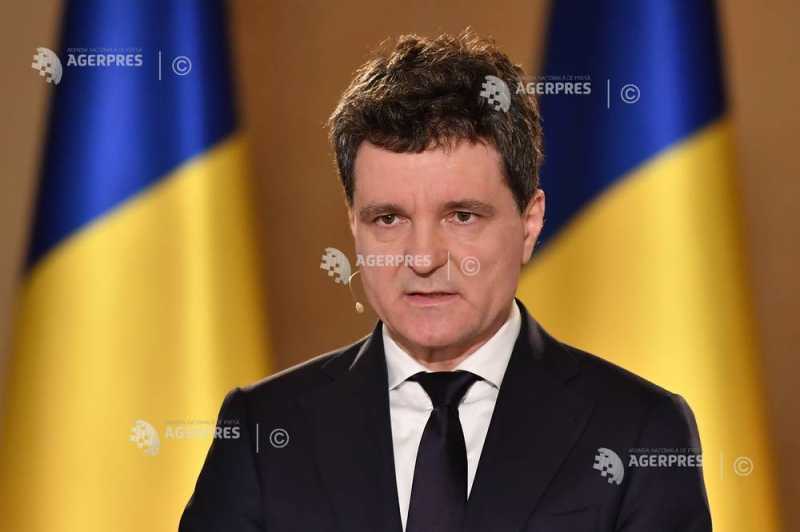
President Nicușor Dan to attend the High-Level Week of the UN General Assembly
President Nicușor Dan has several meetings and events scheduled in New York between 20 and 23 September, as part of his participation in the 81st session of the United Nations General Assembly, according to the agenda published by the Presidential Administration. The President is scheduled to deliver Romania's national statement during the High-Level Week of the session

President Dan says Foreign Ministry investigating Orlivka school case
President Nicusor Dan said on Friday that Romania's Foreign Ministry has opened an investigation into the case of the school in Orlivka, Odesa region, where a Year 1 class taught in Romanian was closed. Speaking at a news conference held after the Carpathian Integration Initiative 'Carpathian 8' Summit, he said that 'remarkable progress has bee

Bolojan: We will try, within our possibilities and depending on our electoral weight, to form a Government
President of the National Liberal Party (PNL) Ilie Bolojan said on Friday that, although Siegfried Muresan's nomination for prime minister came three months late, the party would deal with the situation 'responsibly' and seek to form a Government based on its electoral weight. 'Yesterday, about 30 minutes beforehand, I learned from the piece of

Siegfried Muresan: We will start work on a government programme; beginning of next week - discussion with MPs
Prime Minister-designate Siegfried Muresan announced on Friday that he was starting work on the government programme together with the National Liberal Party (PNL), Save Romania Union (USR) and the Hungarian Democratic Union of Romania (UDMR), mentioning that he would present the priorities at the beginning of next week and, based on these, would hold an "extremely tran

CCIR's Daraban: The diaspora is not a sentimental issue but a chapter in the national economy
The experience gained by Romanians in the diaspora in competitive markets must be transformed into investment, jobs and exports, believes Mihai Daraban, President of the Chamber of Commerce and Industry of Romania (CCIR). According to a press release from the organisation sent to AGERPRES, the institution is strengthening its partnership with ROUNIT - Reunited
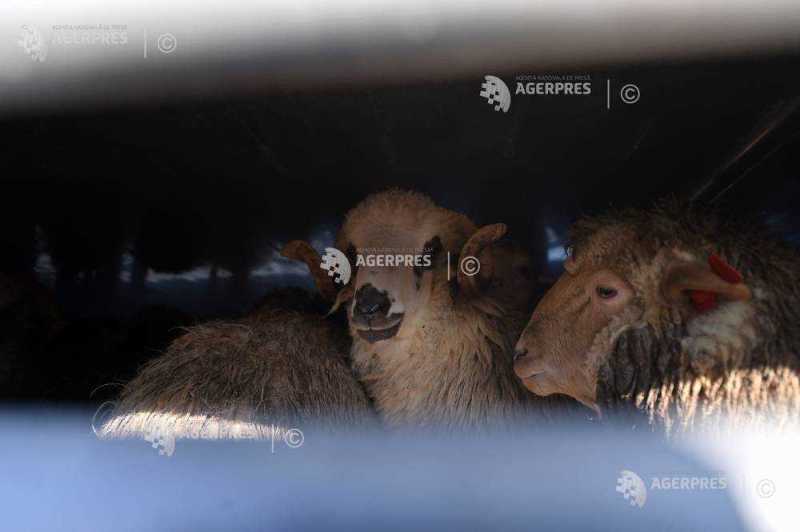
European Commission approves ANSVSA's Action Plan to unblock sheep and goat exports
The Action Plan of the National Veterinary Sanitary and Food Safety Authority (ANSVSA) for unblocking exports of sheep and goats has been approved by the European Commission, allowing exports of carcasses and products to resume under the differentiated vaccination scheme. According to an ANSVSA release sent to AGERPRES on Friday, the approved solution protects
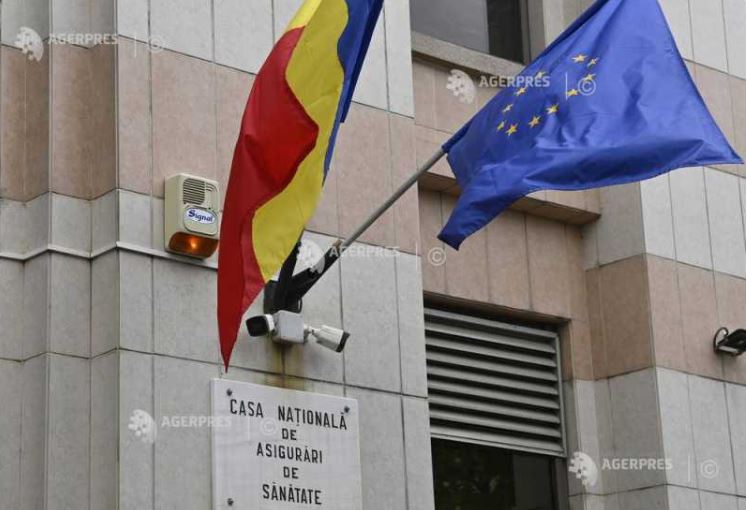
Health Insurance House launches project on cross-border exchange of medical images, laboratory results, discharge reports
The National Health Insurance House (CNAS) announced on Friday the launch of the European project 'Romanian Medical Images, Laboratory Results and Discharge Reports' (RO-MI-LR-DR), for the cross-border exchange of medical images, laboratory results and discharge reports. The project is funded through the EU4Health programme, with the European Health an
'Socola' Institute of Psychiatry in Iasi to hold new memory testing campaign at weekend
The 'Socola' Institute of Psychiatry in Iasi has announced that it will hold the third edition of its 'Memory Testing Campaign' on Saturday and Sunday, a campaign addressing people of all ages and aimed to identify individual risk factors that may predispose people to memory disorders, while also providing participants with specialist counselling.