
The Plant Genetic Resources Bank (BRGV) in Buzau has, for the first time, carried out genetic print analysis on tomatoes using a state-of-the-art sequencer, a step towards creating a virtual genome library, the highest legal and scientific form of proving the origin of some Romanian varieties.
According to the BRGV, the extraction of plant DNA (deoxyribonucleic acid) was made possible with the support of equipment recently acquired by the institution and with the assistance of specialists who trained and supported the bank's researchers. The research institution's portfolio includes more than 20,000 biobanked varieties of vegetables, flowers and aromatic plants, of which approximately 4,000 are tomato species.
'In recent days we carried out the first sequencing procedures, the first genetic print analyses on tomatoes. We managed to do this using a state-of-the-art sequencer. Three of my colleagues were trained to use the equipment in order to perform these genetic print analyses on tomato varieties. This is a period of preparation and DNA extraction, a very long road. Until we manage to complete more than 4,000 genetic marks for all tomato varieties and conduct a comparative evaluation between them, there is still a very long way to go. Genetic marking can be carried out on several plant organs, starting from the seed to certain vegetative parts, but it is easiest to work with young leaves and meristematic tissues,' BRGV director Costel Vanatoru told AGERPRES.
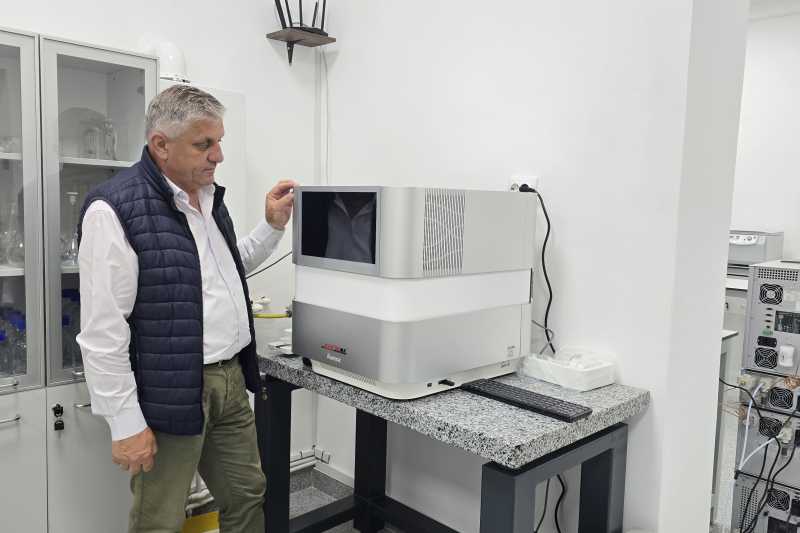
Photo: (c) Florin Zafiu / AGERPRES
The genetic print analysis of tomato varieties represents a first for both the BRGV and Romania, according to the institution's management. The varieties selected were the field tomato Valahia, a determinate-growth variety intended for fresh consumption and industrial processing, and the Claudia variety, intended for industrial processing and preservation.
'We carried out genetic print analysis on the Claudia and Valahia varieties, the varieties developed within the bank, in order to gather information on servers for analysis and comparison. I could say this represents part of a dream fulfilled because when we started out, I tried to convince those with decision-making power that we needed to reach the level of genetic marking. We can perform short and rapid sequencing, though ideally we would have the capacity and strength to carry out full sequencing in order to protect these resources properly. We can call this a first for the Resources Bank and also a first for Romania because we are talking about a gene bank that managed to carry out genetic marking internally rather than externally. It is difficult work involving molecular genetics, thorough training and understanding of the technology we have here,' the researcher said.
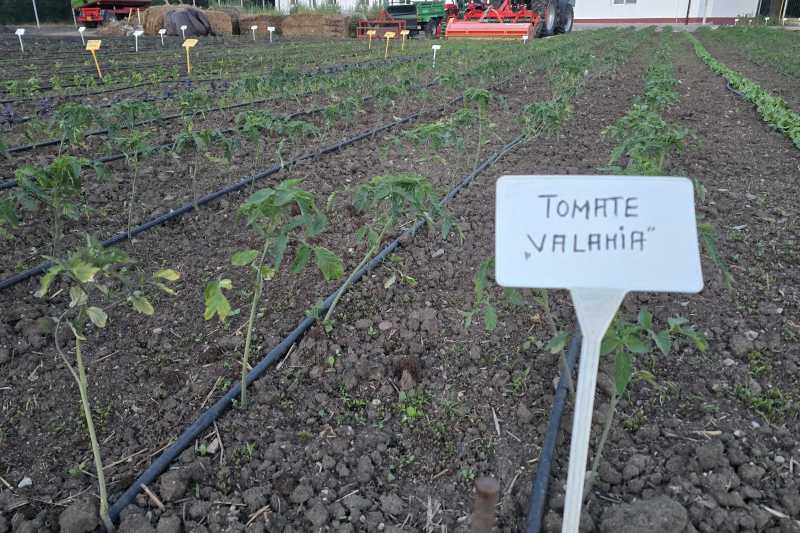
Photo: (c) Florin Zafiu / AGERPRES
DNA extraction and the storage of data in a virtual library make it possible to demonstrate the authenticity of certain varieties, the characteristics that distinguish them and the highlighting of particular traits that may underlie plant diseases.
He added that the results obtained must be made known internationally and for this reason an internationally accredited resources bank is needed.
Previously, the BRGV carried out the first extraction of a plant DNA sequence from an old aubergine variety, thus paving the way for the establishment of a genotypic mark library.
The BRGV Buzau is a specialist institution in Romania whose strategy involves the genotypic and phenotypic study, as well as the short-, medium- and long-term conservation of plant genetic resources, in accordance with international legislation. AGERPRES (RO - writing by: Florin Zafiu; EN - writing by: Adina Panaitescu)
Buzau Plant Genetic Resources Bank carries out genetic print analysis on Romanian tomato varieties
Autor: agerpres.ro
Timp de citire: 3 minute

Alte știri din categorie

Budget deficit falls to 1.17pct of GDP four months into 2026
The budget deficit fell in the first four months of this year by 1.75 percentage points compared with the same period last year, reaching 1.17% of the GDP, compared with 2.92% of the GDP in the January-April 2025 period, according to data the Finance Ministry (MF) published on Tu

Interim Foreign Affairs Minister Oana Toiu to participate in General Affairs Council meeting in Brussels
Interim Foreign Affairs Minister Oana Toiu will participate in the General Affairs Council (GAC) meeting taking place in Brussels on Tuesday, the Foreign Affairs Ministry (MAE) informed. According to MAE, Oana Toiu will be accompanied by Secretary of State for European Affairs, M

'Long Day's Journey into Night' wins Best Performance at UNITER Gala, Rebengiuc honoured
'Long Day's Journey into Night' wins Best Performance at UNITER Gala, Rebengiuc honoured

Over 10 billion containers collected since Deposit Return System launch
Over 10 billion containers collected since Deposit Return System launch

UPDATE Culture minister steps down following leaked recording
UPDATE Culture minister steps down following leaked recording

BVB CEO Vulpescu: I find it difficult to believe that gov't fell because it wanted to list companies
BVB CEO Vulpescu: I find it difficult to believe that gov't fell because it wanted to list companies

The Three Seas Initiative will transform the eastern, south-eastern parts of the European Union
The Three Seas Initiative will transform the eastern, south-eastern parts of the European Union

UMEC - WUCT President: We have a huge responsibility - to contribute to reformation and humanization of society
UMEC - WUCT President: We have a huge responsibility - to contribute to reformation and humanization of society