
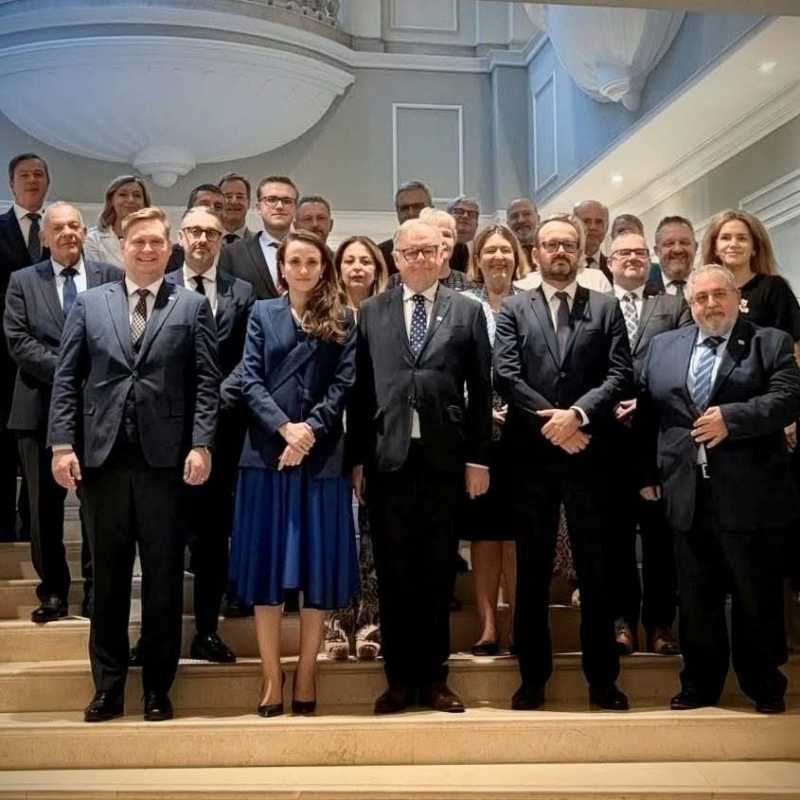
Interim Foreign Affairs Minister Oana Toiu participated in a working meeting with the heads of missions of the EU member states accredited in Romania organised by the Embassy of Ireland in Bucharest, context in which she also discussed the European Union's future multiannual budget, the Ministry of Foreign Affairs (MAE) informed.
The meeting held on Friday took place as Ireland holds the rotating Presidency of the Council of the European Union.
According to a MAE release sent on Monday, the discussions covered topical issues on the European agenda amid the current international and regional geopolitical context, with a focus on the EU's future Multiannual Financial Framework and European competitiveness, protecting European values, EU security and defence, the EU's enlargement process and developments in the Middle East.
Referring to one of the files of greatest interest at European level in this period, the negotiations on the Union's future Multiannual Financial Framework for 2028-2034, Oana Toiu reiterated Romania's commitment to remaining a constructive partner in these negotiations and the importance of preparing the technical scenarios for the financial framework in order to intensify the debate with European citizens and increase the chances of a political agreement by the end of this year.
The minister mentioned, in this context, the main elements of interest for Romania, namely the need for an ambitious budget in terms of both volume and objectives, the importance of a balance between the size of the budget and the revenue component, namely own resources, the role of investments under the Cohesion Policy and the Common Agricultural Policy in continuing to reduce development gaps, while ensuring easier access for Romanian companies, including SMEs, to competitiveness instruments.
Moreover, the minister highlighted the importance of the 'Friends of Cohesion' group as a platform for close coordination and promoting common objectives ahead of the next stages of negotiations on the Union's future financial framework.
In the context of recent security developments in the region, the interim minister underscored her support for strengthening the European Union's action in security and defence policy and including these priorities in funding. She called for increased cooperation in the Black Sea region, referring to Romania's and Bulgaria's proposal to make the Maritime Security Hub operational, which will substantially contribute to strengthening the capacity to analyse and respond to hybrid threats in the region, with Black Sea security also playing an essential role in global grain prices, both from the perspective of Romania as the EU's main grain producer and in terms of logistical transit.
Oana Toiu mentioned that more than 70% of Romania's imports and exports in 2026 are linked to the Single Market and underscored the priority of strengthening Romania's contribution to boosting EU competitiveness. She presented the results of investments in connectivity infrastructure, both through the Security Action for Europe (SAFE) programme and national funding, as well as the concrete results achieved over the past year in connectivity with neighbouring countries, and highlighted the strategic imperative of future funding for infrastructure projects aimed at improving connectivity with countries seeking to join the European Union, particularly given the increased risks in the eastern neighbourhood.
Oana Toiu said that, for Romania, this means accelerating the implementation of connectivity priorities: motorways, bridges, rail and river transport, border crossing points, energy connections and data cables. AGERPRES (RO - writing by: Oana Ghita; EN - writing by: Rodica State)
- Category: English
- Date: 2026-09-14 11:34:49
- Foto: Oana Toiu / Facebook