
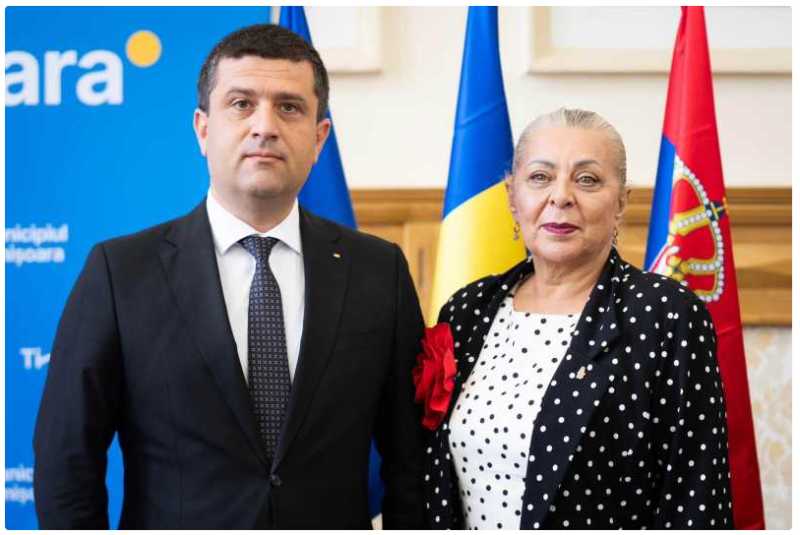
Romania and Serbia agreed on Friday to maintain a joint mechanism for consultation and information exchange on Danube water flows, amid persistently low river levels affecting both countries, acting Transport and Infrastructure Minister Radu Miruta said after talks in Timisoara with Serbian Construction, Transport and Infrastructure Minister Aleksandra Sofronijevic.
According to Romania's Transport Ministry, the two sides will continue sharing real-time data on Danube discharge levels and their impact on navigation, economic activity and energy infrastructure. Romania also reiterated its position on the Djerdap 3 / Iron Gates III hydropower project, stating it remains open to analysis from the perspective of regional energy security and diversification, while stressing the need for a comprehensive assessment of the project's effects on energy production, navigation, the environment and existing hydropower infrastructure. A Memorandum of Understanding facilitating information exchange on Djerdap 3 was signed on July 16, 2026.
Miruta said Romania and Serbia aim to further strengthen connectivity as part of their shared goal of deepening economic, tourism and people-to-people ties. The ministers reviewed nine agenda items covering road, rail, river and air transport links.
A key topic was progress on the Timisoara-Moravita motorway and its connection to Serbia's planned Belgrade-Vatin high-speed road, a strategic project intended to improve cross-border road transport. Romania reaffirmed its commitment to the project and to intensified technical cooperation with Serbia.
On Romanian territory, the motorway will span 73 km across three sections. The first two - Remetea Mare-Jebel and Jebel-Moravita - are in procurement procedures for design and construction. Nine bids were submitted for the Remetea Mare-Jebel section and are under evaluation, while the tender for Jebel-Moravita has been completed and a winning bidder selected.
The ministers also discussed development of the Timisoara-Belgrade rail connection, part of the Rhine-Danube European transport corridor and the TEN-T network. Romania presented the status of the modernization project for the Timisoara Nord-Stamora Moravita-border line, included in the broader rehabilitation of the Resita Nord-Timisoara Nord-Voiteni-Stamora Moravita-border railway. The project includes upgrades to rail infrastructure, stations and level crossings, and aims to increase travel speeds. The investment is estimated at over RON 2 billion, VAT excluded.
The two sides also examined options for restoring passenger rail services between Romania and Serbia, particularly on the Timisoara-Stamora Moravita-Varset route, which would directly support mobility, tourism and economic exchanges.
Regarding third-country transport, Romania expressed readiness to increase the authorization quota and to explore the possibility of liberalizing this type of traffic in the near future.
Cross-border road infrastructure projects were also reviewed, including connections between Backi Breg-Kikinda-Srpska Crnja and the Romanian border crossings Jimbolia and Lunga. Serbia will send Romania a list of proposals to address issues related to Schengen-area driver stays, which will be examined by Romania's Interior and Foreign Ministries.
Ahead of EXPO 2027 Belgrade, Romania highlighted the need for additional transport options between Timisoara and Belgrade to facilitate visitor access. Currently, direct coach services operate between the two cities via private operators.
Regarding river transport, Romania proposed strengthening cooperation to improve navigation safety on the shared Danube sector. Plans include developing an integrated signaling and data-exchange system for updating electronic navigation charts and reactivating technical working groups in hydrology.
Minister Miruta said Romania supports continued dialogue with Serbia on resuming commercial navigation on the Bega Canal and expanding cross-border cooperation in river transport. In recent years, significant joint investments have been made to rehabilitate navigation infrastructure on the Bega Canal, including hydrotechnical works on both sides of the border and development of related facilities. Restoring commercial navigation and advancing the Bega-Tisa-Danube connection would enhance regional connectivity and cross-border river transport.
The sides agreed to maintain close coordination on Danube navigation safety and to support expert-level dialogue on resuming commercial navigation on the Bega through joint, EU-funded projects.
In air transport, Romania and Serbia cooperate within the European Common Aviation Area. Regular passenger flights operate between Bucharest and Belgrade, including Air Serbia services and TAROM flights under code-share with Air Serbia. Both sides praised the strong level of bilateral cooperation in civil aviation and discussed measures to further improve air connectivity. AGERPRES (RO - writing by: Otilia Halunga; EN - writing by: Simona Klodnischi)
- Category: English
- Date: 2026-08-21 18:33:04
- Foto: Radu Miruta / Facebook