
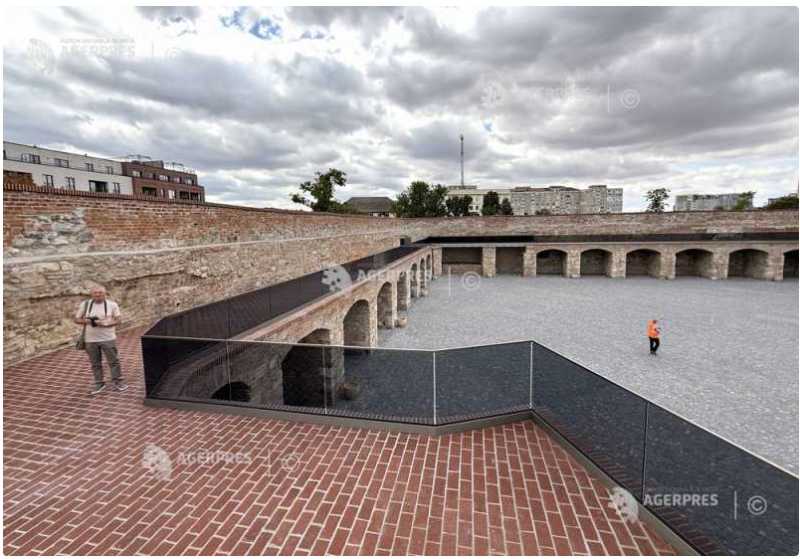
The Craisor Bastion in Oradea Citadel has been restored through an investment of about RON 18 million financed under the National Recovery and Resilience Plan (NRRP), and will be opened to visitors starting next month, local officials announced.
Oradea mayor Florin Birta said on Wednesday, at the completion of works, that the project received roughly RON 10 million in EU funding, with the municipality contributing another RON 8 million. 'This project has brought to light the wonders you can see here, and the bastion will enter Oradea's tourist circuit,' Birta said.
He emphasized that European investments have radically transformed the appearance of Oradea Citadel. 'So far, the municipality has invested around EUR 25 million in the citadel through various EU-funded projects. If the citadel looks as it does today, compared with 20 years ago, it is mainly thanks to European funds,' he added.
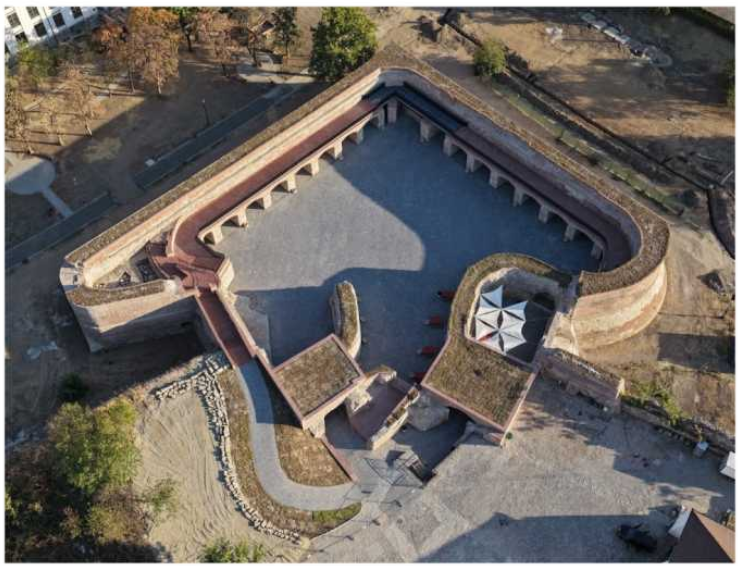
Photo credit: Oradea City Hall
The project was financed under NRRP Component C11 - Tourism and Culture, dedicated to promoting Romania's 12 cultural tourist routes.
Several other structures in the fortress still require restoration, including the Golden Bastion, the Red Bastion and three curtain walls. The municipality plans to seek additional European funding for these works.

Project manager Mihaela Neag highlighted both the scale of the intervention and its archaeological component. She noted that the bastion's name comes from Prince Sigismund, known locally at the time as Craisorul - an affectionate nickname meaning 'little king'.

During the works, which covered a surface of about 1,700 square meters, crews removed 10,500 cubic meters of earth, enabling extensive archaeological research. 'We've never had a project involving the removal of such a large quantity of soil. And even if it rains heavily, you won't see water accumulating here, because a very efficient drainage system was built directly under the paving. That's the merit of the builders,' Mihaela Neag said.

Archaeologists uncovered stone elements from the former Gothic cathedral, two cannonballs embedded in the masonry, glass objects, pipes, ceramics and other historical materials. The most striking find, according to Neag, is one of the statues of the apostles that once supported the altar columns of the Gothic cathedral.
The restoration also required using materials compatible with the historic structure, including old bricks recovered from demolition sites. 'We brought them from Hungary, from Romania, from every city where we found demolitions of old buildings,' said site supervisor Ioana Bob, noting that the works also showcased the original round-path structure and the bastion's defensive elements.

The financing contract was signed in 2022, and works were carried out starting in September 2023 by the Selina group of companies. AGERPRES (RO - writing by: Eugenia Pasca; EN - writing by: Simona Klodnischi)
- Category: English
- Date: 2026-08-19 19:59:07
- Foto: Eugenia PASCA / AGERPRES Photo