

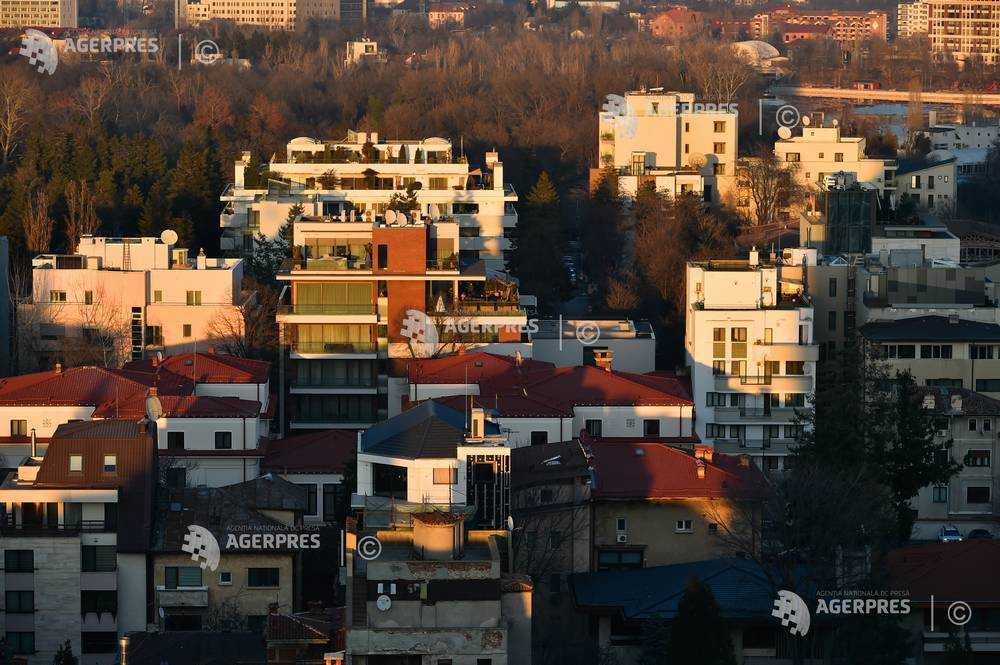
Housing in Romania remains relatively affordable, given that in most counties across the country, earnings from less than two months of work can cover the cost of one square metre of property, according to calculations by a real estate website.
The capital has the widest range of flats and houses for sale, but also rising prices. 'The earnings of Bucharest residents, which have followed an upward trend over time and exceed those of other Romanians, largely offset the price increases, keeping affordability at a favourable level,' Imobiliare.ro said in a press release.
With an affordability index of 0.66, Bucharest has a complex residential market, with significant differences in terms of quality, age and asking prices, even from one neighbourhood to another. Bucharest is home both to one of the cheapest areas among Romania's major cities for those looking to become homeowners and to areas where record prices exceed even those seen in Cluj-Napoca.
Since the beginning of 2024, flats and houses have increased in value by 37% locally, reaching an average of 2,125 euro per square metre in April, according to data from the real estate company. Net salaries earned by employees of companies headquartered in the capital are the highest in the country, averaging close to 1,400 euro per month, according to data from the National Institute of Statistics quoted in the press release.
Ilfov County has an affordability index of 0.69 and offers buyers in the area more spacious housing alternatives, often at considerably lower costs than those in the capital. The average asking price for homes listed for sale, at 1,596 euro per square metre, remains below that of the Bucharest market. Even the more expensive suburban areas largely give buyers the opportunity to obtain more space for the same budget as in Bucharest or even to move from apartment living to a house with a garden. The downside, however, is the time spent commuting to and from work each day, the source said.
Timis County, with an affordability index of 0.66, rivals Bucharest in terms of affordability, while Sibiu has a residential market that is attractive both to buyers and investors.
Counties encompassing some of Romania's largest urban centres - Brasov, Iasi and Constanta - remain broadly on an equal footing.
Cluj and Dolj have the lowest levels of affordability when it comes to buying a home, although there are significant differences both in terms of salaries and the evolution of flat and house prices.
Counties such as Caras-Severin and Harghita have recently benefited from significant private-sector investment. Incomes have risen, but housing prices remain among the lowest in the country.
'With one of the highest homeownership rates in Europe, housing in Romania remains affordable, although there are major differences from one region to another. While Timisoara and Bucharest are competing for the title of the most affordable major city in the country, with the caveat that in Bucharest the wide range of properties available and the excess supply in the lower-priced segment make a major contribution to the city's average price, Cluj-Napoca and Craiova share the status of the least affordable cities on the real estate market. Nevertheless, nationally, the most affordable counties remain those where the housing stock consists predominantly of older properties and where, overall, market activity is lower,' Daniel Crainic, marketing director at Imobiliare.ro, is quoted in the release as saying.
The Affordability Index was calculated using National Institute of Statistics data on average monthly net earnings, converted from lei into euro, together with average asking prices for flats and houses in the country's 41 counties and Bucharest, based on listings published on the specialist platform. AGERPRES (RO - writing by: Andreea Marinescu; EN - writing by: Adina Panaitescu)
Housing in Romania remains relatively affordable (real estate website)
Conţinutul website-ului www.agerpres.ro este destinat exclusiv informării publice. Toate informaţiile publicate pe acest site de către AGERPRES sunt protejate de dispoziţiile legale incidente. Sunt interzise copierea, reproducerea, recompilarea, modificarea, precum şi orice modalitate de exploatare a conţinutului acestui website. Informaţiile transmise pe www.agerpres.ro pot fi preluate, în conformitate cu legislaţia aplicabilă, în limita a 500 de semne. Detalii în secţiunea Condiţii de utilizare. Dacă sunteţi interesaţi de preluarea ştirilor AGERPRES, vă rugăm să contactaţi Direcţia Marketing - marketing@agerpres.ro.
Alte știri din categorie

President Dan says Foreign Ministry investigating Orlivka school case
President Nicusor Dan said on Friday that Romania's Foreign Ministry has opened an investigation into the case of the school in Orlivka, Odesa region, where a Year 1 class taught in Romanian was closed. Speaking at a news conference held after the Carpathian Integration Initiative 'Carpathian 8' Summit, he said that 'remarkable progress has bee

Bolojan: We will try, within our possibilities and depending on our electoral weight, to form a Government
President of the National Liberal Party (PNL) Ilie Bolojan said on Friday that, although Siegfried Muresan's nomination for prime minister came three months late, the party would deal with the situation 'responsibly' and seek to form a Government based on its electoral weight. 'Yesterday, about 30 minutes beforehand, I learned from the piece of

Siegfried Muresan: We will start work on a government programme; beginning of next week - discussion with MPs
Prime Minister-designate Siegfried Muresan announced on Friday that he was starting work on the government programme together with the National Liberal Party (PNL), Save Romania Union (USR) and the Hungarian Democratic Union of Romania (UDMR), mentioning that he would present the priorities at the beginning of next week and, based on these, would hold an "extremely tran

CCIR's Daraban: The diaspora is not a sentimental issue but a chapter in the national economy
The experience gained by Romanians in the diaspora in competitive markets must be transformed into investment, jobs and exports, believes Mihai Daraban, President of the Chamber of Commerce and Industry of Romania (CCIR). According to a press release from the organisation sent to AGERPRES, the institution is strengthening its partnership with ROUNIT - Reunited
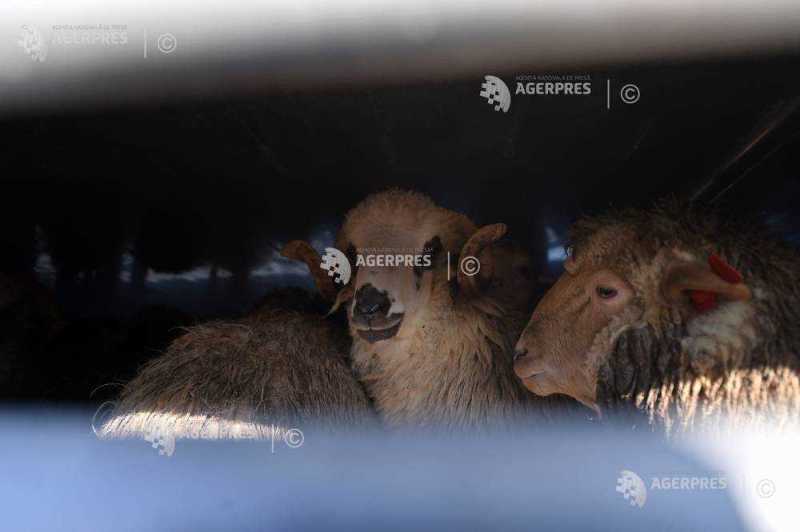
European Commission approves ANSVSA's Action Plan to unblock sheep and goat exports
The Action Plan of the National Veterinary Sanitary and Food Safety Authority (ANSVSA) for unblocking exports of sheep and goats has been approved by the European Commission, allowing exports of carcasses and products to resume under the differentiated vaccination scheme. According to an ANSVSA release sent to AGERPRES on Friday, the approved solution protects
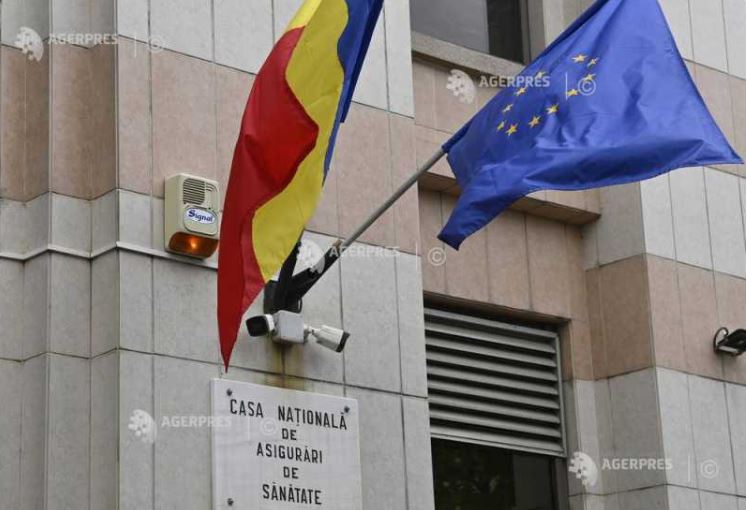
Health Insurance House launches project on cross-border exchange of medical images, laboratory results, discharge reports
The National Health Insurance House (CNAS) announced on Friday the launch of the European project 'Romanian Medical Images, Laboratory Results and Discharge Reports' (RO-MI-LR-DR), for the cross-border exchange of medical images, laboratory results and discharge reports. The project is funded through the EU4Health programme, with the European Health an
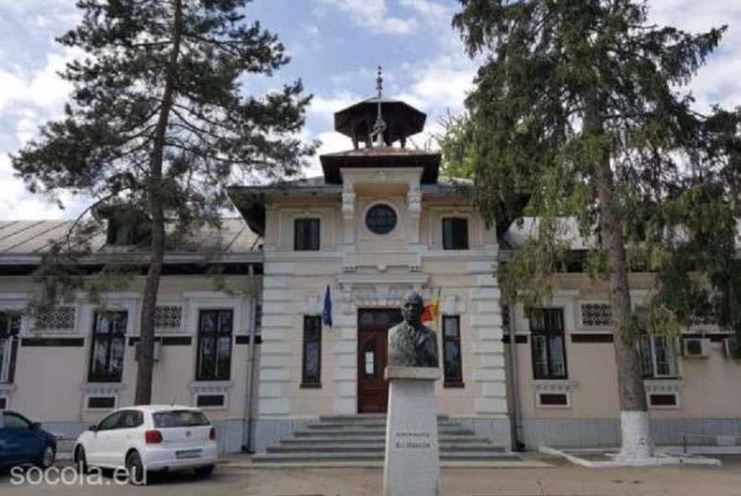
'Socola' Institute of Psychiatry in Iasi to hold new memory testing campaign at weekend
The 'Socola' Institute of Psychiatry in Iasi has announced that it will hold the third edition of its 'Memory Testing Campaign' on Saturday and Sunday, a campaign addressing people of all ages and aimed to identify individual risk factors that may predispose people to memory disorders, while also providing participants with specialist counselling.

'Brancusi and His Muses' exhibition opens at Art Safari
'Brancusi and His Muses', the largest exhibition dedicated to the great sculptor to be held in Romania during Brancusi Year, opened on Thursday evening at the Art Safari New Museum. Curator Doina Lemny said she wanted the initiative to be different, allowing the public to enter the artist's studio atmosphere. 'It is true that Brancusi's wor