

Employees in Romania believe they need an average of ten consecutive days of holiday, including weekends, to fully recharge, a shorter period than the European average of 13 days, according to the international HR & Payroll Pulse 2026 study conducted by SD Worx among 16,500 employees in 16 European countries.
According to the study, more than half of Romanian employees (52%) say that a holiday of between seven and 14 days is the minimum period they need to fully recover. Almost a quarter (23%) consider less than seven days sufficient, while 15% need more than two weeks. One in ten employees cannot estimate the required duration.
At present, Romanian employees receive an average of 24 days of paid leave per year. Ideally, based on the realistic demands of their jobs, they would like approximately 31 days - more than six days above their current entitlement.
Almost two thirds of respondents (64%) believe that an ideal annual holiday period should amount to at least 30 days.
'The results show that recovery depends not only on the total number of holiday days, but also on employees' ability to use them in a way that meets their needs. A period long enough to disconnect, combined with breaks spread throughout the year, can support wellbeing and the ability to concentrate. For employers, the challenge is to provide flexibility while maintaining business continuity and a balanced workload within teams,' SD Worx Romania General Manager Ciprian Chiorean is quoted as saying.
Approximately 80% of Romanian employees have to request holiday before taking it. For these employees, the average notice period for submitting a request is 29 days, compared with the European average of 39 days. The other 20% say they do not have to request holiday in advance.
'Planning ahead allows organisations to anticipate busy periods and distribute responsibilities more effectively. At the same time, the process needs to remain sufficiently flexible for employees to take holiday when they genuinely need to recover. Team dialogue and clear rules are essential to finding this balance,' Ciprian Chiorean added.
Only 57% of Romanian employees say they managed to take all their holiday entitlement over the past year. Nearly 28% did not manage to do so, while 15% took a neutral position.
At the same time, 54% believe they can take time off without creating additional pressure for themselves or their colleagues. For 21%, however, being absent from work creates a different situation.
Managers continue to play an important role: 45% of respondents feel encouraged by their manager to take holiday regularly, while 26% do not perceive such support.
'The data show that having holiday entitlement does not automatically guarantee that it will be used. The way work is organised, teams' ability to temporarily take over responsibilities and managers' attitudes all influence employees' actual experience. Organisations can support recovery through clear rules, advance planning for busy periods, balanced distribution of tasks and encouraging employees to use their holiday without feeling guilty,' the study's authors conclude.
SD Worx is a European provider of HR and payroll services.
The study was conducted between 27 January and 20 February 2026 in 16 European countries (Belgium, Germany, Finland, France, Ireland, Italy, Croatia, the Netherlands, Norway, Poland, Romania, Serbia, Slovenia, Spain, the United Kingdom and Sweden) by the SD Worx Research Institute. A total of 5,936 HR decision-makers and 16,500 employees were surveyed, including nearly 1,000 from Romania. AGERPRES (RO - writing by: Oana Tilica; EN - writing by: Adina Panaitescu)
Employees in Romania believe they need ten consecutive days of holiday to fully recharge (study)
Conţinutul website-ului www.agerpres.ro este destinat exclusiv informării publice. Toate informaţiile publicate pe acest site de către AGERPRES sunt protejate de dispoziţiile legale incidente. Sunt interzise copierea, reproducerea, recompilarea, modificarea, precum şi orice modalitate de exploatare a conţinutului acestui website. Informaţiile transmise pe www.agerpres.ro pot fi preluate, în conformitate cu legislaţia aplicabilă, în limita a 500 de semne. Detalii în secţiunea Condiţii de utilizare. Dacă sunteţi interesaţi de preluarea ştirilor AGERPRES, vă rugăm să contactaţi Direcţia Marketing - marketing@agerpres.ro.
Alte știri din categorie

President Dan says Foreign Ministry investigating Orlivka school case
President Nicusor Dan said on Friday that Romania's Foreign Ministry has opened an investigation into the case of the school in Orlivka, Odesa region, where a Year 1 class taught in Romanian was closed. Speaking at a news conference held after the Carpathian Integration Initiative 'Carpathian 8' Summit, he said that 'remarkable progress has bee

Bolojan: We will try, within our possibilities and depending on our electoral weight, to form a Government
President of the National Liberal Party (PNL) Ilie Bolojan said on Friday that, although Siegfried Muresan's nomination for prime minister came three months late, the party would deal with the situation 'responsibly' and seek to form a Government based on its electoral weight. 'Yesterday, about 30 minutes beforehand, I learned from the piece of

Siegfried Muresan: We will start work on a government programme; beginning of next week - discussion with MPs
Prime Minister-designate Siegfried Muresan announced on Friday that he was starting work on the government programme together with the National Liberal Party (PNL), Save Romania Union (USR) and the Hungarian Democratic Union of Romania (UDMR), mentioning that he would present the priorities at the beginning of next week and, based on these, would hold an "extremely tran

CCIR's Daraban: The diaspora is not a sentimental issue but a chapter in the national economy
The experience gained by Romanians in the diaspora in competitive markets must be transformed into investment, jobs and exports, believes Mihai Daraban, President of the Chamber of Commerce and Industry of Romania (CCIR). According to a press release from the organisation sent to AGERPRES, the institution is strengthening its partnership with ROUNIT - Reunited
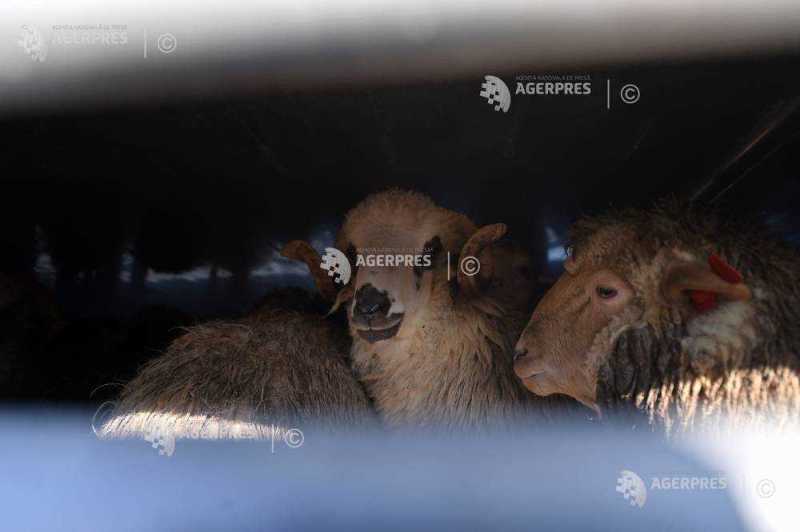
European Commission approves ANSVSA's Action Plan to unblock sheep and goat exports
The Action Plan of the National Veterinary Sanitary and Food Safety Authority (ANSVSA) for unblocking exports of sheep and goats has been approved by the European Commission, allowing exports of carcasses and products to resume under the differentiated vaccination scheme. According to an ANSVSA release sent to AGERPRES on Friday, the approved solution protects
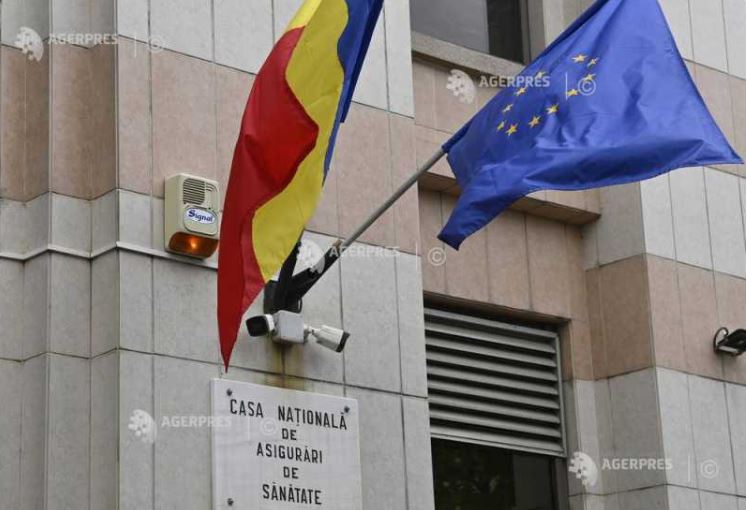
Health Insurance House launches project on cross-border exchange of medical images, laboratory results, discharge reports
The National Health Insurance House (CNAS) announced on Friday the launch of the European project 'Romanian Medical Images, Laboratory Results and Discharge Reports' (RO-MI-LR-DR), for the cross-border exchange of medical images, laboratory results and discharge reports. The project is funded through the EU4Health programme, with the European Health an
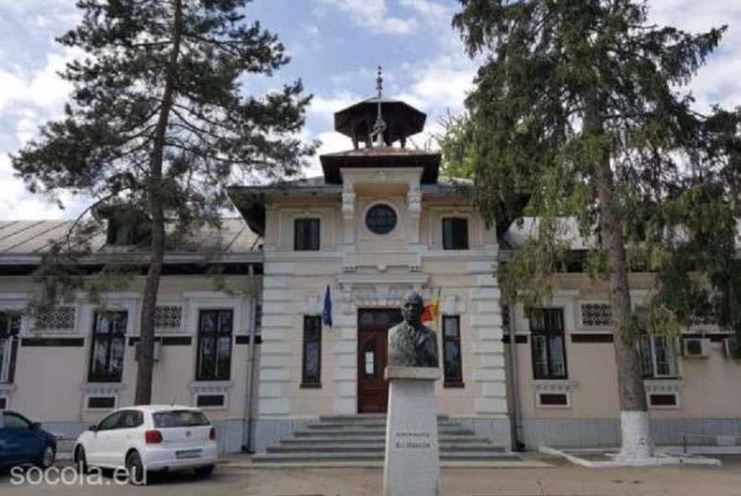
'Socola' Institute of Psychiatry in Iasi to hold new memory testing campaign at weekend
The 'Socola' Institute of Psychiatry in Iasi has announced that it will hold the third edition of its 'Memory Testing Campaign' on Saturday and Sunday, a campaign addressing people of all ages and aimed to identify individual risk factors that may predispose people to memory disorders, while also providing participants with specialist counselling.

'Brancusi and His Muses' exhibition opens at Art Safari
'Brancusi and His Muses', the largest exhibition dedicated to the great sculptor to be held in Romania during Brancusi Year, opened on Thursday evening at the Art Safari New Museum. Curator Doina Lemny said she wanted the initiative to be different, allowing the public to enter the artist's studio atmosphere. 'It is true that Brancusi's wor