

All estimates indicate that there are no risks to the national power supply and that the energy system is stable, interim Prime Minister Ilie Bolojan said on Friday.
'The energy system is stable after Unit 2 of the Cernavoda Nuclear Power Plant had to be shut down in a controlled manner yesterday due to the decrease in the Danube's flow rate. All estimates indicate that there are no risks to the national power supply. In the short term, together with the National Energy Dispatch Centre, we took measures to compensate for the loss of nuclear power, around 650 MW, almost 10% of total national consumption, through hydro, wind and coal-fired generation as well as imports. I thank everyone involved in this effort and all Romanians who understood the need to reduce their consumption in the evening,' Ilie Bolojan wrote in a Facebook post.
He said that he had notified the European Commission about the crisis situation, stressing that Romania has cross-border import capacity of approximately 4,000 MW.
The interim prime minister stressed that long-term measures are also needed.
'But Romania needs more than just firefighting. It also needs long-term measures. In the energy sector, decisions on investment and public policy show results in two to three years. When you fail to do what is needed for years, there are no magic solutions to fix problems overnight. The difficult situation we are facing, following the shutdown of both units at Cernavoda, is the result of the drought in the Danube basin, but also of many years in which a lack of vision, poor decisions and a reluctance to take responsibility have accumulated. For example, if the works designed and approved to increase the flow of the Danube towards Cernavoda had been prioritised rather than postponed for years, we would have had the nuclear power plant operating and almost 20% of our energy needs covered by it. When you hold a position of responsibility, you think long-term and do what needs to be done, not what looks good. That is how I have acted throughout my years in public administration. That is how I am acting now,' Bolojan said.
In this context, he announced that on Friday he had signed a decision establishing an interministerial task force to unblock the Bala 2 project, which is intended to ensure the flow rate needed for the Cernavoda units to operate without problems.
'The project includes a series of hydrotechnical works, dredging works and works to ensure navigation safety. According to the project data, carrying out the investment would raise the water level on the Old Danube by more than one metre and almost double its flow rate. The feasibility study was launched 10 years ago. Since 2024, the project has had all the necessary permits and approvals, including a Government Decision approving the technical indicators. Unfortunately, the Ministry of Transport did not consider it a priority and did not fund it. We are prioritising it, unblocking it, reviewing the proposed solutions, updating the prices and securing the funding. The Lower Danube River Administration in Galati will organise the tender for the design and construction works. Realistically, we could complete the works within three years and ensure cooling water for reactors 1 and 2 as well as reactors 3 and 4. Romania needs real, honest solutions, a long-term vision and the truth, not populism and lies. That is the only way we can have a safe and stable energy system,' Bolojan said. AGERPRES (RO - writing by: Daniel Florea; EN - writing by: Adina Panaitescu)
Interim PM Bolojan: All estimates indicate that there are no risks to the national power supply

Conţinutul website-ului www.agerpres.ro este destinat exclusiv informării publice. Toate informaţiile publicate pe acest site de către AGERPRES sunt protejate de dispoziţiile legale incidente. Sunt interzise copierea, reproducerea, recompilarea, modificarea, precum şi orice modalitate de exploatare a conţinutului acestui website. Informaţiile transmise pe www.agerpres.ro pot fi preluate, în conformitate cu legislaţia aplicabilă, în limita a 500 de semne. Detalii în secţiunea Condiţii de utilizare. Dacă sunteţi interesaţi de preluarea ştirilor AGERPRES, vă rugăm să contactaţi Direcţia Marketing - marketing@agerpres.ro.
Alte știri din categorie

President Dan says Foreign Ministry investigating Orlivka school case
President Nicusor Dan said on Friday that Romania's Foreign Ministry has opened an investigation into the case of the school in Orlivka, Odesa region, where a Year 1 class taught in Romanian was closed. Speaking at a news conference held after the Carpathian Integration Initiative 'Carpathian 8' Summit, he said that 'remarkable progress has bee

Bolojan: We will try, within our possibilities and depending on our electoral weight, to form a Government
President of the National Liberal Party (PNL) Ilie Bolojan said on Friday that, although Siegfried Muresan's nomination for prime minister came three months late, the party would deal with the situation 'responsibly' and seek to form a Government based on its electoral weight. 'Yesterday, about 30 minutes beforehand, I learned from the piece of

Siegfried Muresan: We will start work on a government programme; beginning of next week - discussion with MPs
Prime Minister-designate Siegfried Muresan announced on Friday that he was starting work on the government programme together with the National Liberal Party (PNL), Save Romania Union (USR) and the Hungarian Democratic Union of Romania (UDMR), mentioning that he would present the priorities at the beginning of next week and, based on these, would hold an "extremely tran

CCIR's Daraban: The diaspora is not a sentimental issue but a chapter in the national economy
The experience gained by Romanians in the diaspora in competitive markets must be transformed into investment, jobs and exports, believes Mihai Daraban, President of the Chamber of Commerce and Industry of Romania (CCIR). According to a press release from the organisation sent to AGERPRES, the institution is strengthening its partnership with ROUNIT - Reunited
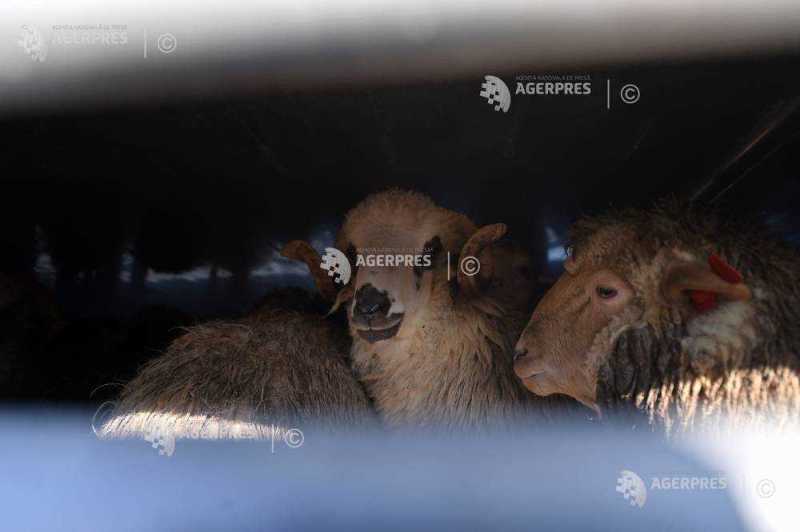
European Commission approves ANSVSA's Action Plan to unblock sheep and goat exports
The Action Plan of the National Veterinary Sanitary and Food Safety Authority (ANSVSA) for unblocking exports of sheep and goats has been approved by the European Commission, allowing exports of carcasses and products to resume under the differentiated vaccination scheme. According to an ANSVSA release sent to AGERPRES on Friday, the approved solution protects
Health Insurance House launches project on cross-border exchange of medical images, laboratory results, discharge reports
The National Health Insurance House (CNAS) announced on Friday the launch of the European project 'Romanian Medical Images, Laboratory Results and Discharge Reports' (RO-MI-LR-DR), for the cross-border exchange of medical images, laboratory results and discharge reports. The project is funded through the EU4Health programme, with the European Health an
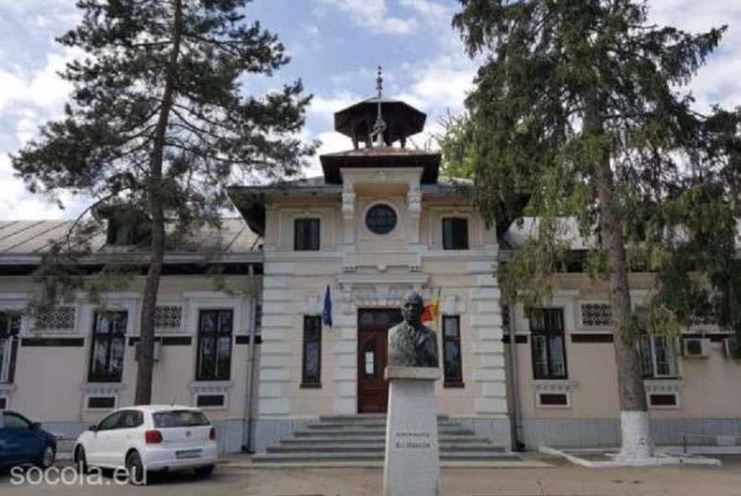
'Socola' Institute of Psychiatry in Iasi to hold new memory testing campaign at weekend
The 'Socola' Institute of Psychiatry in Iasi has announced that it will hold the third edition of its 'Memory Testing Campaign' on Saturday and Sunday, a campaign addressing people of all ages and aimed to identify individual risk factors that may predispose people to memory disorders, while also providing participants with specialist counselling.

'Brancusi and His Muses' exhibition opens at Art Safari
'Brancusi and His Muses', the largest exhibition dedicated to the great sculptor to be held in Romania during Brancusi Year, opened on Thursday evening at the Art Safari New Museum. Curator Doina Lemny said she wanted the initiative to be different, allowing the public to enter the artist's studio atmosphere. 'It is true that Brancusi's wor