
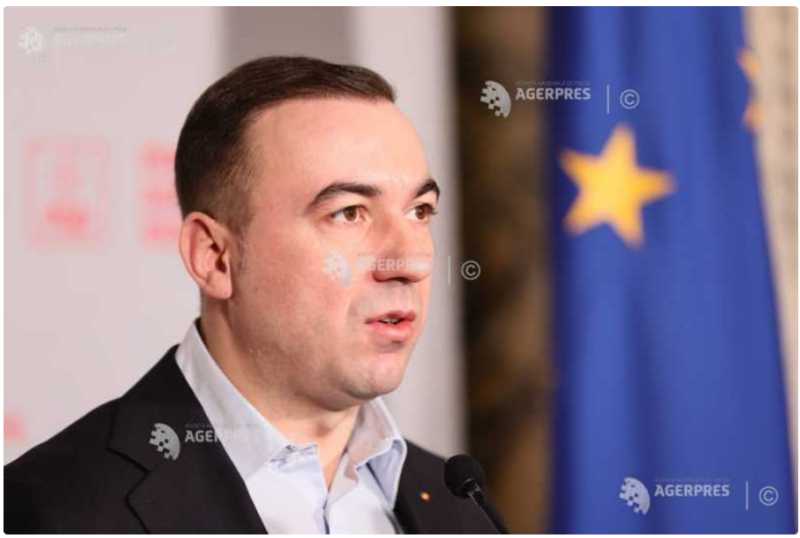
PSD MP Bogdan Ivan stated at Parliament on Tuesday that the current situation in the energy sector could have been foreseen and prevented, thereby avoiding the shutdown of Reactor 2 at Cernavoda. He emphasized that, at present, a government with limited powers is acting in a limited capacity—both in terms of 'powers and vision.'
'Regarding the shutdown of Cernavoda Reactor 2—and I am relying on press reports rather than official information—my experience as a former Energy Minister tells me that the loss of 700 megawatts of generation capacity poses a major complication for the national energy system; given a total output of 3,500-4,000 megawatts, this represents roughly 20% of Romania's production. Coping with this surge in additional energy demand in the current climate is extremely difficult and presents a real challenge. I have confidence that the teams at Transelectrica and the National Energy Dispatch Center will find a way to manage the situation. However, from my perspective, the issue isn't necessarily the shutdown itself, but the fact that all of this should have been anticipated, planned for, and prepared for in advance, so we wouldn't have ended up in a position where shutting down Cernavoda Reactor 2 became unavoidable,' stated Bogdan Ivan.
When asked how energy needs would be met given that Romania is temporarily losing 700 megawatts, Ivan said that one of the solutions would be to increase imports, which would entail additional costs.
'Following the shutdown of Reactor 1—which accounts for another 700 megawatts—the situation is complicated; on one hand, more energy must be imported from foreign markets, which automatically entails additional costs, given that we currently purchase peak-hour energy (between 6:00 PM and 10:00 PM) at rates exceeding 1,700-2,000-2,500 lei per megawatt, inevitably leading to higher prices for consumers. Secondly, I have already been contacted by major electricity-consuming companies asking what is happening; businesses that previously received offers of 500-550 lei per megawatt are now getting notifications from their suppliers of a 200-lei increase—a 40% hike—and this will be reflected in the cost of everything, from goods and food to logistics and transport,' stated Ivan.
The PSD MP also criticized Romania's decision to phase out coal- and gas-fired electricity generation capacities before bringing new ones online, describing it as 'an extremely bad decision for the national energy system.'
'At the moment—based on data I obtained from my former colleagues at the Ministry of Energy—there is a possibility at the Oltenia Energy Complex to start up another turbine at Rovinari (which currently has enough coal for a few days). This would add approximately 330 megawatts from that unit—on top of the three units already fully operational, totaling nearly 1,000 megawatts. However, I reiterate that the current solutions lie in imports and market management: specifically, getting major consumers to adjust their consumption profiles so they use less power between 6:00 PM and 10:00 PM and shift their usage to daytime hours, utilizing solar-generated energy. What I believe will cause disruption is the fact that Nuclearelectrica intends to invoke *force majeure* and consequently stop delivering the energy they had contracted to supply; this will create a need for more energy on the market, leading to a scramble for existing supplies and, inevitably, a price increase,' Ivan stated.
He pointed out that, at present, a government with limited powers operates within limits—both in terms of its powers and its vision.
'What we've seen over the past few days—this fumbling with '2 cm more, 2 cm less'—strikes me as the height of amateurism; and with everyone suddenly an expert on energy—from the Defense Minister to the Environment Minister—people at home no longer know what to make of it,' Ivan stated. AGERPRES (RO - writing by: Daniel Florea;EN - writing by: Catalin Cristian Trandafir)
- Category: English
- Date: 2026-08-11 14:48:59
- Foto: Silviu MATEI / AGERPRES Photo