

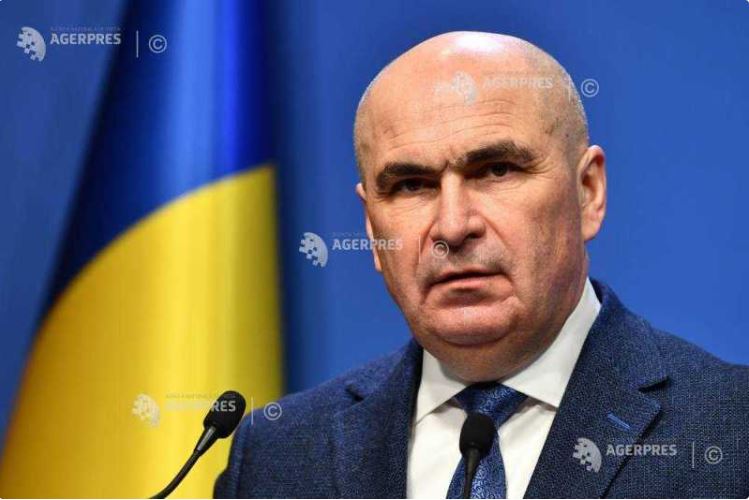
Romania's interim Prime Minister Ilie Bolojan said on Friday that when the country's future is at stake, personal, party and electoral interests should give way to the national interest, stressing that the decisions of credit rating agencies assessing Romania in the coming period will depend on three key factors: budgetary performance, political stability and the outlook for 2027-2028.
'We are in a period of assessments that influence investors' decisions and the interest rates Romania pays on the money it borrows - the decisions of the rating agencies. Three key factors underpin these assessments. The first is what we have achieved so far, namely our budgetary performance. The budget execution for the first half of the year confirmed that the government did what was necessary and right. Revenues were collected more efficiently, spending declined and the deficit is narrowing. We were honest with Romanians, we started putting the country's finances in order and limiting waste,' Bolojan wrote in a Facebook post.
According to the interim prime minister, more could have been achieved had reforms not been blocked from within the former governing coalition.
'We worked hard to recover the delays accumulated over recent years in implementing PNRR [the National Recovery and Resilience Plan] so that Romania would not lose significant funding. Some of these overdue measures were passed by Parliament over the past two weeks, but unfortunately the de facto PSD-AUR alliance undermined them with amendments that could trigger financial penalties and constitutional challenges. If populism took a break and alarmist falsehoods stopped, the unified pay law could also be adopted within a maximum of two weeks,' he said.
Bolojan identified political stability as the second key factor considered by rating agencies.
'A stable parliamentary majority, a serious government and a predictable, realistic and responsible governing programme enhance the credibility of public policies. In Romania, the government was brought down and we are now facing political uncertainty because the de facto PSD-AUR alliance acted solely out of political and clientelist interests. They were not concerned about the consequences for the country. In recent months, despite obstruction and political harassment, we have responsibly fulfilled our duty to govern and administer the country, but with limited powers. We need a government with full powers, willing to stay the difficult course - one that does what is necessary, not merely what is popular. It must reduce tax evasion, cut state spending and continue public administration reform. It must also confront the network of vested interests that opposes any return to normality in the sectors from which it derives its privileges. Only then will the state become more efficient, the economy rest on sound foundations and international markets maintain confidence in Romania,' he said.
Bolojan said the third important factor was the outlook for 2027-2028, noting that the 2028 elections are approaching and, with them, the risk of a return to 'populism and wasteful spending.'
'It has happened before, and both we and those assessing us know it. The growing number of statements heralding the end of fiscal discipline is a warning sign. Those who treat the budget deficit as an abstract figure with no consequences are misleading people. It is like telling someone they can spend without limit, regardless of their income and without ever having to repay what they borrow. The irresponsible creation of false expectations for the sake of opinion polls must stop. If we do not continue measures to reduce public spending this year, we risk returning to the dead end created by the budgetary excesses of 2024. When Romania's future is at stake, personal, party and electoral interests must no longer matter. Only the national interest matters,' Bolojan said. AGERPRES (RO - writing by: Daniel Florea; EN - writing by: Simona Iacob)
Interim PM Bolojan: National interest must come before party, electoral interests
Conţinutul website-ului www.agerpres.ro este destinat exclusiv informării publice. Toate informaţiile publicate pe acest site de către AGERPRES sunt protejate de dispoziţiile legale incidente. Sunt interzise copierea, reproducerea, recompilarea, modificarea, precum şi orice modalitate de exploatare a conţinutului acestui website. Informaţiile transmise pe www.agerpres.ro pot fi preluate, în conformitate cu legislaţia aplicabilă, în limita a 500 de semne. Detalii în secţiunea Condiţii de utilizare. Dacă sunteţi interesaţi de preluarea ştirilor AGERPRES, vă rugăm să contactaţi Direcţia Marketing - marketing@agerpres.ro.
Alte știri din categorie

President Dan says Foreign Ministry investigating Orlivka school case
President Nicusor Dan said on Friday that Romania's Foreign Ministry has opened an investigation into the case of the school in Orlivka, Odesa region, where a Year 1 class taught in Romanian was closed. Speaking at a news conference held after the Carpathian Integration Initiative 'Carpathian 8' Summit, he said that 'remarkable progress has bee

Bolojan: We will try, within our possibilities and depending on our electoral weight, to form a Government
President of the National Liberal Party (PNL) Ilie Bolojan said on Friday that, although Siegfried Muresan's nomination for prime minister came three months late, the party would deal with the situation 'responsibly' and seek to form a Government based on its electoral weight. 'Yesterday, about 30 minutes beforehand, I learned from the piece of

Siegfried Muresan: We will start work on a government programme; beginning of next week - discussion with MPs
Prime Minister-designate Siegfried Muresan announced on Friday that he was starting work on the government programme together with the National Liberal Party (PNL), Save Romania Union (USR) and the Hungarian Democratic Union of Romania (UDMR), mentioning that he would present the priorities at the beginning of next week and, based on these, would hold an "extremely tran

CCIR's Daraban: The diaspora is not a sentimental issue but a chapter in the national economy
The experience gained by Romanians in the diaspora in competitive markets must be transformed into investment, jobs and exports, believes Mihai Daraban, President of the Chamber of Commerce and Industry of Romania (CCIR). According to a press release from the organisation sent to AGERPRES, the institution is strengthening its partnership with ROUNIT - Reunited
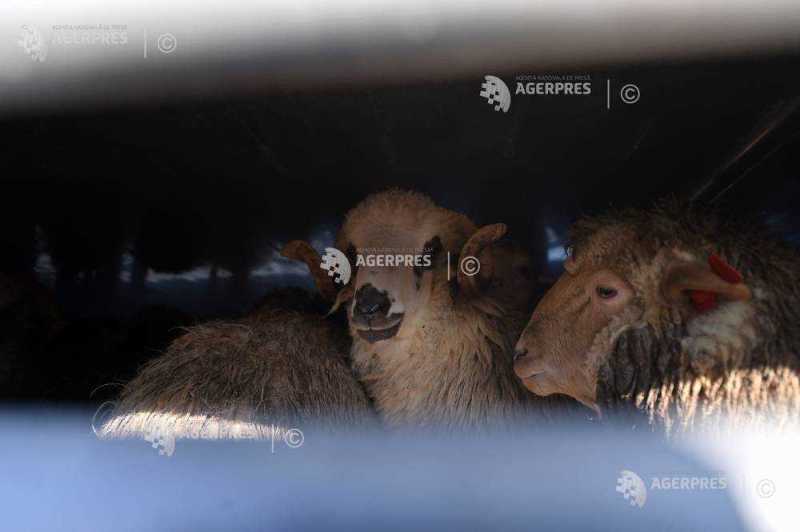
European Commission approves ANSVSA's Action Plan to unblock sheep and goat exports
The Action Plan of the National Veterinary Sanitary and Food Safety Authority (ANSVSA) for unblocking exports of sheep and goats has been approved by the European Commission, allowing exports of carcasses and products to resume under the differentiated vaccination scheme. According to an ANSVSA release sent to AGERPRES on Friday, the approved solution protects
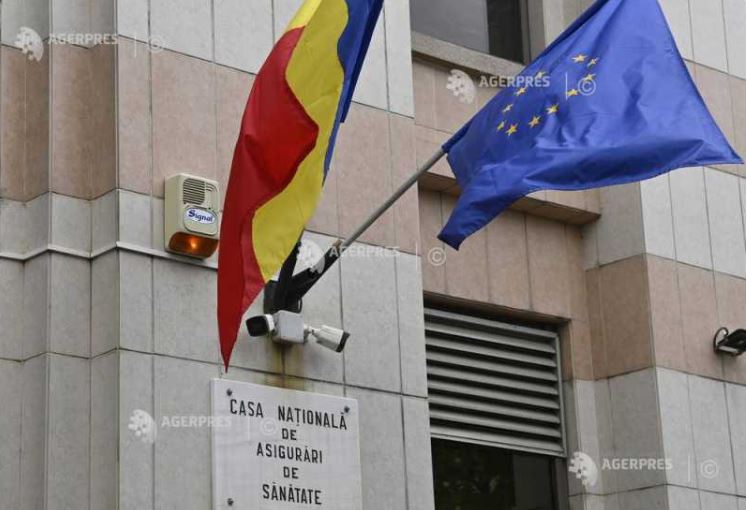
Health Insurance House launches project on cross-border exchange of medical images, laboratory results, discharge reports
The National Health Insurance House (CNAS) announced on Friday the launch of the European project 'Romanian Medical Images, Laboratory Results and Discharge Reports' (RO-MI-LR-DR), for the cross-border exchange of medical images, laboratory results and discharge reports. The project is funded through the EU4Health programme, with the European Health an
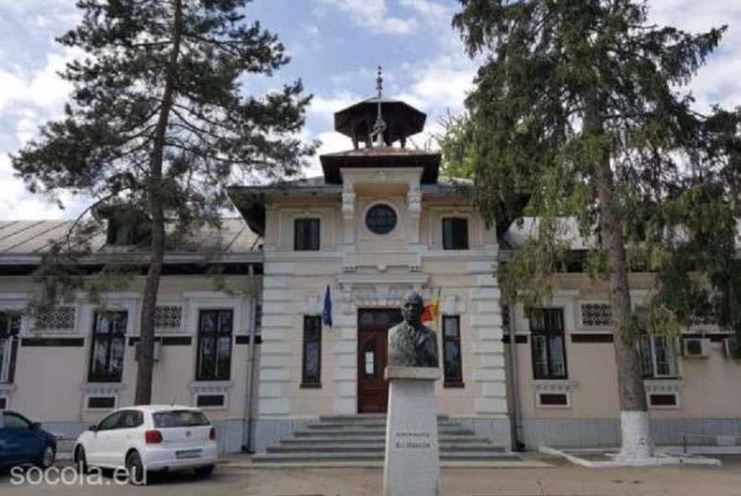
'Socola' Institute of Psychiatry in Iasi to hold new memory testing campaign at weekend
The 'Socola' Institute of Psychiatry in Iasi has announced that it will hold the third edition of its 'Memory Testing Campaign' on Saturday and Sunday, a campaign addressing people of all ages and aimed to identify individual risk factors that may predispose people to memory disorders, while also providing participants with specialist counselling.

'Brancusi and His Muses' exhibition opens at Art Safari
'Brancusi and His Muses', the largest exhibition dedicated to the great sculptor to be held in Romania during Brancusi Year, opened on Thursday evening at the Art Safari New Museum. Curator Doina Lemny said she wanted the initiative to be different, allowing the public to enter the artist's studio atmosphere. 'It is true that Brancusi's wor