

At a time when smartphones and social media seem to dominate the free time of younger generations, a different story is unfolding at the library in the village of Ibanesti, in Romania's Gurghiu Valley, where the scent of old books mingles with that of freshly carved wood, dried corn husks and homemade pastries.
Far from being merely a repository of books, the Ibanesti Library has evolved into a vibrant community hub where reading, traditional crafts and digital skills coexist, bringing together children, parents, volunteers and artisans around the shared values of education, cultural heritage and community.
At the heart of this transformation are librarian Nicoleta Man, who has worked at the library since 1995, and traditional woodcarver Petrut Chirtes, recognised as a Living Human Treasure, together with dozens of volunteers who demonstrate that reading, craftsmanship and dedication can help preserve the identity of a rural community.
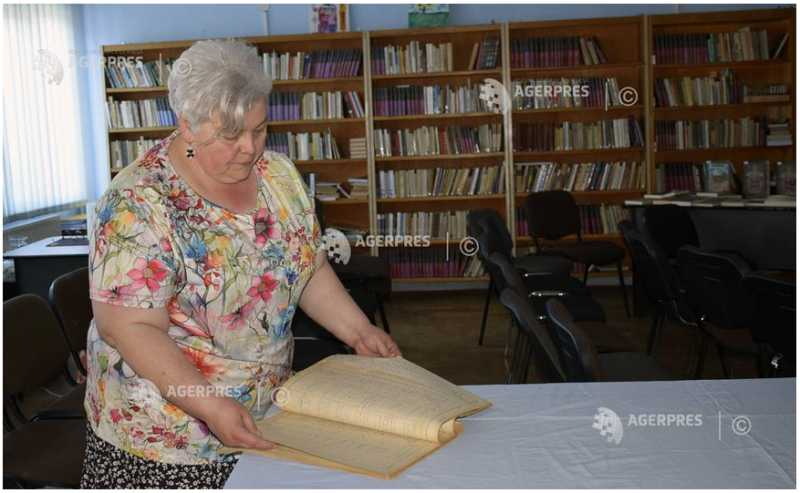
For Nicoleta Man, the library represents a lifetime devoted to serving the community and a determination not to let rural culture fade away.
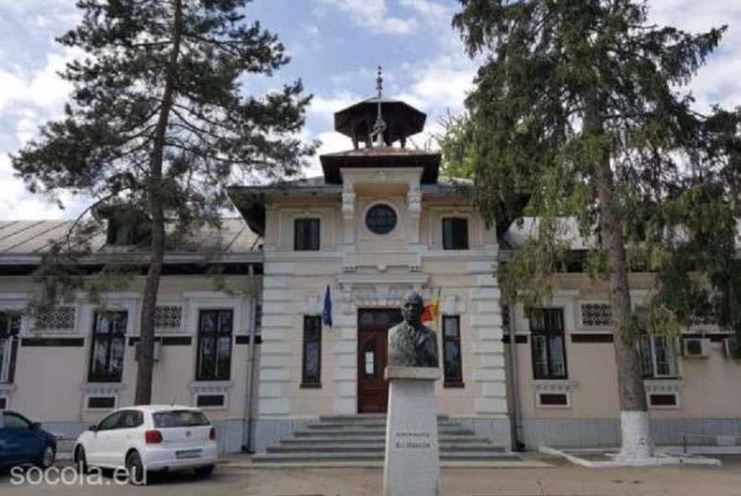
Over the years, the institution has adapted continuously to changing circumstances. Today it houses around 11,000 volumes and, following a recent renovation, has been transformed into an Information and Documentation Centre equipped for both traditional reading and modern learning.
The librarian says the library's roots run much deeper than its current incarnation. According to its records, the institution dates back decades, and while many of its earliest volumes have long since disappeared from circulation, its commitment to promoting reading and culture has endured.
Symbolically, however, the torch of culture has never gone out in Ibanesti.
The addition of computers marked an important turning point.
'When the computers arrived, children came by appointment because there were so many of them. We had five computers and they would queue or arrive five or ten minutes early just to use them,' Man recalled.
Despite limited financial resources, the library continues to expand its collection according to the interests of local readers.
Asked how she still manages to attract children to books at a time when reading is often considered unfashionable, especially in rural areas, Man said the answer lies in interaction, games and practical activities.
Among the most popular initiatives are cooking workshops using locally sourced ingredients.
'I try to organise the cooking workshops using products from our own gardens or from local producers. We make pancakes, sponge cakes and apple pies. The children put on aprons and headscarves, we explain each step of the process, and they crack the eggs, mix the ingredients and prepare everything themselves from start to finish,' she said.
The popularity of these activities has turned the library into one of the busiest places in the village during school holidays, attracting children not only from Ibanesti but also from neighbouring communities.
Recognising that such a cultural movement cannot depend on a single person, Man helped establish a permanent group known simply as the 'Library Volunteers', bringing together adults, pensioners, young people and children.
'I realised that adults also wanted to get involved, so I suggested creating a mixed group. The name came spontaneously during a phone call when someone asked what they should write on a poster. I simply said, 'The Library Volunteers,' and it stayed that way,' she said.
The volunteers include local women who teach children traditional embroidery free of charge, while others have revived the traditional winter gatherings known as sezatori, where participants work, tell stories, sing and pass on local customs.
'The idea came one autumn because that's traditionally when these gatherings took place, after the harvest, when women spent more time at home doing handicrafts. We thought we shouldn't keep it to ourselves but invite groups from neighbouring villages so we could work, talk, laugh and sing together,' Man explained.
Whenever guests visit, participants wear traditional Romanian costumes, turning the library into a celebration of local heritage.
The library has also developed projects together with the local Orthodox parish, combining spiritual education with practical workshops for children.
Interest in these activities has grown so much that schools from the city of Targu Mures now book visits during Romania's 'Different School' and 'Green Week' educational programmes.
Because of the large number of participants, many events are now held outdoors on the nearby Fancel Plateau, where children can learn directly from recognised masters of traditional crafts.
Among them are Margareta Nagy, a Living Human Treasure renowned for weaving with dried corn husks, and Petrut Chirtes from the nearby village of Dulcea, the only Orthodox wayside-cross sculptor in Transylvania recognised with the same distinction.
When AGERPRES visited Chirtes at his workshop, surrounded by the scent of freshly cut oak, he put aside his work to describe his volunteer activities with the library.
'I made twenty wooden carving mallets that I give to children during the workshops we organise at Fancel. Each child also receives a small wooden board on which they carve their name. Then I place a chisel in their hands and watch their amazement. Entire groups come to me because they are fascinated by woodcarving. Some of the children have produced remarkable work. For International Women's Day, I gave each of them a small wooden heart to take home to their mothers and encouraged them to carve a message into it. They surpassed themselves,' Chirtes said.
One of the highlights of the workshops is a visit to the small wooden church on the Fancel Plateau, where the craftsman created the entire iconostasis by hand.
'They enter the church with remarkable discipline. We say the Lord's Prayer together, then I show them the icons and explain the iconostasis and how it was made. Building the entire church interior took me nine months,' he said.
Chirtes said he has found that children from urban areas are often the most fascinated by traditional woodworking because they rarely have the opportunity to experience such crafts firsthand.
'When they arrive, they become completely absorbed in the work. They don't have these opportunities at home, and no one usually explains these things to them. Once they discover carpentry and woodcarving, they become extremely interested,' he said.
One of the rewards for the children involved in the library's activities is the opportunity to discover Romania's cultural heritage first-hand through educational trips organised by the institution.
With financial support from the local authorities, the library recently organised a journey designed to connect children with some of Romania's most important historical and cultural figures.
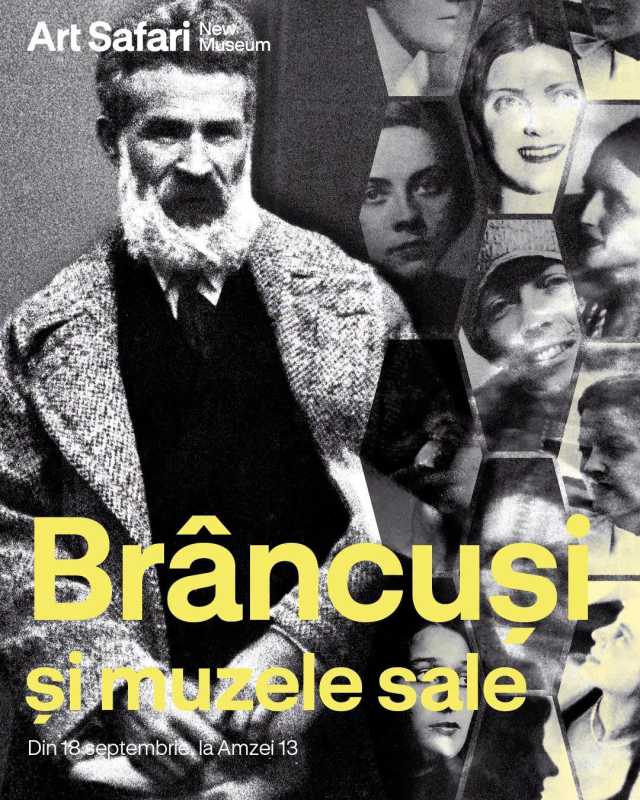
'Of course, this is Brancusi's anniversary year, so I wanted to show the children where Brancusi lived and what he created. We also visited the Ecaterina Teodoroiu Memorial House and places associated with Lucian Blaga. I wanted them to discover the beauty of Romania and the remarkable people this country has produced,' Man said.
The impact of the trip was immediate.
'One little girl asked me, 'Who was Lucian Blaga?' I told her, 'Look over there, under the letter B. Find a book written by Lucian Blaga and discover for yourself who he was.' She tried to do exactly that. She is still in primary school, so his works are not easy for her, but I was delighted that she became curious after visiting those places,' the librarian recalled.
That curiosity extends across generations.
The library's oldest reader is 78 years old, and for those who can no longer travel, Man personally delivers books to their homes. At the other end of the spectrum are preschool children who arrive with their parents eager to browse illustrated books about animals and flowers donated to the library.
While many libraries in neighbouring villages have closed or lost staff in recent years, Ibanesti has taken a different path. Through Romania's National Recovery and Resilience Plan (PNRR), the institution secured European funding that transformed it into a modern cultural and educational centre.
Today, the library features a small amphitheatre, a video projector, laptops, tablets and modern audiovisual equipment used both for educational programmes and for documenting community activities.
In the same space, Nicoleta Man coordinates a large-scale digital literacy programme for adults aged 16 and over.
'I currently have 103 participants attending the course and 92 have already completed it and received certificates. Before every workshop we like to establish some rules and tell a story about what will follow. We show examples so everyone understands what will happen. Without those rules, it would be complete chaos,' she said.
The digital skills programme has turned the library into an intergenerational learning space where children discover books and traditional crafts while adults acquire the technological skills increasingly needed in everyday life.
Although she occasionally thinks about retirement after more than three decades of service, Man remains optimistic about the future of the institution.
'I hope I stay healthy long enough to reach retirement because we also have to make room for those who come after us. I am firmly convinced they will do things even better and even more beautifully. We have done the best we could, and they will find new ways,' she said.
She also has a message for fellow librarians in communities where libraries have closed or where they struggle to keep them alive.
'I hope they find strength, perseverance and faith in what they do, because if you truly believe in your work, you will succeed. Everyone reaches a point when they feel like giving up, but you gather your strength and keep going. The wind blows, storms come, but after every storm the sun returns, and we move forward with our heads held high,' Nicoleta Man said.
Through people like Nicoleta Man and Petrut Chirtes, the library in Ibanesti has become much more than a building filled with books. It stands as a testament to how rural libraries can reinvent themselves by bringing together reading, traditional crafts, digital education and community spirit, demonstrating that culture can remain a powerful force for social cohesion even in the smallest of villages. AGERPRES (RO - writing by: Dorina Matis; EN - writing by: Simona Iacob)
- Category: English
- Date: 2026-08-05 12:31:58
- Foto: Dorina MATIS / AGERPRES