

The 14th edition of Haferland Week, a festival celebrating the history, culture and traditions of Transylvania's Saxon community, begins on Thursday and will run until Sunday across ten villages in Haferland (the Oatland/Tara Ovazului) - Archita, Saschiz, Homorod, Rupea, Crit, Roades, Mesendorf, Cloasterf, Bunesti and Viscri - under the patronage of Senate President Mircea Abrudean and former gymnast Nadia Comaneci.
The theme of the 2026 edition is 'Longing for Transylvania', and the festival's organiser, Michael Schmidt, said this year's message to the Saxon diaspora is that 'they no longer need to pass by the gate without going in - the villages are ready to welcome them'.
In an interview with the National News Agency AGERPRES, Schmidt described Haferland Week as 'an ambassador for Haferland and a genuine platform for promoting local entrepreneurs'.
'The festival we organise is the most important event dedicated to Saxon culture and the leading promoter of the traditions, history and communities of this region. Through this festival, we want to bring Saxon culture and heritage to Romanian society as a whole and beyond the country's borders,' he said.
AGERPRES: The 14th edition of the festival is held under the theme 'Longing for Transylvania'. How did this idea come about and what message do you wish to convey to the Saxon diaspora this year?
Michael Schmidt: This year's theme stems from my own personal story. For years, I drove past my native village without going in. Over time, I realised my story was not unique - many Saxons in the diaspora share the same longing, mixed with hesitation. Through the theme 'Longing for Transylvania', I want to tell them that they no longer need to pass by the gate without entering; the villages are ready to welcome them. This longing is more than nostalgia - it is a force that keeps us connected to our roots, even when we are thousands of kilometres away. Saxons living abroad are not visitors to their own history; they are at home every time they choose to return.
AGERPRES: This year's festival is held under the patronage of Nadia Comaneci and Senate President Mircea Abrudean. How do these prominent figures help promote Saxon culture internationally?
Michael Schmidt: The patronage of public figures such as Nadia Comaneci and the President of the Senate gives the festival greater visibility and creates opportunities to build connections beyond Transylvania. It is no coincidence that this year's patronage comes from both the world of sport and the country's institutional leadership. From the outset, Haferland Week has been built on three pillars - education, culture and community - and every year we try to introduce an element that resonates with the wider public. This year, that element is sport, through Nadia's story, in the Year of Nadia Comaneci. Excellence, discipline and a lifetime devoted to a single goal are the values we want to pass on to young people in our villages, as well as to everyone who comes to visit us.
For me, Haferland Week is a project built patiently, with care and passion, year after year, until it became what it is today. When a festival held in a rural area made up of ten small villages succeeds in attracting both a global sporting icon and high-level institutional support, it shows that we have transformed a local initiative into a truly national and international cultural brand. Their involvement helps us tell the world that Haferland is a place worth seeing, visiting and preserving.
AGERPRES: During the press conference, you donated an 1897 Saxon dowry chest to the Dimitrie Gusti National Village Museum. What does this gesture symbolise for the institutional partnership you are developing?
Michael Schmidt: The dowry chest I donated to the Dimitrie Gusti National Village Museum had been part of the Foundation's collection for many years. It is an object I have carefully preserved, but one that I wanted to place in a public institution, where it can be seen, studied and tell the story of the Saxon community. I believe Saxon heritage does not belong solely to us; it is part of Romania's national identity and cultural memory. A dowry chest tells a story about family, work and the way values were passed down from one generation to the next in Saxon villages.
The institutional partnership we are building with the National Village Museum is based on concrete actions, mutual support and respect. I greatly value the Museum as a partner and hope we will continue working together on projects to preserve and promote the traditional Saxon village. This year, as part of the festival, the village church in Cri? will be reconsecrated following restoration works that we supported. I believe it is a fitting coincidence, and through these initiatives I want to convey that heritage should once again become an active part of people's lives. We want to leave something tangible behind for future generations.
AGERPRES: Together with Peter Maffay, you have transformed a regional initiative into a successful cultural brand. What have been the greatest logistical challenges in managing simultaneous activities across the ten villages?
Michael Schmidt: Visitors experience an authentic festival, but behind those four days lies a full year of work by the organising team. Coordinating activities across ten villages is a major undertaking. It is not easy to organise events, engage local communities and fine-tune so many details.
At the same time, we must ensure that every village is properly represented, because each has a unique heritage. We have to coordinate everything so that every village is visible, has the opportunity to tell its story and becomes known to visitors. Over the years, we have built a strong team with decision-making capacity, involved local communities, respected their ideas and encouraged people from every village to play an active role in organising the festival.
That is how the festival has grown year after year without losing its authenticity. The greatest challenge is not the technical or logistical side, but preserving the spirit of Haferland as the festival continues to expand.
AGERPRES: How does the large number of visitors during the festival directly affect small local businesses, such as guesthouses, craftspeople and producers, in villages like Crit and Viscri?
Michael Schmidt: The impact is direct and visible every year. Haferland Week is an ambassador for Haferland and a genuine platform for promoting local entrepreneurs, making a significant contribution to developing the area's tourism potential.
The festival we organise is the most important event dedicated to Saxon culture and the leading promoter of the traditions, history and communities of this region. Through it, we aim to bring Saxon culture and heritage to Romanian society as a whole and beyond the country's borders.
We welcome large numbers of visitors from Romania and abroad. The impact continues long after the four-day festival ends, as many people return to explore the region further or spend ordinary weekends here with family and friends.
For us, this is an essential part of the Foundation's mission: to ensure that the people who live in these villages today have a genuine economic reason to stay and invest in their communities. A festival that attracts tourists but leaves nothing behind for the local community would not have achieved its purpose.
AGERPRES: Looking ahead, what is your vision for next year's 15th anniversary edition?
Michael Schmidt: For the 15th anniversary edition, we want to go beyond the format of the previous 14 festivals. We intend to celebrate this important milestone as it deserves to be celebrated. We also want to attract more young people. We will celebrate not only the Saxon community but also all our partners, from my friend Peter Maffay, who has stood by me since the very first edition, to everyone who has helped this project grow from an event attended by a few thousand people into one recognised nationally and internationally.
AGERPRES: The project helps strengthen the cultural and economic ties between Romania and Germany, consistently benefiting from high-level patronage and diplomatic partnerships. What does this mean for Haferland Week?
Michael Schmidt: I believe it shows that Haferland Week has long outgrown its status as a local cultural event and has become a project with an important cultural diplomacy dimension. I am also a founding member of the Romanian-German Bilateral Cooperation Forum, a structure dedicated precisely to strengthening relations between the two countries in the cultural, social, economic and scientific fields.
The Forum is the practical expression of Haferland Week - a place where cooperation goes beyond declarations and can be seen in villages that are developing, in young people learning German through the Foundation's educational programmes, and in German partners investing time and resources in Transylvania's heritage.
I believe our responsibility is to demonstrate that the relationship between Romania and Germany is built not only in Bucharest or Berlin, but also in villages such as Cris and Viscri, and that a cultural festival is a genuine instrument of diplomacy because it is founded on people, shared memory and mutual trust. AGERPRES (RO - writing by: Petronius Craiu; EN - writing by: Cristina Zaharia)
INTERVIEW Michael Schmidt: Haferland Week - an ambassador of Tara Ovazului/Oatland

Conţinutul website-ului www.agerpres.ro este destinat exclusiv informării publice. Toate informaţiile publicate pe acest site de către AGERPRES sunt protejate de dispoziţiile legale incidente. Sunt interzise copierea, reproducerea, recompilarea, modificarea, precum şi orice modalitate de exploatare a conţinutului acestui website. Informaţiile transmise pe www.agerpres.ro pot fi preluate, în conformitate cu legislaţia aplicabilă, în limita a 500 de semne. Detalii în secţiunea Condiţii de utilizare. Dacă sunteţi interesaţi de preluarea ştirilor AGERPRES, vă rugăm să contactaţi Direcţia Marketing - marketing@agerpres.ro.
Alte știri din categorie

President Dan says Foreign Ministry investigating Orlivka school case
President Nicusor Dan said on Friday that Romania's Foreign Ministry has opened an investigation into the case of the school in Orlivka, Odesa region, where a Year 1 class taught in Romanian was closed. Speaking at a news conference held after the Carpathian Integration Initiative 'Carpathian 8' Summit, he said that 'remarkable progress has bee

Bolojan: We will try, within our possibilities and depending on our electoral weight, to form a Government
President of the National Liberal Party (PNL) Ilie Bolojan said on Friday that, although Siegfried Muresan's nomination for prime minister came three months late, the party would deal with the situation 'responsibly' and seek to form a Government based on its electoral weight. 'Yesterday, about 30 minutes beforehand, I learned from the piece of

Siegfried Muresan: We will start work on a government programme; beginning of next week - discussion with MPs
Prime Minister-designate Siegfried Muresan announced on Friday that he was starting work on the government programme together with the National Liberal Party (PNL), Save Romania Union (USR) and the Hungarian Democratic Union of Romania (UDMR), mentioning that he would present the priorities at the beginning of next week and, based on these, would hold an "extremely tran

CCIR's Daraban: The diaspora is not a sentimental issue but a chapter in the national economy
The experience gained by Romanians in the diaspora in competitive markets must be transformed into investment, jobs and exports, believes Mihai Daraban, President of the Chamber of Commerce and Industry of Romania (CCIR). According to a press release from the organisation sent to AGERPRES, the institution is strengthening its partnership with ROUNIT - Reunited
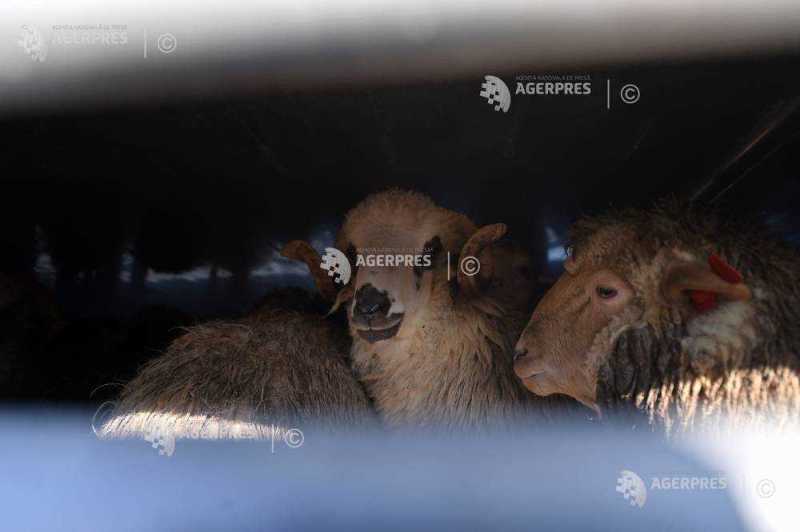
European Commission approves ANSVSA's Action Plan to unblock sheep and goat exports
The Action Plan of the National Veterinary Sanitary and Food Safety Authority (ANSVSA) for unblocking exports of sheep and goats has been approved by the European Commission, allowing exports of carcasses and products to resume under the differentiated vaccination scheme. According to an ANSVSA release sent to AGERPRES on Friday, the approved solution protects
Health Insurance House launches project on cross-border exchange of medical images, laboratory results, discharge reports
The National Health Insurance House (CNAS) announced on Friday the launch of the European project 'Romanian Medical Images, Laboratory Results and Discharge Reports' (RO-MI-LR-DR), for the cross-border exchange of medical images, laboratory results and discharge reports. The project is funded through the EU4Health programme, with the European Health an
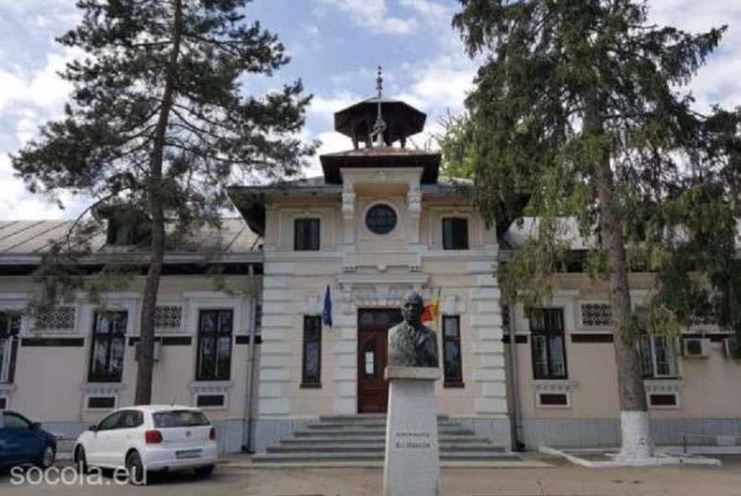
'Socola' Institute of Psychiatry in Iasi to hold new memory testing campaign at weekend
The 'Socola' Institute of Psychiatry in Iasi has announced that it will hold the third edition of its 'Memory Testing Campaign' on Saturday and Sunday, a campaign addressing people of all ages and aimed to identify individual risk factors that may predispose people to memory disorders, while also providing participants with specialist counselling.
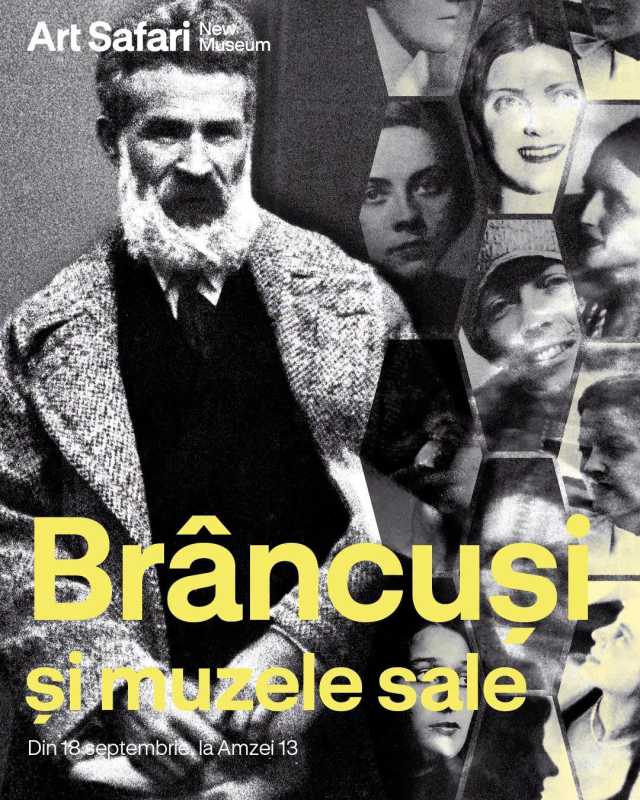
'Brancusi and His Muses' exhibition opens at Art Safari
'Brancusi and His Muses', the largest exhibition dedicated to the great sculptor to be held in Romania during Brancusi Year, opened on Thursday evening at the Art Safari New Museum. Curator Doina Lemny said she wanted the initiative to be different, allowing the public to enter the artist's studio atmosphere. 'It is true that Brancusi's wor