
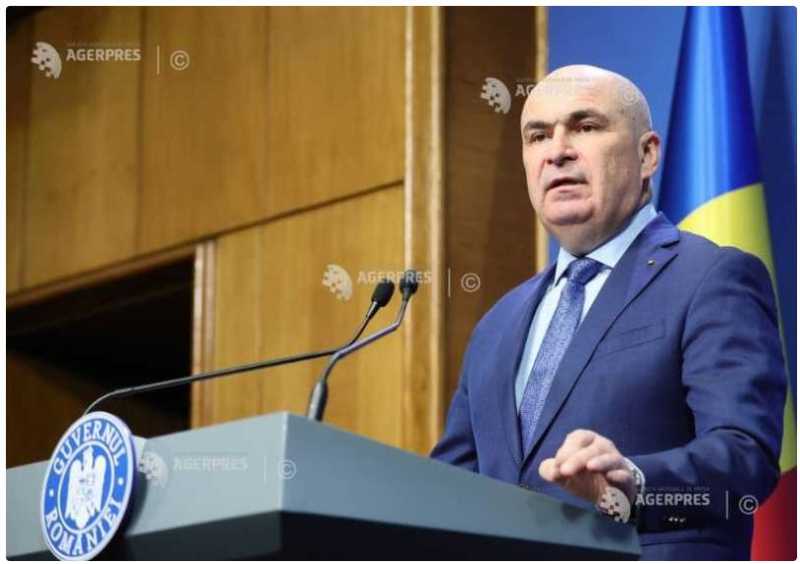
The strike of employees in the public healthcare system was based on lies and misinformation, related to the draft of the new Pay Law, declared Prime Minister Ilie Bolojan, Tuesday evening, at the Victoria Palace, at the end of the extraordinary government meeting.
'Regarding the strike in the healthcare system, first of all I apologize to all patients for the discomfort they have had today as a result of this strike. I assure all my respect to the doctors, assistants, nurses, and those who work hard in the healthcare sector. At the same time, I believe that this strike was based on lies and misinformation, related, first of all, to what would happen if the Pay Law were adopted. And I clarify, once again, if this law were adopted, no salary in the public sector, no earnings in the public sector will decrease, as all assurances were given by the relevant ministers, as well as by the Minister of Labor,' said Ilie Bolojan.
He stressed that, on the contrary, as a result of correcting some inequities in the bill promoted by the Ministry of Labor, a good part of salaries should increase.
'Obviously, these salary increases cannot be made on the basis of loans, but they can be made as much as the payment capacity of the Romanian economy allows, so that we do not return to where we left off in the following years, to have predictable salaries, fair salaries in the public and private sectors in Romania and to have a budgetary balance that is absolutely necessary to build on sound foundations,' Bolojan declared.
On the other hand, he explained that the Law on Unitary Salary, if adopted in the healthcare sector, will also bring some challenges, which cannot be avoided.
'Today we have a salary system that is not based mainly on the payment of medical services that hospitals provide to patients, as would be normal, the patient having to be at the center of the system. Most of the payment of expenses that hospitals make is made through direct allocations from the National Health House and two-thirds of the salaries that are paid in the public health sector come through direct allocations and not through the payment of services that are provided to patients. As such, hospital managers do not have pressure to adapt the offer of hospitals, the size of the departments, their type, to the needs of patients; having ensured most of the funds, they do not have this incentive and this means major distortions in the health sector (...) Once the salary law is adopted, the tariffs for the cases that hospitals solve will have to be recalculated, at a level much higher than that of today, which does not cover the cost of these services, so that the functioning of hospitals in the coming years is based on the services provided to patients and each case that is resolved brings an amount from which salaries at hospitals and all other expenses are borne', said Bolojan. AGERPRES(RO - writing by: Daniel Florea; EN - writing by: Bogdan Gabaroi)
- Category: English
- Date: 2026-07-28 22:58:57
- Foto: Silviu MATEI / AGERPRES Photo