

Former great gymnast Nadia Comaneci said in an interview with AGERPRES National News Agency, marking the 50th anniversary of the first perfect 10 in history, that her life did not change on a personal level after receiving the maximum score at the Montreal Olympic Games on 18 July 1976, that moment only helped her understand that she could push beyond her limits and that she was capable of achieving even greater performances.
Five decades after the moment which changed world gymnastics, the multiple Olympic, world and European medallist recalled the confusion she felt in the competition arena when the electronic scoreboard displayed the score 1.00. She revealed that she did not immediately realise the scale of her achievement, as her attention had already turned to the next apparatus, the balance beam, which was considered much more dangerous. Although she expected a very high score, receiving the maximum score was a complete surprise, including for the organisers and the manufacturer of the electronic scoreboard, which had been assured by the International Federation that nobody would ever receive a score of 10.
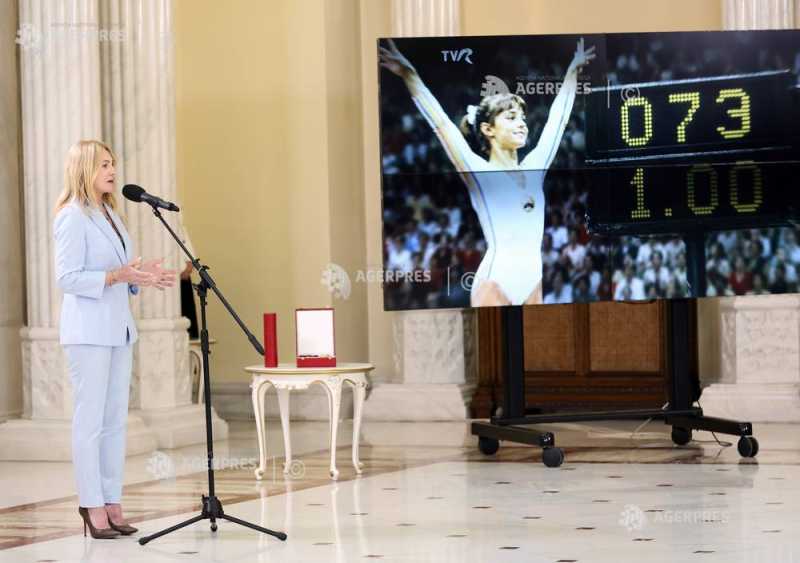
Photo: (c) SILVIU MATEI/ AGERPRES PHOTO
Nadia Comaneci explained that, although the current scoring code has undergone major changes, the score of 10 has remained a symbol of excellence, going beyond the boundaries of sport and becoming an expression used in everyday life to describe outstanding achievements. In her view, gymnastics provides an essential foundation for children's development and a set of skills that helps them regardless of the sport they later choose.
Beyond the perfect 10 performance in Montreal, the former great champion admitted that she does not seek perfection in her everyday activities and that this has been associated with her name because she managed to reach a historic milestone before anyone else. However, if she were to describe the entire 50-year period since the first 10 in gymnastics history in a single word, the word she would choose is 'perfection.'
AGERPRES: When you think of that day, 18 July, what is the first thing that comes to mind? Not necessarily the scoreboard showing 1.00, but an image, a smell, perhaps a particular sound?
Nadia Comaneci: Every year on 18 July, I think about and have in mind the image of the 14-year-old girl, the image of Nadia at 14, who had already been practising gymnastics for eight years and who went bravely to those Olympic Games without knowing exactly what would happen there. She went with confidence, after many hours of work, wanting, together with the team, to show their worth. At the time, there was no social media, nobody knew how they were preparing or how ready our opponents were. That is what I think about. That little girl managed and navigated through life, going through good moments and less good ones, but she succeeded.
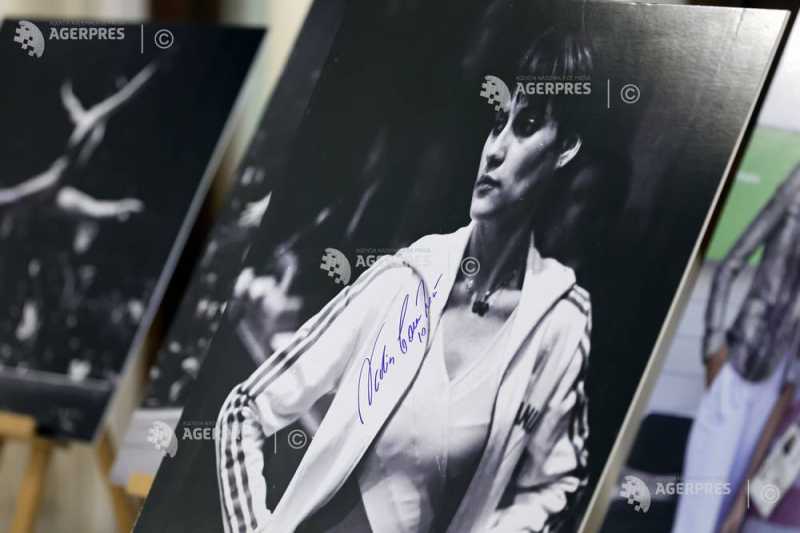
Photo: (c) SILVIU MATEI/ AGERPRES PHOTO
AGERPRES: At the end of the uneven bars routine, when you saw the scoreboard showing 1.00 and that state of confusion developed around you, what was going through Nadia's mind at the age of 14? Did you know that the 1.00 actually meant a score of 10?
Nadia Comaneci: No, no. First of all, I do not even know whether I looked at the scoreboard immediately, because I usually did not look at the scores. I was the last gymnast from the Romanian team to compete and I was already thinking anxiously about the next apparatus, the balance beam, which was much more dangerous as an idea compared with the uneven bars. I only know that I turned to look at the scoreboard after I heard a lot of noise in the arena and I did not understand why. I noticed the 1.00, but the march for changing apparatus had already started. So, I did not realise what I had done. I did not immediately realized what I had achieved. I was not afraid that I had made a mistake, I expected to receive a 9.90 or a 9.95, but I never thought about a score of 10.
AGERPRES: If you could go back in time, just before that uneven bars routine, what would you whisper to the 14-year-old girl?
Nadia Comaneci: No, I would not whisper anything to her, because I could confuse her. I think she was very focused on the fast elements she had to perform in that compulsory routine. And she was only hoping not to make any mistakes. That is what I was thinking about at the time.
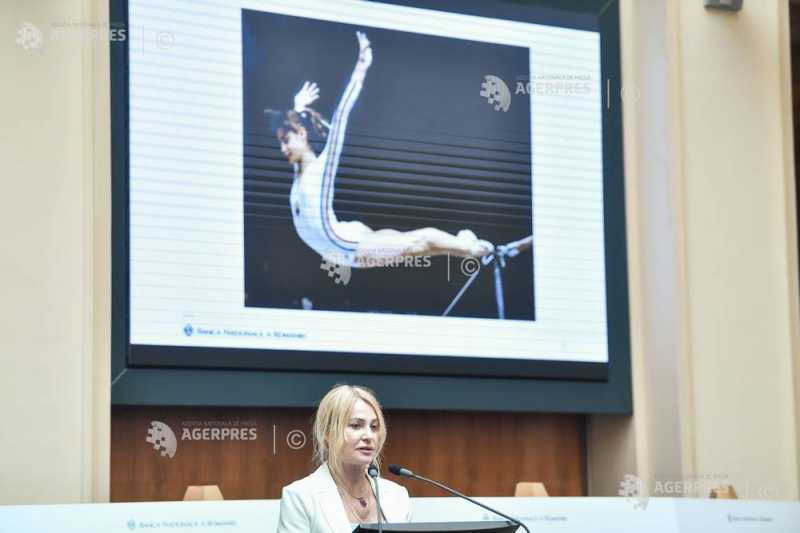
Photo: (c) ALEX MICSIK/ AGERPRES PHOTO
AGERPRES: It is said that the 10 you received in Montreal changed gymnastics. In what way did that 10 change Nadia the person?
Nadia Comaneci: Nadia the person did not change after that 10, but she understood that she had a limit she had not yet discovered and that she was capable of doing even more than that. After so many years, many people no longer remember how many medals I won in Montreal, but they remember that 10, that 1.00, perfectly. Later, I also found out the story behind that electronic scoreboard made by Omega. As far as I know, the people at Omega had called the International Gymnastics Federation before the competition, asking whether anyone would receive a score of 10, so they would know exactly how many lights to install on the scoreboard. The Federation told them not to worry about the lights, because nobody would receive a score of 10. And so, I think I slightly disrupted Omega's scoreboard. I heard this story many years later, when I also met with their representatives.
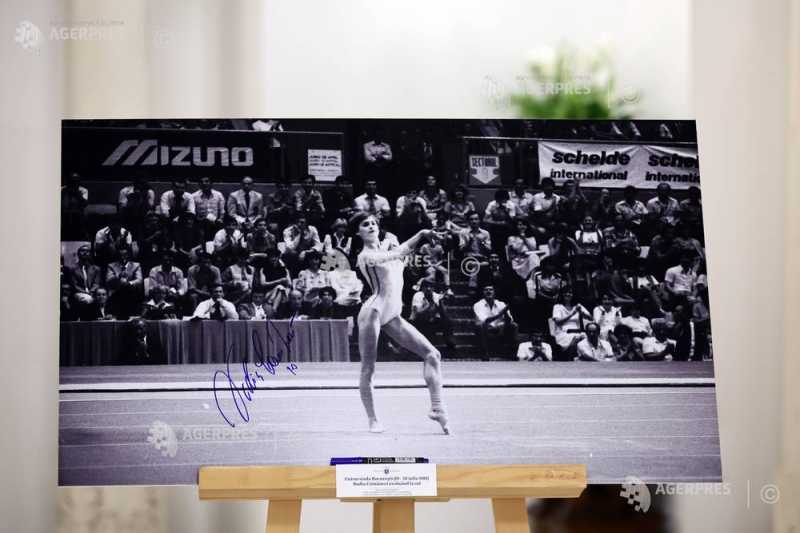
Photo: (c) SILVIU MATEI/ AGERPRES PHOTO
AGERPRES: Today, a perfect 10 is no longer possible in gymnastics, after the scoring code was changed. Do you regret that this symbolic pursuit of the perfect score has been lost?
Nadia Comaneci: It has not been completely lost, because you can still receive a 10 for execution, although it is extremely difficult. We do not know whether the scoring code will change again in the future or not. In any case, this 10 will remain forever in history as 'gymnastics' 10.' And every time a person manages to achieve something exceptional in life, not necessarily in sport, people say: 'It was a perfect 10.'
AGERPRES: How do you feel when you see little girls who, today, 50 years after that perfect 10, take up gymnastics inspired by you?
Nadia Comaneci: They take it up because, first of all, gymnastics is a sport that children start practising as a form of play at a very young age. We promote this sport as an excellent foundation for any other discipline and as an essential form of movement for children's development. Many children stay in gymnastics, while others later move on to different sports. However, with this foundation, they become much better, they perform much better both in the sport they choose and at school, compared with other children. Giving them the opportunity to do sport is the best investment in children's future.
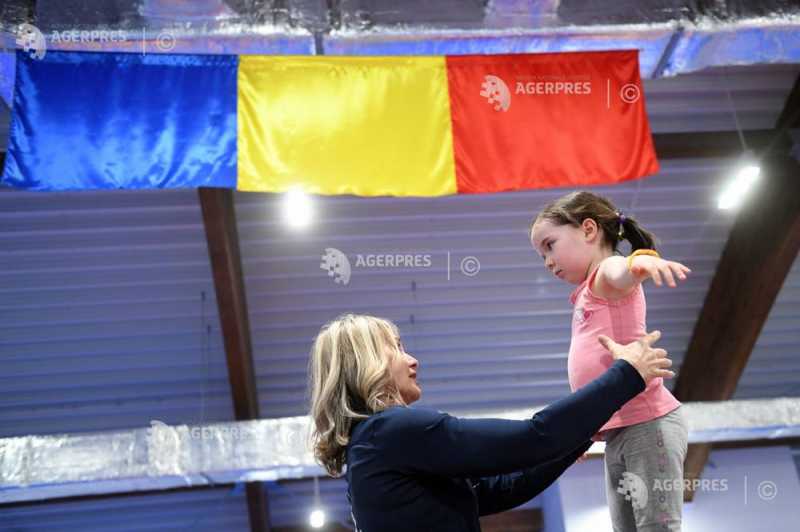
Photo: (c) CRISTIAN NISTOR/AGERPRES PHOTO
AGERPRES: What does perfection mean to Nadia, beyond sport? Do you seek perfection in everyday life?
Nadia Comaneci: I am not sure whether perfection exists. No, I do not seek perfection in everyday life. I can even say that I am not good at many things. It was called perfection back then because something happened that nobody expected. I managed to climb that ladder before everyone else. But, the moment I reached that peak, everyone wanted, in turn, to be better than me.
AGERPRES: If you were to define these 50 years that have passed since that 10 until the present day with a single word, what would it be?
Nadia Comaneci: To choose one word that defines this entire period, I will simply say: 'perfection.' AGERPRES (RO - writing by: Marius Tone; EN - writing by: Rodica State)
- Category: English
- Date: 2026-07-17 12:14:02
- Foto: SILVIU MATEI / AGERPRES PHOTO